
Best Hair Dryers 2026: 5 Models Tested and Reviewed

Avatar of Marco Blasco
Reviewed by: Marco Blasco
Fact-checked by: Shildy Veruska
Last price check: 7 Nov 2026, 03:54 GMT
Last technical update: 05/11/2026

The best hair dryer of 2026 is the Philips 8000 Series BHD837. It dried long, soaking-wet hair in 2:51, the fastest time we’ve recorded, and at 395 g it’s also the lightest dryer we’ve weighed. We tested 5 hair dryers in Spain with the same protocol, timing the drying and measuring air temperature, noise and weight, and all five are available on Amazon.co.uk.

The best hair dryer for every need

  • Best overall: Philips 8000 Series BHD837. It dried long, soaking-wet hair in 2:51 and, at 76-78 dB, it’s also the quietest we’ve measured.
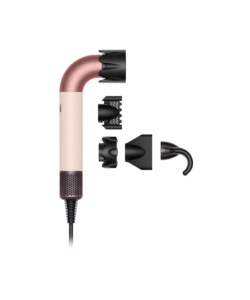
  • Best for round-brush styling with a concentrator: Dyson Supersonic r. A curved body that reaches the nape of your neck and 3:27 drying time with the concentrator.
  • Best for a sensitive scalp: Dyson Supersonic Nural. 55-56 °C at the roots in scalp protect mode and pause detection when you put it down.
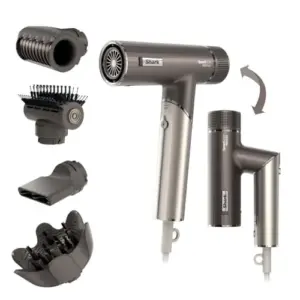
  • Best for travel: Shark SpeedStyle Pro Flex. A folding handle with no play after two weeks and 3:02 drying time at full power.
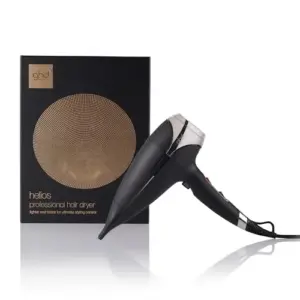
  • Best for a sleek blow-dry: ghd Helios. A very concentrated jet for working section by section, with 3:31 drying time.

Hair dryers compared

The table puts all five dryers side by side, with their scores and key specs, so you can compare power, temperatures and weight at a glance before scrolling down to the review of each one.

Scroll right to see every product in the table.

Swipe to scroll sideways.

Technical specifications

Power
1,400 W1,700 W1,600 W1,700 W2,200 W
Measurements
13 x 16.9 x 30.1 cm (packaging)28.5 cm high, 10.8 cm long and 5.5 cm wide27.2 x 4.1 x 4.8 cm10.59 x 4.8 x 19.63 cm32 x 24.8 x 10.9 cm (packaging)
Number of temperature settings
74443
Number of speed settings
33332
Weight
395 g0.325 kg (dryer body)0.66 kg0.68 kg780 g (tested)

Pros

2 min 51 s to dry long, soaking-wet hair, the fastest time we've recorded.3 min 27 s on average to dry long, soaking-wet hair, on a par with fast digital dryers.55-56 °C measured 2 cm from the nozzle with scalp protect mode on, so it doesn't sting up close.3 min 2 s to dry long, soaking-wet hair, the second-best time we've recorded.3 min 31 s to dry long, soaking-wet hair, one of the fastest times we've recorded.
395 g on the scales, the lightest dryer we've tested.Curved body that points towards the back of the neck without twisting your wrist.Pause detection cuts the heat in under a second when you put it down between sections.Folding handle that stayed play-free after two weeks of daily use.Very concentrated stream, even without the nozzle, for precise section-by-section styling.
76-78 dB at one metre, the quietest we've measured.Five attachments that remember their last heat and speed setting.664 g with the motor in the handle, so your wrist only tires after nine minutes.Automatic heat for each attachment, with 61-63 °C measured.77-79 dB at one metre with a deep tone, one of the quietest for its airflow.
Seven heat settings from 43-44 °C to 79-81 °C, plus a 50-51 °C gentle mode.2.7 m cable with a tidy strap and a filter that didn't clog in two weeks.Each attachment remembers its last heat and speed setting.Diffuser with extending prongs plus three more attachments in the box.3 m cable that reaches any bathroom socket with ease.

Cons

No distance sensor, so the high setting reaches 80 °C even up close.No diffuser in the box and 96 °C on maximum heat, with no scalp protect mode.3 min 45 s to dry long, soaking-wet hair, slower than most digital dryers we've timed.80-82 dB at one metre, among the loudest digital dryers we've measured.780 g, the heaviest we've tested, with wrist fatigue from minute seven.
2 m cable, shorter than its rivals'.80.4-80.8 dB(A) with the concentrator, a bulky plug and no drying without an attachment.79-81 dB at one metre and a bulky box on the cable.No distance sensor, and automatic mode adds 17 seconds to the drying time.No diffuser in the box and no distance heat sensor (87-89 °C on maximum).

Drying your hair is something you do almost every day, and a hair dryer stands or falls on three things you won’t find on the box: whether it dries quickly, whether the air is kind to your hair and scalp, and whether you can hold it with your arm raised without the weight or the noise getting to you. The power figures quoted by manufacturers answer none of those questions. That’s why every dryer in this ranking goes through the same protocol, with the same three tests in the same order, so the scores can be compared from one model to the next.

The three tests that decide the score

  • Power and airflow. We dry long hair soaked straight from the shower and time the full drying at maximum power with the concentrator nozzle. We compare the result with other dryers on the same hair.
  • Hair care. We spend two weeks drying with warm air and a final cool shot. We look at frizz, whether the air stings the scalp and, on models that come with a diffuser, whether it respects curls.
  • Weight and noise. We use a sound level meter at 1 m on maximum power and dry non-stop for 10 minutes with the arm raised. We note when the weight starts to show in the wrist, whether the cable falls short and whether the rear filter clogs with hair.

All the ratings in this guide are based on our own tests in Spain, measurements and direct comparison between models, following our full testing methodology.

Each hair dryer’s overall score is the simple arithmetic mean of three criteria, each rated independently out of 10:

  • Power and airflow
  • Hair care
  • Weight and noise

These three criteria are exactly the sub-scores you’ll see broken down in each product review, so you can compare model by model by the same yardstick. There’s no weighting, and the overall score is the average of the three in equal parts.

The order of the ranking doesn’t follow the individual score alone. It takes into account how well each model suits each type of user, value for money and availability, so a dryer with a higher score can sit behind one that covers a specific need better.

We tested all five dryers in Spain with the same protocol and on long hair soaked straight from the shower, so their drying times, temperatures and noise readings can be compared directly.

"This article contains affiliate links. We may earn a commission if you buy through them, at no extra cost to you. As an Amazon Associate, La Casa Sibarita earns from qualifying purchases."

The best hair dryers: our tested ranking

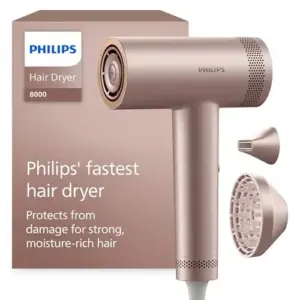
1. Philips 8000 Series BHD837: the best hair dryer overall

9.1
Score
Power and airflow
9.5
Hair care
8.9
Weight and noise
8.8
Features Details
Power 1,400 W
Measurements 13 x 16.9 x 30.1 cm (packaging)
Number of temperature settings 7
Number of speed settings 3
Weight 395 g
  • Drying long, soaking-wet hair (nozzle on, speed and heat at maximum): 2:51 median (2:48 / 2:54 / 2:51)
  • Air temperature at 2 cm (after 30 s running): 43-44 °C on the lowest setting · 50-51 °C in gentle mode · 58-60 °C on medium · 79-81 °C on high
  • Noise at 1 m and weight on the scales (maximum speed): 76-78 dB without attachment · 78-80 dB with the nozzle · 395 g without attachment · 427 g with the nozzle
  • Arm raised (10 min of non-stop drying): the weight only shows at minute 10
  • Rear filter after two weeks: little visible build-up, helped by the eight-second self-clean mode

Why we recommend it

It's the fastest hair dryer we've timed. Long, soaking-wet hair was dry in 2:51, eleven seconds ahead of the next quickest and more than a minute ahead of dryers with a conventional motor, even though it only claims 1,400 W. The difference comes from a brushless motor spinning at 110,000 rpm and an airflow that Philips puts at 228 km/h.

It's also the lightest we've weighed, at 395 g, and the quietest, at 76-78 dB at one metre. In ten minutes of drying with the arm raised the weight only began to show at minute ten, so long round-brush sessions don't wear out your wrist.

Seven temperature settings and four preset modes let you choose exactly how much heat you want. We measured 50-51 °C in gentle mode and 43-44 °C on the lowest setting, low enough to dry almost right against your scalp. We tested the BHD837/10 in Spain; on Amazon.co.uk it's sold as the BHD837/03 in the same Rose Champagne. According to its UK listing, the set includes only the dryer and the 8 mm styling nozzle, with no diffuser, whereas our Spanish unit also came with a magnetic diffuser.

Weak points

What it lacks is a distance sensor. Scalp protection depends on the mode you choose, not on how close you hold it, so on the high setting the air still reaches 80 °C if you get too near. Unlike the Shark SpeedStyle Pro Flex, it doesn’t fold for travel either.

The 2 m cable is shorter than its rivals’ and can feel tight if the socket is far from your mirror.

Who it's for

👤 It’s for you if you dry your hair every day and want it done fast without tiring your wrist, or if you dry early in the morning with people asleep nearby. If you have natural curls, bear in mind that the UK listing includes no diffuser, only the 8 mm nozzle.

Biggest advantage

✅ The fastest drying time we've recorded, 2:51 with long, soaking-wet hair, in the lightest body we've weighed.

Biggest drawback

❌ There's no distance sensor, so on high the air still reaches 80 °C if you hold it close to your scalp.

Philips 8000 Series BHD837 Hair Dryer

Deals

Prices may change. We earn a commission on purchases made through these links.

2. Dyson Supersonic r: the best for round-brush styling with a concentrator

8.6
Score
Power and airflow
8.9
Hair care
8.3
Weight and noise
8.5
Features Details
Power 1,700 W
Measurements 28.5 cm high, 10.8 cm long and 5.5 cm wide
Number of temperature settings 4
Number of speed settings 3
Weight 0.325 kg (dryer body)
  • Drying long, soaking-wet hair (concentrator, speed and heat at maximum): 3:27 median (3:24 / 3:31 / 3:27)
  • Air temperature at 2 cm (concentrator, high speed, centre of the jet): 96 °C at maximum · 77 °C on medium
  • Noise at 1 m (maximum speed and heat): 80.4-80.8 dB(A) with the concentrator · 79.2-79.6 dB(A) with the power-drying attachment (it doesn’t work without an attachment)
  • Arm raised (10 min of non-stop drying): the weight shows at minute 9
  • Rear filter after two weeks: no clogging, with a little fluff; cleaning it takes about 3 min 20 s plus air drying

Why we recommend it

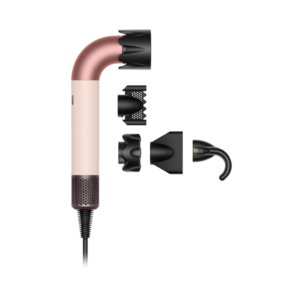
If you dry your hair with a round brush and a concentrator, this dryer changes your posture. Its curved body bends the airflow forwards and reaches the nape of your neck and the back of your head without turning your wrist, and it dried long, soaking-wet hair in 3:27.

Each of its five attachments has a chip that tells the dryer which temperature and speed you used last time, so when you click on the concentrator you're back to your setting without touching a button. Over six blow-dries with medium heat and a cool shot, hair was less frizzy through the lengths and ends than with the tester's usual dryer.

It heats the air with ten foils spread around the curve (1,700 W and 12.4 l/s claimed) so it comes out evenly, with no hot or cold spots. The long cable, with a strap to tidy it away, reaches any socket with room to spare, and in ten minutes with the arm raised there was no need to stop.

Weak points

Its weak spot is heat. It has no distance sensor or scalp protection mode, and at maximum we measured 96 °C two centimetres from the concentrator, so at the roots you need to keep it moving and hold the nozzle away from your head. Against the Shark SpeedStyle Pro Flex, two places below, it took 25 seconds longer to dry long hair, and the Shark comes with a diffuser.

This version for straight and wavy hair has no diffuser, only works with an attachment fitted, and the bulky plug makes it awkward to put away.

Who it's for

👤 You’ll love it if you style with a round brush and a concentrator and always struggle to reach the nape of your neck. If you have natural curls, though, look for the version for curly hair, which is the one that comes with the diffuser.

Biggest advantage

✅ Its curved body directs the air towards the nape of your neck and the back of your head, so you can dry with a brush without straining your wrist.

Biggest drawback

❌ No diffuser in this version and no scalp protection mode, and at maximum the air comes out at 96 °C.

Dyson Supersonic r Hair Dryer

Deals

Prices may change. We earn a commission on purchases made through these links.

3. Dyson Supersonic Nural: the best for a sensitive scalp

8.6
Score
Power and airflow
8.1
Hair care
9.4
Weight and noise
8.4
Features Details
Power 1,600 W
Measurements 27.2 x 4.1 x 4.8 cm
Number of temperature settings 4
Number of speed settings 3
Weight 0.66 kg
  • Drying long, soaking-wet hair (concentrator, speed and heat at maximum): 3:45 with scalp protect mode off (3:42 / 3:48 / 3:45) · 4:02 with it on
  • Air temperature at 2 cm (gentle air attachment, after 30 s running): 55-56 °C at maximum and 52-53 °C on medium with scalp protect mode · 91-93 °C and 68-70 °C without it
  • Noise at 1 m and weight on the scales (maximum speed): 79-81 dB without attachment · 81-83 dB with the concentrator · 664 g without attachment · 706 g with the concentrator
  • Arm raised (10 min of non-stop drying): the weight shows at minute 9
  • Pause detection (when put down on the basin): cuts the heat and reduces the airflow 0.5 to 1 s later

Why we recommend it

If someone at home has a sensitive scalp, this dryer takes one worry off their mind. A sensor at the outlet measures how far away your head is and lowers the heat as you get closer, and with scalp protect mode we measured 55-56 °C on the maximum setting, compared with 91-93 °C on the same setting with the mode switched off.

In two weeks of daily drying the scalp never once complained, not even with the gentle air attachment resting on the head. Hair was less frizzy than with the tester's usual dryer, and with the diffuser curls came out defined and soft.

Pause detection changes your routine too. When you put it down on the basin to pick up your brush, it cuts the heat and lowers the airflow almost instantly, and when you pick it up it goes back to where it was. The attachments click on magnetically and each one remembers the last setting you used with it. We tested the Straight+Wavy edition in Spain; on Amazon.co.uk it's sold as the Curly+Coily edition, which is the same dryer with a different set of attachments, including another diffuser and a wide-tooth comb in place of the wide smoothing nozzle.

Weak points

Its weak spot is drying time. Long, soaking-wet hair took 3:45 with the protection switched off and 4:02 with it on, which is how it comes out of the box and doesn’t let you turn the temperature up by hand. Against the Dyson Supersonic r one place above, it takes about eighteen seconds longer on the same hair and is slightly louder with the concentrator, in exchange for the distance sensor the r doesn’t have.

It’s no quieter than the previous generation, at 79-81 dB at one metre, and the electronics box on the cable still makes it bulky to put away.

Who it's for

👤 It’s a good fit if your roots end up sore every time you dry your hair, or if your hair is fine and you notice the heat punishing it. You’ll enjoy it more, though, if you’re not racing against the clock in the morning.

Biggest advantage

✅ It lowers the heat by itself when you bring the dryer close to your head, so you protect your scalp without remembering to change mode.

Biggest drawback

❌ Long, soaking-wet hair takes almost four minutes, and over four with the factory scalp protection switched on.

Dyson Supersonic Nural Hair Dryer

Deals

Prices may change. We earn a commission on purchases made through these links.

4. Shark SpeedStyle Pro Flex: the best for travel

8.8
Score
Power and airflow
9.2
Hair care
8.8
Weight and noise
8.3
Features Details
Power 1,700 W
Measurements 10.59 x 4.8 x 19.63 cm
Number of temperature settings 4
Number of speed settings 3
Weight 0.68 kg
  • Drying long, soaking-wet hair: 3:02 at full power (2:59 / 3:05 / 3:02) · 3:19 in automatic mode
  • Air temperature at 2 cm: 61-63 °C in automatic mode · 86-88 °C at maximum
  • Noise at 1 m and weight on the scales: 80-82 dB without attachment · 82-84 dB with the concentrator · 642 g without attachment · 683 g with the concentrator
  • Arm raised: the weight shows at minute 9
  • Folding handle after two weeks: firm, with no play; folded, it fits in a medium wash bag

Why we recommend it

Where you notice it most is in your suitcase. The handle folds in half, the hinge was still firm after two weeks, and even so it dried long, soaking-wet hair in 3:02 at full power, so you don't give up performance to take it travelling or keep it in a home with no storage space.

When you click on each attachment, the dryer recognises it and sets the temperature and airflow by itself. In that automatic mode we measured 61-63 °C at the outlet, air that never once bothered the scalp. A control that reads the temperature a thousand times a second stops it going above 110 °C.

It comes with four attachments (1,700 W, air at up to 160 km/h), and the diffuser with extendable prongs left curls defined and separated. The concentrator rotates 360 degrees so you can aim the jet without twisting your wrist. We tested the HD542EU in Spain; on Amazon.co.uk it's sold as the HD543PLUK in Lilac Frost, with a UK plug and the same four attachments, diffuser included.

Weak points

What we liked least is the noise. At maximum speed we measured 80-82 dB at one metre without an attachment and 82-84 dB with the concentrator, with a high-pitched tone. Against the Philips 8000 Series in first place, it takes eleven seconds longer, you hold about 250 g more in your hand and it’s noticeably louder.

The automatic mode for each attachment is gentler, but seventeen seconds slower than full power.

Who it's for

👤 Think about it if you live out of a half-packed suitcase or have nowhere to put a full-size dryer. And if you can’t be bothered fiddling with buttons, it adjusts itself to whichever attachment you fit.

Biggest advantage

✅ The handle folds in half and fits in a wash bag without losing power, with 3:02 drying time at full power.

Biggest drawback

❌ It's one of the loudest we've measured, with a high-pitched tone you can hear all over the house at maximum speed.

Shark SpeedStyle Pro Flex Hair Dryer

Deals

Prices may change. We earn a commission on purchases made through these links.

5. ghd Helios: the best for a sleek, salon-style blow-dry

8.3
Score
Power and airflow
8.9
Hair care
8.2
Weight and noise
7.9
Features Details
Power 2,200 W
Measurements 32 x 24.8 x 10.9 cm (packaging)
Number of temperature settings 3
Number of speed settings 2
Weight 780 g (tested)
  • Drying long, soaking-wet hair (concentrator nozzle, speed and heat at maximum): 3:31 median (3:28 / 3:34 / 3:31)
  • Air temperature at 2 cm (after 30 s running): 87-89 °C at maximum · 65-67 °C on medium
  • Noise at 1 m and weight on the scales (maximum speed): 77-79 dB without the nozzle · 79-81 dB with it · 780 g without attachment · 823 g with the nozzle
  • Arm raised (10 min of non-stop drying): the weight shows at minute 7
  • Cable and rear filter after two weeks: the 3 m cable reaches with plenty to spare; only small traces of hair in the filter

Why we recommend it

If you dry long hair every day and want a sleek, polished finish without reaching for the straighteners, this is the dryer that puts the air exactly where you point it. The jet is so concentrated that you often don't need the nozzle, and it dried long, soaking-wet hair in 3:31, a time only a couple of the digital dryers we've measured have beaten.

Its brushless motor claims 2,200 W and 120 km/h, and the ionic system is always on. After two weeks of drying with warm air and a final cool shot, hair was smoother and less frizzy than with the tester's usual dryer, and the shine shows most on straight or wavy hair styled with the nozzle.

It's also quiet for the airflow it moves, at 77-79 dB at one metre with a low-pitched tone, and the salon-length 3 m cable reaches any socket with room to spare. On Amazon.co.uk it's sold in black with a UK plug.

Weak points

Weight is what we liked least. At 780 g it’s the heaviest dryer we’ve weighed, and with the arm raised it made itself felt in the wrist at minute seven, earlier than any other. It also has no distance sensor: at maximum we measured 87-89 °C, and if you deliberately bring it close to the scalp it does sting. Against the Dyson Supersonic Nural, two places above, it dries fourteen seconds faster, but it weighs over 100 g more and has none of its scalp protection.

There’s no diffuser in the box either. It’s sold separately and needs its own adaptor ring, so if you have curls you’ll have to buy it on top.

Who it's for

👤 It suits you if you have long hair, blow-dry it straight with a round brush and want to be done quickly. If you have curls, a sensitive scalp or a delicate wrist, one of the models above will serve you better.

Biggest advantage

✅ A very concentrated jet that dried long, soaking-wet hair in 3:31 and lets you work section by section without disturbing the rest.

Biggest drawback

❌ At 780 g it's the heaviest we've tested, and the weight shows in your wrist from minute seven.

ghd Helios Hair Dryer

Deals

Prices may change. We earn a commission on purchases made through these links.

Buying guide: how to choose the best hair dryer

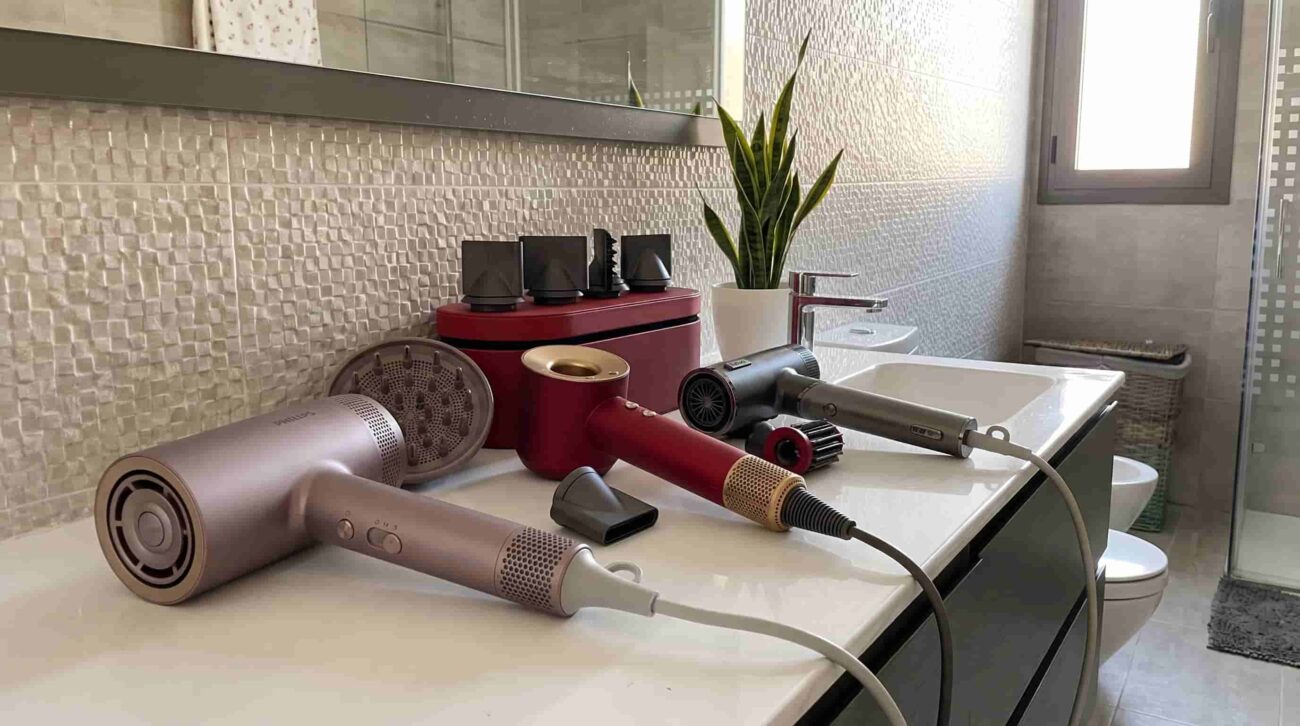
Choosing the best hair dryer in 2026 isn't about the wattage on the box. After timing the drying and measuring air temperature, noise and weight on every dryer in this ranking, we found that five things decide the purchase: the type of motor, how it controls heat, how heavy it feels with your arm raised, the attachments in the box and whether you'll take it travelling.

Testing hair dryers for our ranking

Brushless or brushed motor: why watts don't tell you how fast a hair dryer dries

Watts measure what a dryer consumes, not how fast it dries. In our tests the quickest dryer with long, soaking-wet hair was the one with the lowest claimed power, the Philips 8000 Series BHD837, which with 1,400 W and a brushless motor at 110,000 rpm finished in 2:51, while models of 1,600 to 2,200 W took between 3:02 and 3:45. The difference lies in the speed of the air, not the heat. A brushless (digital) motor also usually sits in the handle, which balances the weight, and keeps its power for more years. If you dry your hair every day, it's the first box to tick; if you use it twice a week, a good brushed motor still does the job.

Temperature and sensors: the hair dryer that won't burn your scalp

Heat is what dries out hair and stings at the roots, and on the highest setting we measured between 79 and 96 °C depending on the model. What makes the difference is a sensor that corrects the heat for you. The Dyson Supersonic Nural drops to 55-56 °C at the roots in scalp protect mode as you bring it closer, and cuts the heat when you put it down. Without a distance sensor, control is down to you, so look for at least three temperature settings, a cool shot that really cools and, if your hair is fine or coloured, a care mode of around 50-60 °C so you can dry close to your head without worry.

Weight, balance and noise: what you notice after ten minutes with your arm raised

You use a hair dryer with your arm raised, and in our tests the wrist started to complain between minute seven and minute ten, depending on the weight and how it's distributed. Balance counts as much as grams, because a motor in the handle is less tiring than one in the head at the same weight. The Philips 8000 Series BHD837 is the clearest example, at 395 g on our scales and with the weight only showing at minute ten, while the 780 g ghd Helios made itself felt at minute seven. Noise matters too. Among the dryers we measured, readings ranged from 76-78 dB to 82-84 dB at one metre, and a high-pitched whine is more noticeable than a low hum. If you dry your hair with people asleep nearby, look at the measured decibels, not just the weight.

Curls or sleek: the diffuser and nozzle that come with your hair dryer

The two attachments that change the result are the diffuser, which defines curls without frizz, and the concentrator nozzle, for smoothing section by section. Check that the one you want is in the box, because several models in this comparison don't include a diffuser: the ghd Helios, the Dyson Supersonic r and, according to its UK listing, the Philips 8000 Series. The Shark SpeedStyle Pro Flex comes with one, with extendable prongs that left curls defined and separated, and it adjusts heat and airflow to each attachment by itself. For straight or wavy hair you want sleek without the straighteners, the very concentrated jet of the ghd Helios lets you work section by section with a round brush without disturbing the rest. Magnetic attachments that rotate can be angled without twisting your wrist, while push-fit ones tend to loosen over the years.

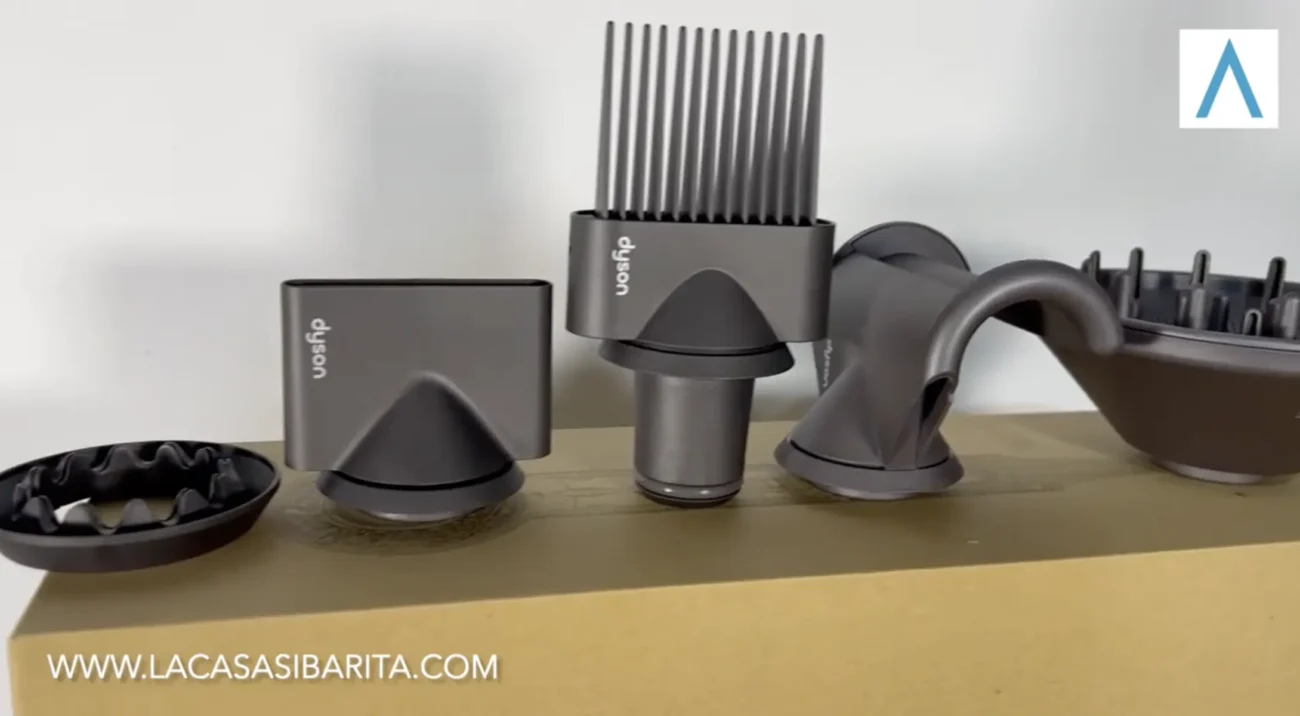
Testing the attachments of a Dyson hair dryer

Folding, cable and travel: when a compact hair dryer makes sense

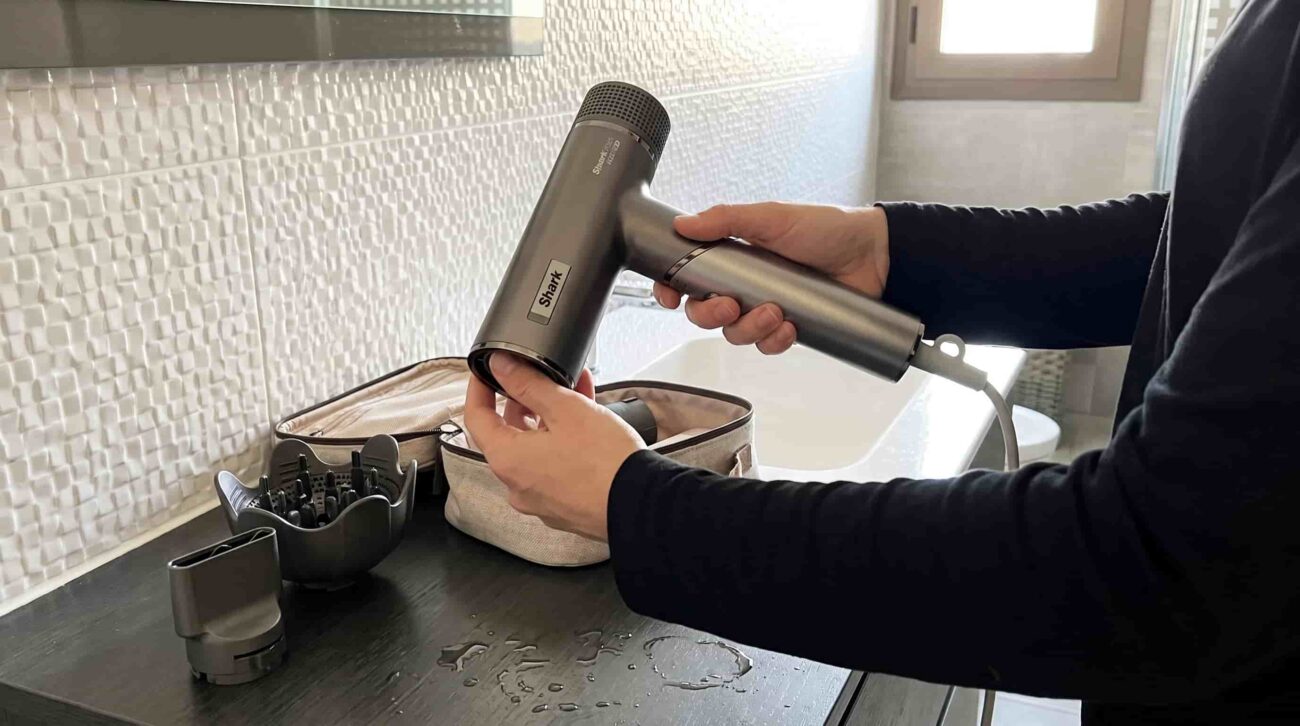
If your dryer is going to travel or you're short on space, check three things: whether the handle folds and stays firm after weeks of use, how much room it takes up with the attachments and how long the cable is. The Shark SpeedStyle Pro Flex handles this best without giving up power. It folds with no play, sets the heat by itself when you fit each attachment and dried long hair in 3:02, the second-fastest time we've recorded. A compact dryer with a small motor, on the other hand, saves space but takes longer to dry. To complete the same travel wash bag, have a look at our electric shaver comparison, with equally compact models designed for your suitcase.

Testing the folding travel design of the Shark SpeedStyle Pro Flex
Testing the folding travel design of the Shark SpeedStyle Pro Flex hair dryer

How much hair dryer do you need: entry-level, mid-range and premium

Brushless motors are no longer reserved for premium dryers, and you'll now find them alongside ionic technology at more affordable prices. The mid-range adds thermal sensors, more settings and magnetic attachments, as on the Philips 8000 Series BHD837, which checks the air temperature 200 times a second. The premium end adds a distance sensor, pause detection and attachments that remember your settings, as on the Dyson Supersonic Nural. Our rule of thumb is simple. Fine or coloured hair or a sensitive scalp justifies paying for the sensor, thick or abundant hair justifies paying for airflow, and occasional use justifies neither.

When is it not worth replacing your hair dryer?

If your current dryer dries long hair in under four minutes, its cool shot really cools and it doesn't tire your wrist, swapping it just for a digital motor will save you seconds, not minutes. It isn't worth it either if you only use it now and then, or if the problem is heat and can be solved by drying on the medium setting. It is worth it when the frizz won't go away, the air stings at the roots or the weight forces you to stop.

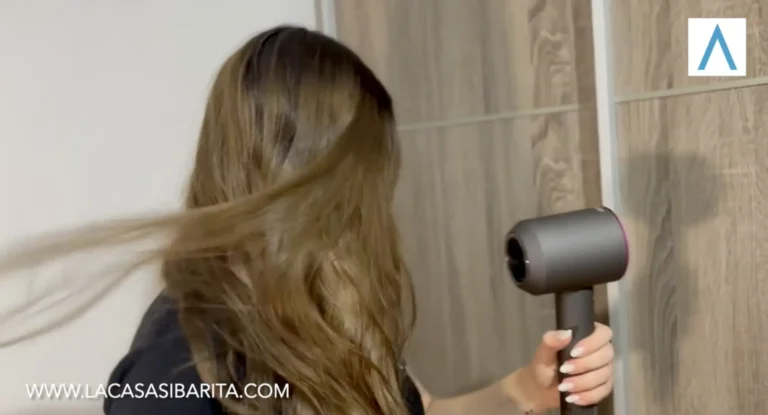
Testing a Dyson Supersonic hair dryer after a shower

Checklist: what to look for before you buy

  • Brushless (digital) or brushed motor?
  • How many temperature settings does it have, and how cool is the cool shot?
  • Does it have a sensor that regulates the heat by itself?
  • How much does it weigh with the nozzle fitted, and where is the motor?
  • Are a diffuser and a concentrator included in the box?
  • Does it fold, and how long is the cable?
  • How many decibels have been measured, rather than just ‘quiet’?
  • What manufacturer's guarantee does it come with?

How we put this ranking together

The scores in this comparison come from our own test protocol, the same for all five dryers, and we ran every test in Spain. The order of the ranking is an editorial decision and doesn’t always match the highest score, and each model’s score is shown in its review and in the comparison table.

Update history

  • 05/11/2026: We publish our UK ranking, with the models available on Amazon.co.uk.

FAQs about hair dryers

Conventional dryers simply heat the air with an element, while ionic dryers also release negative ions that neutralise the static charge in wet hair. In our tests, the models with ionic technology left hair less frizzy after two weeks of use than an equivalent dryer without it, although the difference shows more on thick or frizz-prone hair than on fine hair.

Yes, as long as the diffuser comes in the box, because several models in this comparison don’t include one. In our tests, magnetic diffusers that rotate 360 degrees defined curls better than push-fit ones, and results vary from one model to another, with curls feeling drier to the touch on some than on others in the same range.

Yes, and the difference is bigger than you might think. With the sound level meter at one metre we measured dryers from 76-78 dB on the Philips 8000 Series BHD837 up to 82-84 dB at maximum power, and the tone matters as much as the number. A motor with a low hum is less noticeable than one with a high-pitched whine, even when the decibel readings are similar.

In our tests, yes. Digital (brushless) motors dried faster with fewer watts, usually sit in the handle to spread the weight better and keep their power for more years. A brushed motor is still fine for occasional use, but if you dry your hair every day, you’ll notice the digital motor in both time and wrist comfort.

Fewer than you might think. In our tests, the fastest dryer with long, soaking-wet hair had fewer watts than models with a much higher claimed power. What decides drying time is the speed of the air, not the claimed power, so a mid-range digital motor usually beats a brushed motor with more watts.

In our measurements, the air on the maximum setting ranged from 79 to 96 °C depending on the model, and only one of the dryers we tested adjusts the heat by itself as you bring it close to your head. Without that sensor, a safe temperature is up to you, so use a medium setting near the roots and save the maximum for shaping with the nozzle held at a distance.

Video comparison of hair dryers

In this video (in Spanish) we compare a Dyson hair dryer with a more affordable model, looking at the features, weight, handling and power of each.

Related comparisons

The models we have analysed or tested

Real tests · No sponsorships

Marco Blasco

I'm Marco Blasco and I've been testing and comparing home appliances for more than five years. My ratings come from real tests, first-hand experience and objective criteria, explained transparently. Our tests are carried out in Spain. Through detailed guides and comparisons I've helped thousands of people choose with more confidence, and I can do that because I'm completely independent of the brands.