
Best Bean to Cup Coffee Machines 2026: 7 Models Tested and Reviewed
Our pick for the best bean to cup coffee machine of 2026 is the Melitta Purista F230, a slim 20 cm espresso specialist that pours two freshly ground cups at once (its 9.1 comes from our earlier test protocol, with different criteria, as we explain in its entry). If you want milky drinks, hot and cold, for the whole household, the De’Longhi Eletta Ultra covers more than 50 recipes. We’ve looked at more than 18 machines, and these are the 7 we tested that you can buy on Amazon.co.uk.
The best bean to cup coffee machine for every need
- Best for espresso in a small kitchen: Melitta Purista F230. 20 cm wide and two cups at once.
- Best for switching between regular and decaf with milk: De’Longhi Rivelia. Hopper swap in about 3 s.
- Quietest grinder: De’Longhi Rivelia Start. 55.7 to 56.8 dB at 1 m.
- Best for hot and cold drinks: De’Longhi Eletta Ultra. More than 50 recipes, with cold drinks made by the machine itself.
- Best for fine-tuning every cup: De’Longhi Magnifica Evo Next. 13 grind settings and 3 profiles that keep size, strength and temperature.
- Easiest milk system to clean: Philips 3300 Series LatteGo. Milk jug rinsed in 10 s.
- Best simple cappuccino machine: Philips 2300 Series LatteGo. 4 drinks and a cappuccino in 1 min 27 s.
Bean to cup coffee machines compared
Compare the scores, milk system, water tank and whether the brew unit comes out, all at a glance.
Scroll right to see every product in the table.
Swipe to scroll sideways.
|
|
|
|
|
|
|
|
Technical specifications
Material | ||||||
| Stainless steel and plastic | Stainless steel and plastic | Plastic with metal details | Metal | Not specified | Plastic | Plastic |
Milk frother | ||||||
| No | Yes | Yes | Yes | Yes | Yes | Yes |
User profiles | ||||||
| Yes (1) | Yes | No | Yes | Yes | No | No |
Coffee grinder | ||||||
| Stainless steel conical burrs (5 levels) | Yes | Yes | Yes | Yes | Yes | Yes |
2 coffees at once | ||||||
| Yes | Yes | Yes | Yes | Not specified | Yes | Yes |
Coffee types | ||||||
| Beans | Beans | Beans and ground | Beans + ground | Beans + ground | Beans + ground | Beans + ground |
Water tank capacity | ||||||
| 1.2 L | 1.4 L | 1.4 L | 1.8 L | 1.8 L | 1.8 L | 1.8 L |
Cup warmer | ||||||
| Yes | No | No | Yes | Not specified | No | No |
Type | ||||||
| Bean-to-cup espresso machine | Bean-to-cup | Bean-to-cup | Bean-to-cup | Bean-to-cup | Bean-to-cup | Bean-to-cup |
Pressure | ||||||
| 15 bar | 19 bar | 15 bar | 19 bar | 15 bar | 15 bar | 15 bar |
Pros
| Quiet stainless steel grinder for early mornings | Quiet grinder, 66.4 to 66.8 dB at one metre on the medium setting | Five espressos in a row between 30.6 and 31.8 seconds | Exactly 43 seconds per espresso across four consecutive cups | Consistent 44-second extraction across five espressos in a row | 12-step ceramic grinder: a dose in under six seconds with little residue | 12-step ceramic grinder: a dose in about six seconds, no whole pieces |
| Saves your favourite coffee at the touch of a button | 69 °C in the first cup and 70 °C in the fifth of a five-coffee run | Fast, quiet grinder: 5.6 to 6.1 seconds per dose, 56.8 dB at most | Full cappuccino in 2 minutes 5 seconds from switched off | Three profiles that save size, strength and temperature | Two-part, tube-free milk carafe that rinses clean in 10 seconds | Cappuccino in 1 minute 27 seconds from switched off |
| Makes 2 coffees at once from its twin spout | Bean hoppers swap in about three seconds with no flavour mixing | Two 250 g bean hoppers that swap in 30 to 35 seconds | More than 50 one-touch hot and cold recipes with no accessories | Full cappuccino in 1 minute 51 seconds from switched off | Five espressos in a row between 35.4 and 36.5 seconds | Five espressos in a row between 35.7 and 36.9 seconds |
| Removable brewing unit that's easy to clean | Dense, even milk foam from a fridge-friendly carafe | Full cappuccino in 1 minute 32 seconds from switched off | Dose ground in 7.2 seconds with automatic grind adjustment | Front-loading tank you can refill without moving the machine | Front-loading 1.8-litre tank good for 31 espressos | Front-loading 1.8-litre tank good for 31 espressos |
Cons
| Noticeably pricier than the earlier Melitta model it replaces | 1.4-litre tank good for 26 espressos, with grounds and drip tray to empty every ten or so | 1.4-litre tank and a grounds drawer that warns after 10 coffees | A little dust at the finest grind, and the bean profile is only adjustable in the app | 25 espressos from a full tank and hopper, short for more than two people | Light-bodied espresso on medium settings and only three strength levels | Mild espresso on medium strength and only three levels to correct it |
| No milk frother, so milky drinks need a separate accessory | One grind setting shared by both hoppers, so very different roasts don't both extract well | 13-position grind selector numbered only from 1 to 7 | 31 espressos per hopper and a grounds warning after 14 doses | 70 dB while grinding, some retention in the chute and a powdery finest setting | The grounds drawer asks to be emptied after just 12 coffees | Grounds drawer full at coffee 12 and hopper empty at 28, before the water |
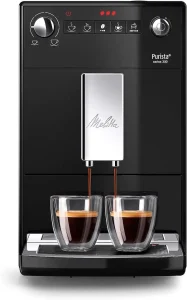
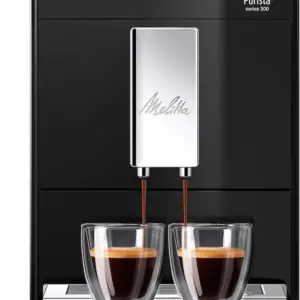
Melitta Purista F230 Bean to Cup Coffee Machine
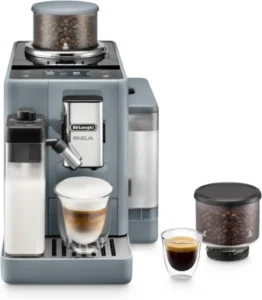
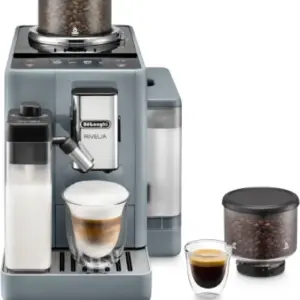
De’Longhi Rivelia EXAM440.55.G Bean to Cup Coffee Machine
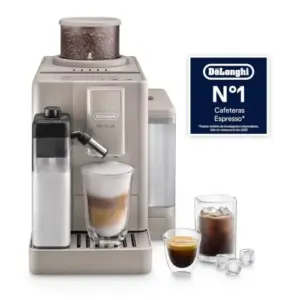
De’Longhi Rivelia Start EXAM422.55.BG Bean to Cup Coffee Machine
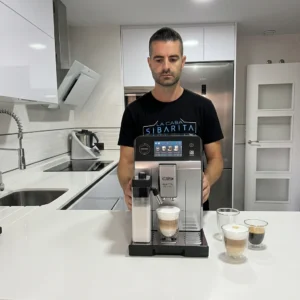
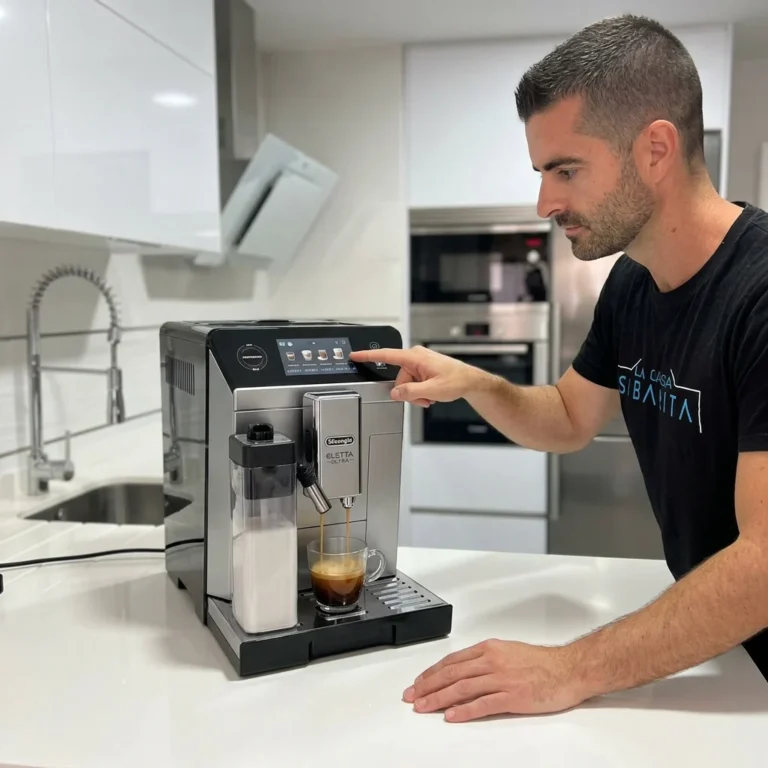
De’Longhi Eletta Ultra ECAM472.85.MB Bean to Cup Coffee Machine
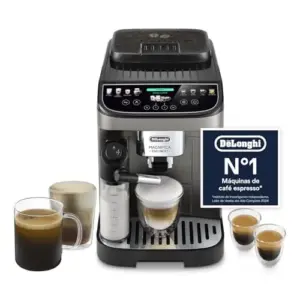
De’Longhi Magnifica Evo Next ECAM312.80.TB Bean to Cup Coffee Machine
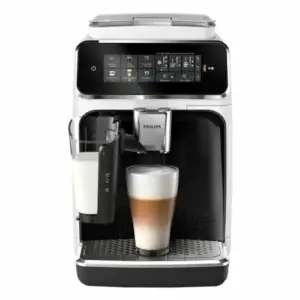
Philips 3300 Series LatteGo Bean to Cup Coffee Machine
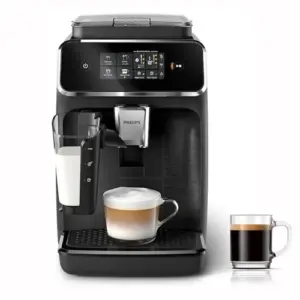
Philips 2300 Series LatteGo Bean to Cup Coffee Machine
‘This article contains affiliate links. We may earn a commission if you buy through them, at no extra cost to you.’
How we test bean to cup coffee machines
With a bean to cup machine you’re not really buying one cup of coffee. You’re buying the fiftieth, the one that has to taste exactly like the first without eating into your morning. That’s why we judge these machines on what they do day after day, not on what the spec sheet promises. We look at how steady the extraction stays when you make several coffees in a row, how well the grinder handles the beans and how long the machine lasts before it asks you to refill or empty something. Every criterion is tested the same way on each machine, with the same coffee beans, so the differences in the scores come down to the machine. We also try the recipes, the user profiles and the milk system on the models that have one, and we cover them in each review, but they don’t carry a score of their own.
The three tests that decide the score
- Coffee quality. Five coffees in a row with the same settings. We time each extraction from the moment we press the button until the flow stops, compare the crema on the first and fifth cups and take the temperature of both.
- Grinder. We grind 100 g of beans on the finest setting, a medium one and the coarsest, then check the result on white paper for unground pieces and loose dust. We time the grinding of one dose, record the noise at one metre and note whether any coffee stays stuck in the chute.
- Capacity. We fill everything to the maximum and count how many drinks the machine makes, always using a 40 ml espresso as the reference cup so the figure can be compared across models. We also check whether the water tank comes out and refills without moving the machine, and whether the low-water warning gives you enough notice.
All our tests took place in Spain, with the same models you can buy on Amazon.co.uk. Where the UK listing has a different reference, colour or seller, we say so in the entry. The Melitta Purista F230 was tested before we adopted this protocol, under our previous criteria (design, power and build quality), so its score comes from that earlier test and doesn’t include the measurements described above. Every rating in this guide is based on our own tests, measurements and direct comparison between models.
How we calculate the score
The final score of each bean to cup coffee machine is the simple average of three criteria, each assessed independently out of 10:
- Coffee quality
- Grinder
- Capacity
The overall score is the average of those three sections, weighted equally and without adjustments. They’re exactly the same sub-scores you’ll see broken down in each product review, so you can compare one model with another using the same yardstick.
We score bean to cup machines on these three criteria. The one exception in this ranking is the Melitta Purista F230, whose score comes from our earlier test on design, power and build quality, and its review shows that breakdown. Recipes, user profiles and the milk system don’t get a score of their own, but we explain them in each ranking entry and in each model’s review.
The score doesn’t come from the spec sheet. A machine can claim more bar, more recipes or a bigger water tank and still rank below another if what it does with those figures falls short in daily use. What counts is the performance we observed, how useful each feature is, the limitations that show up when you live with the machine and what it offers for its price bracket. A high score means a well-balanced machine within its segment, not absolute superiority.
A lower score doesn’t mean a bad product either. It means the machine suits a more specific profile or budget, and we explain that in each review. We penalise shortcomings you notice when using the machine, not minor catalogue differences, and we revise the rating when better models appear, prices change or a product stops being available.
The order of the list isn’t based only on each review’s score. We also weigh how current the model is, how well each machine fits a different type of buyer, its value for money and whether you can buy it today without waiting. That’s why a product with a higher score can sit below one that covers a specific need better or belongs to the latest generation of its range.
The best bean to cup coffee machines: our tested ranking
1. Melitta Purista F230: our top pick, a slim espresso specialist that makes two cups at once
| Features | Details |
|---|---|
| Material | Stainless steel and plastic |
| Milk frother | No |
| User profiles | Yes (1) |
| Removable brew group | Yes |
| Coffee grinder | Stainless steel conical burrs (5 levels) |
| 2 coffees at once | Yes |
| See all | |
| Coffee types | Beans |
| Water tank capacity | 1.2 L |
| Cup warmer | Yes |
| Type | Bean-to-cup espresso machine |
| Pressure | 15 bar |
Test results
The Purista F230 went through our earlier protocol, which didn’t include the timed five-espresso series or the grinder noise readings, so these are the checks we made plus Melitta’s own figures.
- Width with the water tank fitted: 20 cm, as Melitta quotes
- Tallest cup under the spout: 13.5 cm, without removing the drip tray
- Two espressos at once: twin spouts, with consistent crema cup after cup
- Grinder: conical burrs with 5 settings, noticeably quieter than others we’ve used
- Brew unit after a month of use: still slides in and out without extra resistance
- Water tank, bean hopper and volume dial: 1.2 l, 125 g and 25 to 220 ml
Why we recommend it
It heads our ranking as the simplest way into freshly ground espresso, although its score comes from our earlier test protocol, as we explain below. If your coffee is an espresso, or two, the Purista F230 does exactly that without taking over the worktop. It's just 20 cm wide, the controls come down to a volume dial and a handful of buttons, and the twin spouts pour two cups at once, which halves the wait when someone joins you for breakfast.
Getting it the way you like it is easy. There are three strength levels, five grind settings on a side dial and a ‘favourite coffee’ button that saves your strength and volume. In our test the crema stayed consistent cup after cup, and the grinder was noticeably quieter than others we've tried, so the first coffee of the day doesn't wake the house.
Looking after it is simple too. It rinses itself when you switch it on and off, and the brew unit comes out for a proper clean, something not every bean to cup machine allows. After a month of use it still slid in and out smoothly. The catch is clear from the start, because there's no milk system.
Weak points
The big one is milk. There’s no frother or steam wand, so cappuccinos and lattes need a separate gadget such as Melitta’s Cremio, which you buy on top. If you drink milky coffee every day, one of the machines with an automatic milk system further down this ranking will suit you better.
It’s also small inside. The bean hopper takes 125 g and the water tank 1.2 litres, so in a busy household you’ll top them up often. And it only takes whole beans, with no chute for pre-ground coffee, so there’s no shortcut for an occasional decaf.
Who it's for
👤 You drink your coffee black, you want it freshly ground every morning and your kitchen has no room for a bulky machine. With 20 cm of width and two cups at the press of a button, it fits a small worktop and a shared breakfast. What you give up is milk, so for cappuccinos you'll need a separate frother.
Biggest advantage
✅ Two freshly ground espressos at once from a machine only 20 cm wide, with a removable brew unit that's easy to clean.
Biggest drawback
❌ No milk system at all, so cappuccinos mean buying a separate frother.
On Amazon.co.uk the Purista is listed as the F230-102 in black and sold by AO rather than by Amazon. The unit we tested in Spain had the silver front; otherwise it's the same F230 machine. Its 9.1 comes from our earlier test protocol, which used different criteria (design, power and build quality) and didn't include the timed espresso series, grinder noise readings or capacity count we now carry out, so it isn't directly comparable with the coffee quality, grinder and capacity scores of the machines below.
Deals
Prices may change. We earn a commission on purchases made through these links.
2. De'Longhi Rivelia: the best for switching between regular and decaf in milky drinks
| Features | Details |
|---|---|
| Material | Stainless steel and plastic |
| Milk frother | Yes |
| User profiles | Yes |
| Removable brew group | Yes |
| Coffee grinder | Yes |
| 2 coffees at once | Yes |
| See all | |
| Coffee types | Beans |
| Water tank capacity | 1.4 L |
| Cup warmer | No |
| Type | Bean-to-cup |
| Pressure | 19 bar |
Test results
- Five coffees in a row with the same recipe: 45 to 47 s each, at 69 °C in the first cup and 70 °C in the fifth
- Grinding one dose on the medium setting and noise at 1 m (three repeats): 8.3 s on average and 66.4 to 66.8 dB
- Full 1.4 l tank, counting 40 ml espressos: 26 espressos, after allowing for rinses
- Swapping bean hoppers between a medium roast and its decaf: about 3 s, with no mixing of flavours in the cup
- Grounds and drip tray warning: roughly every ten coffees
Why we recommend it
Next to the Rivelia Start just below it, this is the bigger-screen version, with 16 drinks on a 3.5-inch touchscreen instead of 10. The Start scored a little higher and beat it on our consistency and grinder noise tests, but if milky drinks are an everyday thing at home, the Rivelia gives you more. Its automatic frother gave us dense, even foam, and its milk jug can be kept in the fridge.
Its other strength is switching beans. It has two interchangeable hoppers, and the swap from your everyday roast to decaf took us about 3 seconds, with no mixing of flavours in the cup.
It does all this without fuss. While grinding it read between 66.4 and 66.8 dB at one metre, a fairly restrained noise for the first coffee in a quiet house.
Weak points
If your household gets through a lot of coffee, you’ll notice the capacity. The 1.4-litre tank gave us 26 espressos, and the grounds drawer and drip tray want emptying roughly every ten coffees.
The second drawback is the grinder. There’s a single grind setting for both hoppers, so with very different roasts one of them won’t extract as well.
Who it's for
👤 It'll suit you if one of you drinks regular coffee and the other switches to decaf in the afternoon, and you both like a cappuccino without frothing by hand. You want more than a basic machine, without going as far as a full coffee-shop menu.
Biggest advantage
✅ Two bean hoppers that swap in about 3 seconds, and an automatic frother with a jug you can keep in the fridge.
Biggest drawback
❌ One grind setting for both hoppers, and grounds and drip tray to empty every ten coffees.
Deals
Prices may change. We earn a commission on purchases made through these links.
3. De'Longhi Rivelia Start: the quietest grinder we measured, with two swappable bean hoppers
| Features | Details |
|---|---|
| Material | Plastic with metal details |
| Milk frother | Yes |
| User profiles | No |
| Removable brew group | Yes |
| Coffee grinder | Yes |
| 2 coffees at once | Yes |
| See all | |
| Coffee types | Beans and ground |
| Water tank capacity | 1.4 L |
| Cup warmer | No |
| Type | Bean-to-cup |
| Pressure | 15 bar |
Test results
- Five 40 ml espressos in a row with the same beans: 31.8, 30.9, 30.7, 30.8 and 30.6 s, from 68.4 °C in the first cup to 70.1 °C in the fifth
- Grinding one dose and noise at 1 m (three repeats): 5.6 to 6.1 s and 55.7 to 56.8 dB
- Everything filled to the maximum, counting 40 ml espressos: grounds warning at cup 10, water at cup 25 and beans gone at cup 27
- Switching bean hoppers: 30 to 35 s, including the function that empties the grinder so the two coffees don’t mix
- Full cappuccino from a machine switched fully off: 1 min 32 s, plus 52 s to take the milk jug apart and rinse it under the tap
Why we recommend it
You can make the first coffee of the day without waking the whole house. The grinder doses an espresso in about six seconds and stayed between 55.7 and 56.8 dB at one metre, the quietest reading in this ranking. It's a clean grind too, with no unground pieces on the fine setting and barely any coffee left in the chute.
Its reason for being is the pair of 250 g bean hoppers. Swapping one for the other took us 30 to 35 seconds, including a function that empties the grinder first, and the next cup carried at most a trace of the previous coffee. You can have regular coffee in the morning and decaf in the afternoon without emptying anything by hand.
The coffee is remarkably steady. Five espressos in a row stayed within 1.2 seconds of each other, and the fifth was slightly hotter than the first. Add an automatic milk jug that makes a cappuccino from a cold start in 1 minute and 32 seconds, and you get a lot of machine in 24.5 cm of width.
Weak points
It asks for attention. The water tank holds 1.4 litres and the grounds drawer warned at cup 10, so it interrupts you twice before you need to refill water or beans. For a couple drinking four or five coffees a day, that means emptying the grounds every other day; with more people or milky drinks, almost daily.
The grind selector is the other niggle. It has 13 positions, but the visible numbers only go from 1 to 7 and the steps in between aren’t marked, so at first it’s hard to tell where you are. Once you get the hang of it, it stops being a problem.
Who it's for
👤 One of you drinks regular coffee and the other prefers decaf, or you like one bean for espresso and another for milky drinks. You want a quiet machine for early mornings and a slim one for the worktop, and you don't mind emptying the grounds drawer often.
Biggest advantage
✅ The quietest grinder in our ranking, at 55.7 to 56.8 dB, plus two hoppers that let you swap beans without mixing them.
Biggest drawback
❌ A 1.4-litre water tank and a grounds drawer that warns after 10 coffees, so busy households will refill and empty it often.
On Amazon.co.uk it's sold by Amazon in beige as the EXAM422.55.BG, the same reference we tested in Spain, although the listing title also mentions EXAM420.55.BG.
Deals
Prices may change. We earn a commission on purchases made through these links.
4. De'Longhi Eletta Ultra: the most versatile, with more than 50 hot and cold drinks
| Features | Details |
|---|---|
| Material | Metal |
| Milk frother | Yes |
| User profiles | Yes |
| Removable brew group | Yes |
| Coffee grinder | Yes |
| 2 coffees at once | Yes |
| See all | |
| Coffee types | Beans + ground |
| Water tank capacity | 1.8 L |
| Cup warmer | Yes |
| Type | Bean-to-cup |
| Pressure | 19 bar |
Test results
- Five 40 ml espressos in a row on a medium grind: 52 s for the first and 43 s for each of the next four, at 69 °C in the cup
- Grinding one dose and noise at 1 m: 7.2 s, with readings of 61.5, 62.2 and 61.8 dB
- One hopper load, counting 40 ml espressos: 31 espressos, with about 11 g of coffee per cup
- Full cappuccino from a machine switched fully off: 2 min 5 s, with the milk circuit rinsing itself in 27 s
- Grounds drawer warning: after 14 doses
Why we recommend it
It isn't the fastest machine on this list, but its grinder barely raises its voice. While grinding it read between 61.5 and 62.2 dB at one metre, the second-quietest result in this ranking, and it adjusts the grind to the beans, so you don't have to touch anything when you change coffee.
It covers you all year round. There are more than 50 recipes, hot and cold, with cold coffee made by the machine itself, and a cappuccino from a cold start was ready in 2 minutes and 5 seconds.
Compared with the Purista F230 at the top of this ranking, the Eletta Ultra adds automatic milk, cold drinks and far more recipes, but it's a much bigger machine at nearly 11 kg. If espresso is all you want, the Melitta does it in a fraction of the space.
Weak points
After 14 doses the grounds drawer already wants emptying, before the water tank and before the hopper, which lasted 31 espressos. With a full house, it’s the first thing that makes you stop.
The milk jug has more parts than one-piece designs and needs a hand wash every few days. On top of that, the bean profile can only be fine-tuned from the smartphone app.
Who it's for
👤 It suits you if everyone at home asks for something different and iced coffee is a must in summer. You're up before everyone else, you want that first coffee without waking anyone, and you have a permanent spot for a large machine.
Biggest advantage
✅ A grinder that stays between 61.5 and 62.2 dB at one metre, and cold coffee made by the machine itself.
Biggest drawback
❌ The grounds drawer asks to be emptied after 14 doses, and the milk jug needs a hand wash every few days.
Deals
Prices may change. We earn a commission on purchases made through these links.
5. De'Longhi Magnifica Evo Next: the one for fine-tuning, with profiles that remember size, strength and temperature
| Features | Details |
|---|---|
| Material | Not specified |
| Milk frother | Yes |
| User profiles | Yes |
| Removable brew group | Yes |
| Coffee grinder | Yes |
| 2 coffees at once | Not specified |
| See all | |
| Coffee types | Beans + ground |
| Water tank capacity | 1.8 L |
| Cup warmer | Not specified |
| Type | Bean-to-cup |
| Pressure | 15 bar |
Test results
- Five 40 ml espressos in a row with the same settings: 50 s for the first and 44 s for each of the next four, at 68 °C in the cup
- Grinding one dose and noise at 1 m: 9 s and 70 dB, with a little coffee left in the chute
- Full 1.8 l tank and 250 g hopper, counting 40 ml espressos: 25 espressos, with water and beans running out almost together
- Full cappuccino from a machine switched fully off: 1 min 51 s, plus 53 s to take the milk system apart and rinse it
- User profiles: 3, and a saved profile kept size, strength and temperature after logging out and back in
Why we recommend it
If you want an espresso with character without stepping up to a flagship machine, this is the one to look at. It pours a coffee with more body than most automatics in its range, and it's consistent, because after a first shot of 50 seconds the next four landed on 44 seconds exactly.
Its real strength is how much you can adjust. Between 13 grind settings, several strength levels and three temperatures, you can correct a cup without changing beans, and the three user profiles remember size, strength and temperature. We saved one with all three changes, logged out and back in, and it came back intact.
Milk is quick too. A cappuccino from a cold start was served in 1 minute and 51 seconds, with dense foam that comes out the same every time. Compared with the two Rivelia models higher up, you lose the second hopper but gain a bigger 1.8-litre water tank.
Weak points
Capacity is where you notice it isn’t a flagship. With the tank and hopper full we got 25 espressos, fine for a couple but short as soon as the house fills up, and well below premium machines with big hoppers.
The grinder is clearly audible, at 70 dB at one metre for 9 seconds per coffee, and it keeps a little coffee in the chute. The finest setting comes out quite powdery and, combined with the highest dose, can clog the machine, so stick to the middle settings for espresso.
Who it's for
👤 There are two of you, you each like your coffee a different way and you want the machine to remember it. You drink espresso as often as cappuccino and you'd rather tweak the grind and temperature than settle for one standard cup. You'll be topping up beans and water about once a week, or more often if milky drinks take over.
Biggest advantage
✅ Three user profiles that save size, strength and temperature, with 13 grind settings to fine-tune each cup.
Biggest drawback
❌ Only 25 espressos per full tank and hopper, and a grinder that reaches 70 dB at one metre.
On Amazon.co.uk it's sold by Amazon in titanium under the same reference we tested in Spain, the ECAM312.80.TB.
Deals
Prices may change. We earn a commission on purchases made through these links.
6. Philips 3300 Series LatteGo: the easiest milk system to clean, with iced coffee on the menu
| Features | Details |
|---|---|
| Material | Plastic |
| Milk frother | Yes |
| User profiles | No |
| Removable brew group | Yes |
| Coffee grinder | Yes |
| 2 coffees at once | Yes |
| See all | |
| Coffee types | Beans + ground |
| Water tank capacity | 1.8 L |
| Cup warmer | No |
| Type | Bean-to-cup |
| Pressure | 15 bar |
Test results
- Five 40 ml espressos in a row (grind 4 of 12, strength 2 of 3): 36.5, 35.8, 35.6, 35.7 and 35.4 s, from 66.4 °C to 67.8 °C in the cup
- Grinding one dose and noise at 1 m: 5.7 to 5.9 s and 64.9 to 65.4 dB(A), with doses of 9.8 to 9.9 g
- Full 1.8 l tank, counting 40 ml espressos: 31 espressos, with the grounds warning at cup 12 and the beans gone at cup 28
- Cappuccino from a machine switched fully off: 1 min 24 s, at 62.1 °C in the cup
- Taking the LatteGo milk jug apart and rinsing it: 10 s
Why we recommend it
Ten seconds is all it took us to take the milk jug apart and rinse it under the tap, and that's the reason to choose this Philips. The LatteGo jug has two parts and no tubes, so a daily cappuccino never leaves you with cleaning to do. From a cold start, a cappuccino was ready in 1 minute and 24 seconds.
The 12-step ceramic grinder earned its best sub-score. It grinds a dose in under six seconds, gave a clean result on all three settings we tried and left very little in the chute. The espresso is just as regular, with five in a row between 35.4 and 36.5 seconds and half a gram of difference in the cup.
Next to the Magnifica Evo Next above it, you give up user profiles and some body in the cup, but you get a much simpler milk system and six drinks on a colour touchscreen, iced coffee included.
Weak points
The espresso is light-bodied on the medium settings, and with only three strength levels there isn’t much room to correct it. For a more concentrated cup you’ll need to turn the strength up to maximum or grind finer.
The other limit is maintenance between coffees. The grounds drawer asked to be emptied at cup 12, well before the water or the beans ran out, so it’s the warning you’ll see most if there are several coffee drinkers at home. The grinder isn’t quiet either, at around 65 dB(A), although only for the few seconds it runs.
Who it's for
👤 Your morning means a cappuccino or a latte, and what puts you off milk systems is the cleaning. With a two-part jug you rinse in seconds and a 1.8-litre tank that comes out from the front, it fits a busy weekday. Just accept that you'll empty the grounds drawer more often than you refill the water.
Biggest advantage
✅ A two-part milk jug with no tubes that we took apart and rinsed in 10 seconds.
Biggest drawback
❌ Light-bodied espresso on the medium settings, and a grounds drawer that wants emptying at cup 12.
On Amazon.co.uk this machine is sold as the EP3347/90, while the one we tested in Spain was the EP3343/50. It's the same 3300 Series LatteGo with a different reference and finish.
Deals
Prices may change. We earn a commission on purchases made through these links.
7. Philips 2300 Series LatteGo: a no-fuss cappuccino machine with just four drinks
| Features | Details |
|---|---|
| Material | Plastic |
| Milk frother | Yes |
| User profiles | No |
| Removable brew group | Yes |
| Coffee grinder | Yes |
| 2 coffees at once | Yes |
| See all | |
| Coffee types | Beans + ground |
| Water tank capacity | 1.8 L |
| Cup warmer | No |
| Type | Bean-to-cup |
| Pressure | 15 bar |
Test results
- Five 40 ml espressos in a row (grind 4 of 12, strength 2 of 3): 36.9, 36.1, 35.8, 35.9 and 35.7 s, from 66.1 °C to 67.6 °C in the cup
- Grinding one dose and noise at 1 m: 5.8 to 6.0 s and 65.0 to 65.5 dB(A), with doses of 9.7 to 9.8 g
- Full 1.8 l tank, counting 40 ml espressos: 31 espressos, with the grounds warning at cup 12 and the beans gone at cup 28
- Cappuccino from a machine switched fully off: 1 min 27 s, at 61.8 °C in the cup
- Taking the LatteGo milk jug apart and rinsing it: 10 s
Why we recommend it
If you want to move to freshly ground beans with a one-touch cappuccino and you'll never use a long menu, the 2300 gets the basics right. It makes four drinks, espresso, coffee, cappuccino and hot water, each with its own icon on the touchscreen.
What it doesn't cut back on is the hardware. It has a 12-step ceramic grinder that grinds a dose in about six seconds with no unground pieces on any setting, a 1.8-litre tank that comes out from the front and the two-part LatteGo jug we rinsed in 10 seconds. A cappuccino from a cold start took 1 minute and 27 seconds.
Compared with the 3300 Series above it, you lose the iced coffee and a second milk drink, and the coffee scored slightly lower. Everything else that matters day to day works the same way.
Weak points
The espresso comes out mild on the medium strength, and with only three levels your only options are turning it up to maximum or grinding a couple of steps finer. If you mostly drink milky coffee, it won’t bother you; if you like a short, intense espresso, it’ll fall short.
Maintenance is where you’ll feel its limits. The grounds drawer filled up at cup 12 and the 275 g hopper ran out at cup 28, both before the water, which lasted 31 espressos. For each tank, expect to empty the grounds twice and refill the beans once.
Who it's for
👤 Your morning is a black coffee, a white coffee or a cappuccino, and you want the machine to do the work without menus to learn. In a home of one or two, the tank and hopper last several days and cleaning the milk system is just a rinse. It's not for you if everyone wants a different recipe or you'd like to save your settings, because there are no user profiles.
Biggest advantage
✅ Cappuccino in 1 minute and 27 seconds from a cold start, with a two-part milk jug we rinsed in 10 seconds.
Biggest drawback
❌ Mild espresso on the medium setting, with only three strength levels to correct it.
On Amazon.co.uk it's sold as the EP2339/40, while the one we tested in Spain was the EP2330/10. It's the same 2300 Series LatteGo with a different reference and finish.
Deals
Prices may change. We earn a commission on purchases made through these links.
Buying guide: how to choose the best bean to cup coffee machine
If you're looking at bean to cup machines, you most likely want the coffee from your favourite café without learning about grind sizes and doses. Before you settle on this type, it's worth a look at our ranking of the best pod coffee machines, because sometimes the answer is a different kind of machine.
Spec sheets don't help much, with bar figures that don't mean what they seem and milk systems of every kind. Here you'll see what matters when you use one every day, with the figures we measured on the machines in this comparison.
Bean to cup or espresso machine with a grinder: what does each one do on its own?
Plenty of people search for an espresso machine with a built-in grinder and end up with a bean to cup, but they don't work the same way. A bean to cup machine does everything at the touch of a button, because it grinds, doses, tamps, extracts and ejects the used grounds. Machines that leave you with a portafilter and a steam wand suit people who enjoy the ritual. If you don't fancy learning to tamp, you're in the right place.
Coffee quality: what matters more than bar pressure?
Almost all of them advertise 15 or 19 bar, but more pressure doesn't mean better coffee. What changes the taste is the dose per cup, the grind and a machine that extracts the same way on Monday as on Friday. That's why we make five espressos in a row on each one. Across the six machines we timed this way, extraction ran from 30.6 to 52 seconds and the cup came out at between 66 and 70 °C. The absolute time depends on the dose and on whether the machine starts cold; what warns you of a problem is a series that wanders by several seconds from one cup to the next. The De'Longhi Rivelia Start, for example, kept its five espressos between 30.6 and 31.8 seconds.
Grinder and noise: how loud is a bean to cup machine at seven in the morning?
The grinder is the noisiest part. In our measurements, the six machines we checked ranged from 55.7 to 70 dB during the 5.6 to 9 seconds it takes them to grind a dose. Below 65 dB the noise is restrained; from 70 upwards, in an open-plan kitchen, you'll notice it. Check the number of grind settings too, because with only a few there's little room to adapt to your beans. The quietest was the De'Longhi Rivelia Start, between 55.7 and 56.8 dB at one metre, followed by the De'Longhi Eletta Ultra at 61.5 to 62.2 dB.
Cappuccinos every day? The milk system is what you'll notice most
If you drink your coffee black, you can do without a milk system, and in this ranking only the Melitta Purista F230 goes without one. If breakfast means cappuccino, an automatic system changes everything, but a circuit with lots of parts ends up neglected. Check whether the jug comes apart without tubes and whether the circuit rinses itself. On the five machines where we timed it, a cappuccino from a machine switched fully off took between 1 minute 24 seconds and 2 minutes 5 seconds. If you want cleaning to be a non-issue, look at the Philips 3300 Series LatteGo, whose two-part jug we rinsed under the tap in 10 seconds.
Water tank, hopper and size: will a compact bean to cup machine fit your kitchen?
The water isn't the only thing that decides how long a machine lasts between refills. A full tank or hopper gave us between 25 and 31 espressos, but the grounds drawer often stops you first, with warnings at between 10 and 14 coffees. With one or two coffees a day, 1.2 to 1.4 litres is plenty; with several coffee drinkers, look for 1.8 litres or more. If space is the problem, measure the height with the lid open as well. The slimmest here, the Melitta Purista F230, is just 20 cm wide, while several others are 43 to 44 cm deep. For a busier household, the De'Longhi Eletta Ultra gave 31 espressos per hopper load and only asked for the grounds to be emptied after 14.
How much should you spend on a bean to cup coffee machine?
At the entry level you'll find simple bean to cup machines with no milk system and small tanks. The mid-range adds twin hoppers, automatic milk and user profiles, and at the top you're paying for cold drinks, large colour screens and long recipe lists. A basic machine works well if you drink your coffee black. If there's milk every day, stepping up to the middle of the range is the change you'll notice most.
When is a bean to cup coffee machine not worth it?
If you have one coffee a day, black, a bean to cup is a lot of machine for so little use. A pod machine, a moka pot or a simple manual espresso machine will cover that for less money, with less worktop space and less maintenance. A bean to cup machine shines when several cups are made every day and, above all, when milky drinks come into play.
It isn't the ideal buy either if you enjoy fine-tuning every variable of your espresso. No bean to cup machine gives you the control of a portafilter machine, and if the ritual is what you love, a manual espresso machine will be far more satisfying.
Checklist: what to look for before you buy
- How many coffees do you make at home each day, and how many have milk?
- Is there room on the worktop, including the height needed to open the hopper lid?
- Does the brew unit come out for rinsing, or is it fixed?
- Does the milk system clean itself, or do you have to take several parts apart?
- Does it take pre-ground coffee as well as beans, in case you want an occasional decaf?
- How often does it need descaling, and which consumables does it use?
- Does the brand offer service and spare parts in the UK?
- What time will you make the first coffee, and how much noise can your home put up with?
FAQs about bean to cup coffee machines
These are the questions that come up most often when choosing a bean to cup machine, answered with what we saw in our tests.
What's the best coffee for a bean to cup coffee machine?
A medium roast that's fresh and not too oily. Very dark or oily beans gum up the grinder and can block the hopper, and pre-ground coffee never goes in the bean hopper, only in its separate chute if the machine has one.
Which De'Longhi bean to cup coffee machine should you choose?
There are four in this ranking, and each suits a different buyer. The De'Longhi Eletta Ultra is the top of the range, with cold drinks and more than 50 recipes. The De'Longhi Rivelia Start had the quietest grinder in our tests, between 55.7 and 56.8 dB at one metre, plus two swappable hoppers. The De'Longhi Rivelia keeps the two hoppers and adds 16 drinks on a larger screen. And the De'Longhi Magnifica Evo Next does without the second hopper but offers three profiles that remember size, strength and temperature. If you won't use the cold drinks, one of the other three will do the job.
Is a Philips bean to cup coffee machine worth it?
If you drink milky coffee every day, yes. Both Philips machines in this ranking use the LatteGo jug, two parts with no tubes, which we took apart and rinsed in 10 seconds. The Philips 3300 Series LatteGo made a cappuccino from a cold start in 1 minute and 24 seconds and offers six drinks, iced coffee included. The Philips 2300 Series LatteGo keeps it to four and took 1 minute and 27 seconds. Bear in mind that the espresso is light-bodied on the medium settings, the grounds drawer wants emptying at cup 12 and neither machine saves user profiles.
Is the Melitta Purista F230 worth it without a milk frother?
It is if you drink espresso. The Melitta Purista F230 is a simple, compact machine, 20 cm wide, that grinds the beans fresh, pours two cups at once and has a removable brew unit. It doesn't make milky drinks, though, so for cappuccinos you'd need a separate frother such as Melitta's Cremio. It suits you if you have one or two black coffees a day and little worktop space.
Which is the quietest bean to cup coffee machine?
In our grinder test, the De'Longhi Rivelia Start stayed between 55.7 and 56.8 dB at one metre while grinding a dose, the lowest reading in this ranking. The Eletta Ultra came next at 61.5 to 62.2 dB, while the Magnifica Evo Next reached 70 dB. Bear in mind that the noise only lasts for the 5.6 to 9 seconds of grinding.
Is a bean to cup machine with two hoppers worth it?
Only if two coffees live side by side at home every day, such as regular and decaf. On the De'Longhi Rivelia the hopper swap itself took us about 3 seconds with no mixing of flavours, and on the De'Longhi Rivelia Start it took 30 to 35 seconds including the function that empties the grinder first, leaving at most a trace of the previous coffee. If decaf is only occasional, a machine with a chute for pre-ground coffee is enough.
Editorial independence
We choose the products in this comparison based on our own tests and editorial judgement, not on commercial agreements with brands.
Although this guide contains affiliate links, they don't influence the ratings or the order of the ranking.
We prioritise the performance observed in everyday home use, consistency between tests and how well each bean to cup coffee machine fits each type of user, how often it's used, its features, how easy it is to maintain, the limitations we found and its value for money.
If a product stops offering a good balance between features and price, or a better alternative appears, we update the ranking and change our recommendation, even if that means replacing models that pay a higher commission with more competitive ones.
Update history
- 05/11/2026: We publish our UK ranking, with the models available on Amazon.co.uk.
The models we have analysed or tested
Real tests · No sponsorships
Marco Blasco
I'm Marco Blasco and I've been testing and comparing home appliances for more than five years. My ratings come from real tests, first-hand experience and objective criteria, explained transparently. Our tests are carried out in Spain. Through detailed guides and comparisons I've helped thousands of people choose with more confidence, and I can do that because I'm completely independent of the brands.