Dyson Supersonic Nural Hair Dryer

Gallery

Deals
This page contains affiliate links: if you buy through them we may earn a commission, at no extra cost to you. Prices and availability may change. As an Amazon Associate, La Casa Sibarita earns from qualifying purchases.
Pros
-
55-56 °C measured 2 cm from the nozzle with scalp protect mode on, so it doesn't sting up close.
-
Pause detection cuts the heat in under a second when you put it down between sections.
-
664 g with the motor in the handle, so your wrist only tires after nine minutes.
-
Each attachment remembers its last heat and speed setting.
Cons
-
3 min 45 s to dry long, soaking-wet hair, slower than most digital dryers we've timed.
-
79-81 dB at one metre and a bulky box on the cable.
Contents
Technical specifications
| Power | 1,600 W |
|---|---|
| Measurements | 27.2 x 4.1 x 4.8 cm |
| Number of temperature settings | 4 |
| Number of speed settings | 3 |
| Weight | 0.66 kg |
Description
Summary
If every blow-dry leaves your scalp burning and your ends drier than when you stepped out of the shower, the Dyson Supersonic Nural goes straight for that problem. A sensor in the nozzle measures how far your head is and turns the heat down as you get closer. With that mode switched on, the air we measured two centimetres from the outlet stayed at 55-56 °C, compared with 91-93 °C on the same setting with the mode turned off.
It suits you best if you dry your hair every day, have a sensitive scalp or fine hair that suffers with heat, and you’ve already tried powerful dryers that leave it feeling rough. With 1,600 W, a claimed airflow of 13.3 litres per second, four heat settings and three speeds, there’s plenty of air for long hair without giving up the protection.
The feature that changed our routine most is pause detection. When you put the dryer down to pick up a brush or section your hair, it cuts the heat and lowers the airflow in under a second, then picks up where it left off when you lift it again. It sounds like a small thing until you get used to resting it on the side without it blowing everything around or heating the surface.
The attachments clip on magnetically and the dryer remembers the last setting you used with each one, so when you fit the concentrator you get yesterday’s heat and speed back without touching a button. On the scales it weighs 664 g without an attachment, and the 2.62 m cable easily reaches anywhere in the bathroom.
We tested this Nural in Spain, in the Straight+Wavy edition. On Amazon.co.uk it’s sold as the Curly+Coily edition in Ceramic Pink/Rose Gold, which is the same dryer with a different set of attachments (more on that below).
Its main limitation is drying speed. It shares its motor with the previous generation, and long, soaking-wet hair took us 3 minutes 45 seconds at full power, longer than most of the digital-motor dryers we’ve timed on the same hair. If you want to finish sooner, this isn’t where it shines. If you want to finish without scorching your scalp, it is.
Analysis and verdict
Power and airflow – Score: 8.1/10
The motor sits in the handle, spins at 110,000 rpm and pushes the air out at a pressure of 3.2 kPa (13.3 l/s of airflow). The stream is strong from the very first second, without the sluggish start of dryers with a conventional motor, and with the concentrator you can work section by section without disturbing the rest of your hair.
What it won’t give you is faster drying. Dyson has kept the same motor and put the new features into the sensors, and the stopwatch shows it. Our 3 minutes 45 seconds on long, soaking-wet hair trails almost every digital dryer we’ve measured in the same conditions, and only beats entry-level dryers with a conventional motor. It’s a perfectly acceptable time at home, but it isn’t the reason to pay what it costs.
There’s one detail worth knowing before you buy. With scalp protect mode on, which is how it comes out of the box, you can’t turn the heat up manually, and the same blow-dry stretched to 4 minutes 2 seconds. On thick hair or stubborn roots that makes smoothing the roots with a brush harder. You need to switch the mode off to get full control of all four heat settings, which the dryer lets you do, although nobody tells you on day one.
Hair care – Score: 9.4/10
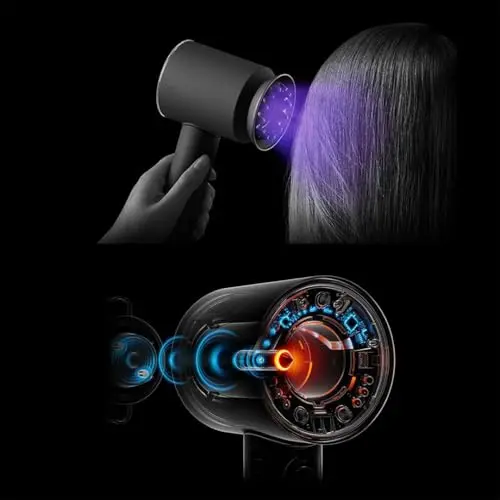
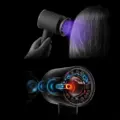
This is why the dryer exists. An infrared sensor at the outlet measures the distance to your head several times a second and lowers the heat as you get closer. Dyson quotes 55 °C with the mode on, and we measured 55-56 °C on the highest setting and 52-53 °C on the middle one, with the thermometer two centimetres from the gentle air attachment. With the mode off, the same settings gave 91-93 °C and 68-70 °C, which is the range of any powerful dryer.
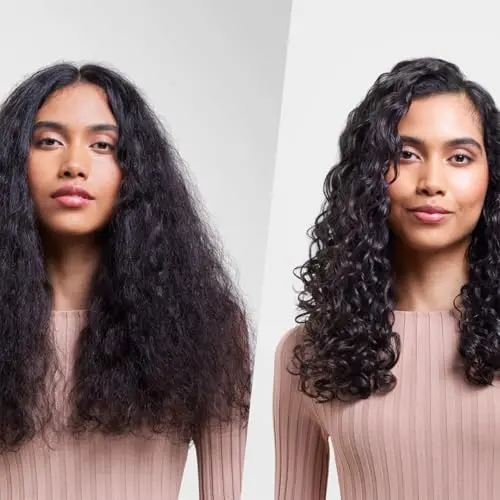
On top of that there’s the heat control found across the range, which monitors the outlet air continuously so it never goes above the chosen temperature, plus negative ions to reduce static. Over two weeks of drying with warm air and a final cool shot, the scalp didn’t complain once, with the mode on or off at a normal distance, and the hair was less frizzy than with our tester’s usual dryer. With the diffuser, curls came out defined and soft, without that rough feel that dryers which strip the hair leave behind.
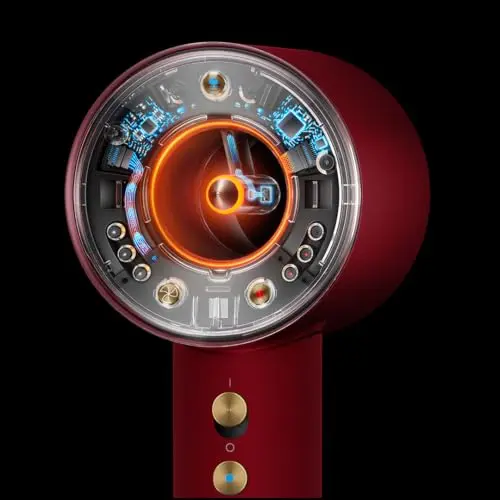
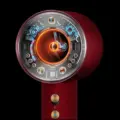
The capsule inside changes colour with the heat (blue for cold, then yellow, orange and red at maximum), so you know how hot the air is without looking at the buttons. Compared with a mid-range ionic dryer, what you’re paying for here is protection that works automatically and doesn’t depend on you remembering to turn the heat down.
Weight and noise – Score: 8.4/10
At 664 g on the scales (706 g with the concentrator) and with the motor in the handle, it’s one of the best-balanced dryers we’ve tried. In ten minutes non-stop with the arm raised, the weight started to tell on the wrist at minute nine. That’s better than conventional-motor dryers with a front-heavy head, although some digital models are lighter.
Noise is another story. Dyson doesn’t publish a decibel figure, and we measured 79-81 dB at one metre on maximum speed without an attachment, and 81-83 dB with the concentrator. That’s the level of a powerful dryer, with a higher pitch that sounds more like wind than motor, and it’s no quieter than the previous generation. The electronics box on the cable, near the plug, is still bulky, and there’s no strap to tidy away the spare 2.62 m.
The filter sits at the back of the handle. You clean it by twisting off the cap and using a soft brush (never water), and the dryer itself warns you with three flashing lights when it’s time. After two weeks we found small traces of hair, without the warning having come on.
Attachments and versions
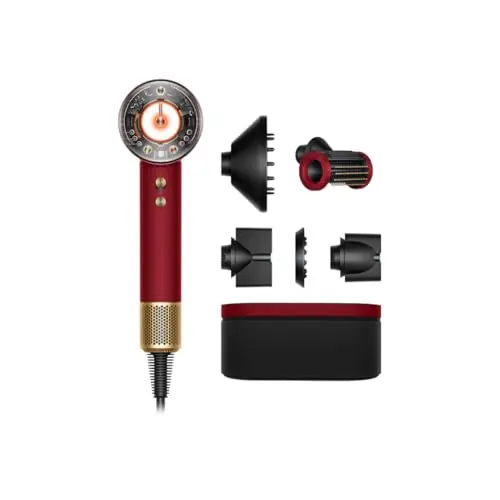
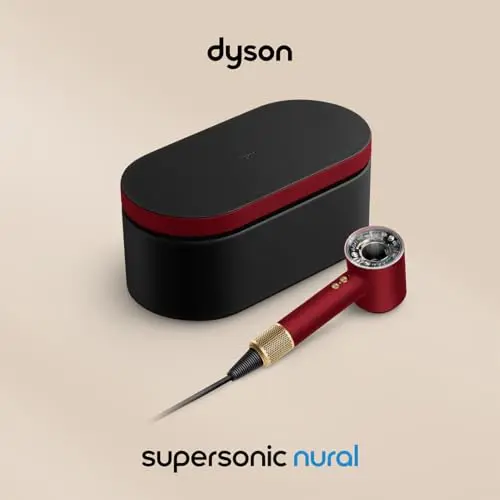
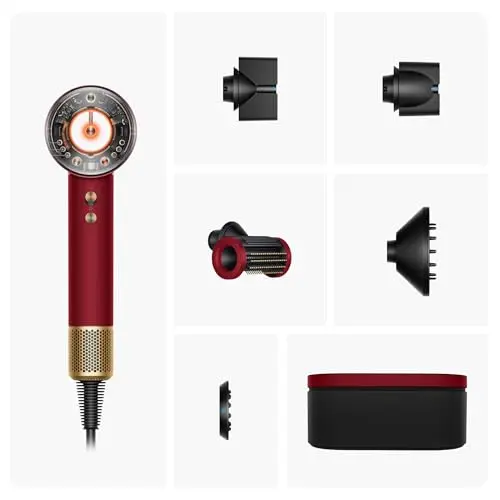
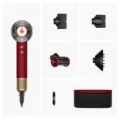
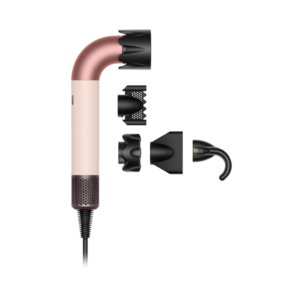
The Straight+Wavy edition we tested comes with the concentrator, a wide smoothing nozzle, the gentle air attachment for sensitive scalps, the diffuser, the anti-frizz attachment and a case. They all attach magnetically, with a firmer grip in this generation, and the dryer recognises each one to bring back your last setting. The anti-frizz attachment is used on hair that’s already dry and straight, passed over the top so loose strands tuck under the outer layer.
The edition sold on Amazon.co.uk is the one designed for curly and coily hair. The dryer is exactly the same; what changes is the set of attachments, with a different diffuser and a wide-tooth comb instead of the wide smoothing nozzle. If your hair is naturally straight or wavy, bear in mind that the UK box doesn’t include the wide smoothing nozzle we used.
Pros
- 55-56 °C measured 2 cm from the nozzle with scalp protect mode on, so you can dry close to the scalp without it stinging.
- Pause detection cuts the heat and lowers the airflow in under a second when you put it down, so you can rest it between sections without warming the surface.
- 664 g with the motor in the handle, which makes it a well-balanced dryer that doesn’t tire your wrist until nine minutes in.
- Settings memory for each attachment, so every nozzle starts with the heat and speed you used last time.
Cons
- 3 minutes 45 seconds to dry long, soaking-wet hair, slower than most digital dryers we’ve timed, and 4 minutes 2 seconds with scalp protect mode on.
- 79-81 dB at one metre and a bulky box on the cable, so it’s no quieter than the previous generation and no easier to put away.
Our test
Test 1: Power and airflow – long, soaking-wet hair after a shower
We dried long hair straight out of the shower, towel-dried no more than usual, with the concentrator fitted, speed and heat on maximum and scalp protect mode off. We timed the full blow-dry until roots and ends felt dry to the touch, repeated it on three different days on the same hair, and added a fourth run with scalp protect mode on to see how much it costs.
The three runs came in at 3:42, 3:48 and 3:45, and with scalp protect mode on the same blow-dry rose to 4:02. Compared with the other digital-motor dryers we’ve measured on the same hair, the Nural is among the slowest, and only clearly beats cheap conventional-motor dryers. If you’re coming from an old dryer, you’ll notice your hair is dry before your scalp heats up. If you’re coming from Dyson’s previous generation, you won’t save any minutes. We can’t say how it behaves on very thick, dense hair, because that wasn’t the hair we tested on.
Test 2: Hair care – two weeks of warm air and a cool shot
We measured the air temperature with a thermometer two centimetres from the gentle air attachment after thirty seconds of running, on the highest and middle settings, three readings each, first with scalp protect mode on and then off. We then dried hair every day for two weeks on the middle heat with a cool shot at the end, using the gentle attachment for the roots and the concentrator for lengths and ends, plus the diffuser on natural-curl days.
With the mode on, the air stayed at 55-56 °C on maximum and 52-53 °C on the middle setting; without it, 91-93 °C and 68-70 °C. That’s the difference between being able to rest the nozzle against your head and having to hold it away, and in two weeks the scalp never complained once. Frizz at the end was lower than with our tester’s usual dryer, and curls came out of the diffuser defined and soft. What we can’t vouch for is the long-term effect on the hair fibre, because two weeks isn’t enough to judge that.
Test 3: Weight and noise – ten minutes with the arm raised
We placed the sound meter one metre away at ear height, with the dryer on maximum speed, and took three ten-second readings without an attachment and three with the concentrator. We weighed the dryer with and without the nozzle, then dried for ten minutes non-stop with the arm above shoulder height, noting the minute the weight started to tell on the wrist, whether the cable comfortably reached the bathroom socket and what had built up in the rear filter after two weeks.
The sound meter read 79-81 dB without a nozzle and 81-83 dB with the concentrator, and the scales 664 g without an attachment and 706 g with it. The weight made itself felt at minute nine, the cable had length to spare and pause detection took between half a second and a second to cut the heat when we put it down. There were small traces of hair in the filter, without the warning coming on. If noise is your priority, we can’t tell you this dryer will solve it.
If you’d like to know more about what to look for, take a look at our guide to the best hair dryers, where you’ll find the best models we’ve tested to help you choose the right one for you.
Contents
Other models we analysed

Real tests · No sponsorships
Marco Blasco
I'm Marco Blasco and I've been testing and comparing home appliances for more than five years. My ratings come from real tests, first-hand experience and objective criteria, explained transparently. Our tests are carried out in Spain. Through detailed guides and comparisons I've helped thousands of people choose with more confidence, and I can do that because I'm completely independent of the brands.