
De’Longhi Rivelia EXAM440.55.G Bean to Cup Coffee Machine

Gallery

Deals
This page contains affiliate links: if you buy through them we may earn a commission, at no extra cost to you. Prices and availability may change. As an Amazon Associate, La Casa Sibarita earns from qualifying purchases.
Pros
-
Quiet grinder, 66.4 to 66.8 dB at one metre on the medium setting
-
69 °C in the first cup and 70 °C in the fifth of a five-coffee run
-
Bean hoppers swap in about three seconds with no flavour mixing
-
Dense, even milk foam from a fridge-friendly carafe
Cons
-
1.4-litre tank good for 26 espressos, with grounds and drip tray to empty every ten or so
-
One grind setting shared by both hoppers, so very different roasts don't both extract well
Contents
Technical specifications
| Material | Stainless steel and plastic |
|---|---|
| Milk frother | Yes |
| User profiles | Yes |
| Removable brew group | Yes |
| Coffee grinder | Yes |
| 2 coffees at once | Yes |
| Coffee types | Beans |
| Water tank capacity | 1.4 L |
| Cup warmer | No |
| Type | Bean-to-cup |
| Pressure | 19 bar |
Description
Summary
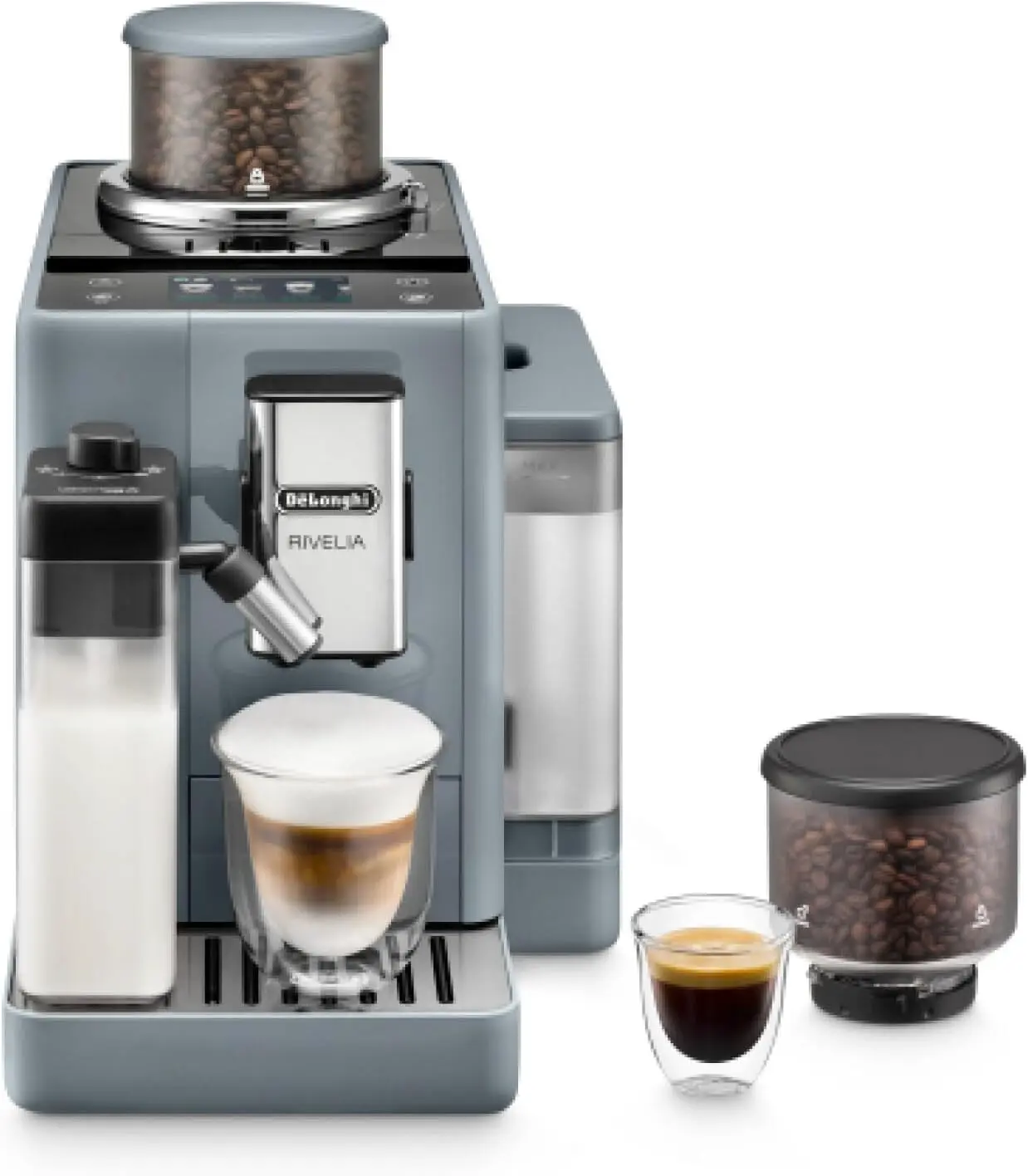
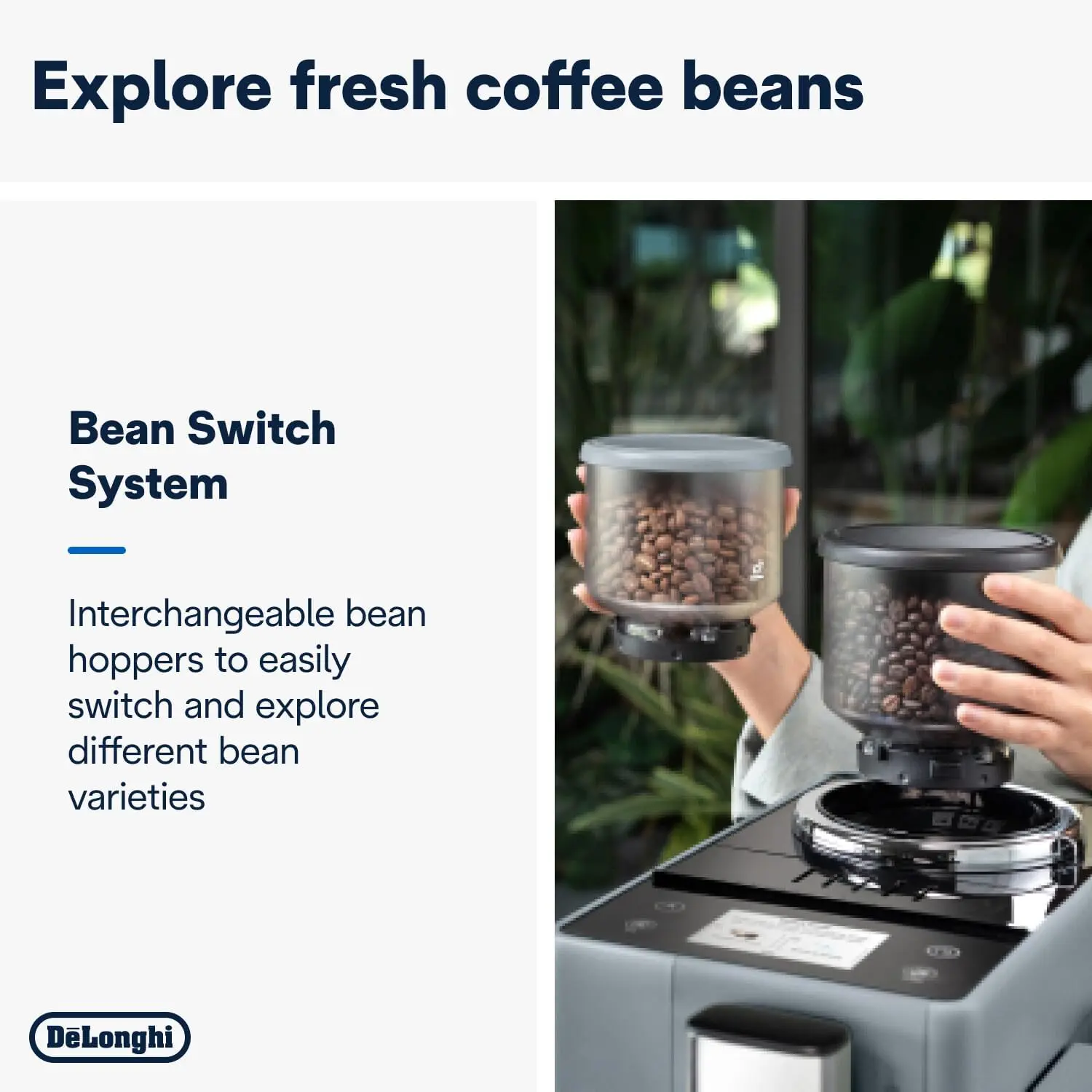
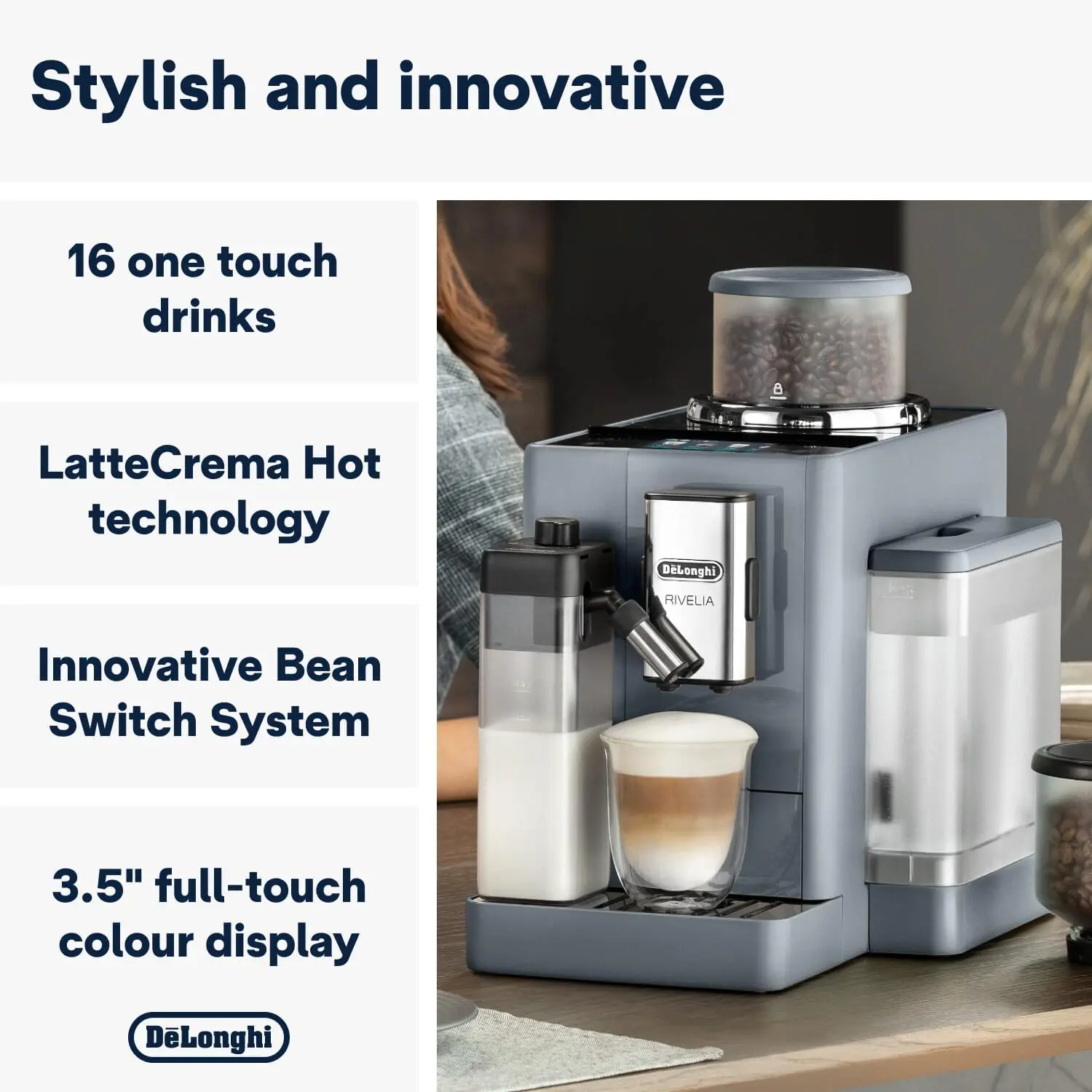
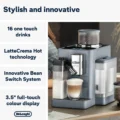
Two bean hoppers that swap over in seconds are the signature feature of the De’Longhi Rivelia in Pebble Grey (EXAM440.55.G). They let you switch between a regular coffee and its decaf without emptying the hopper or keeping the second bag of beans in a jar.
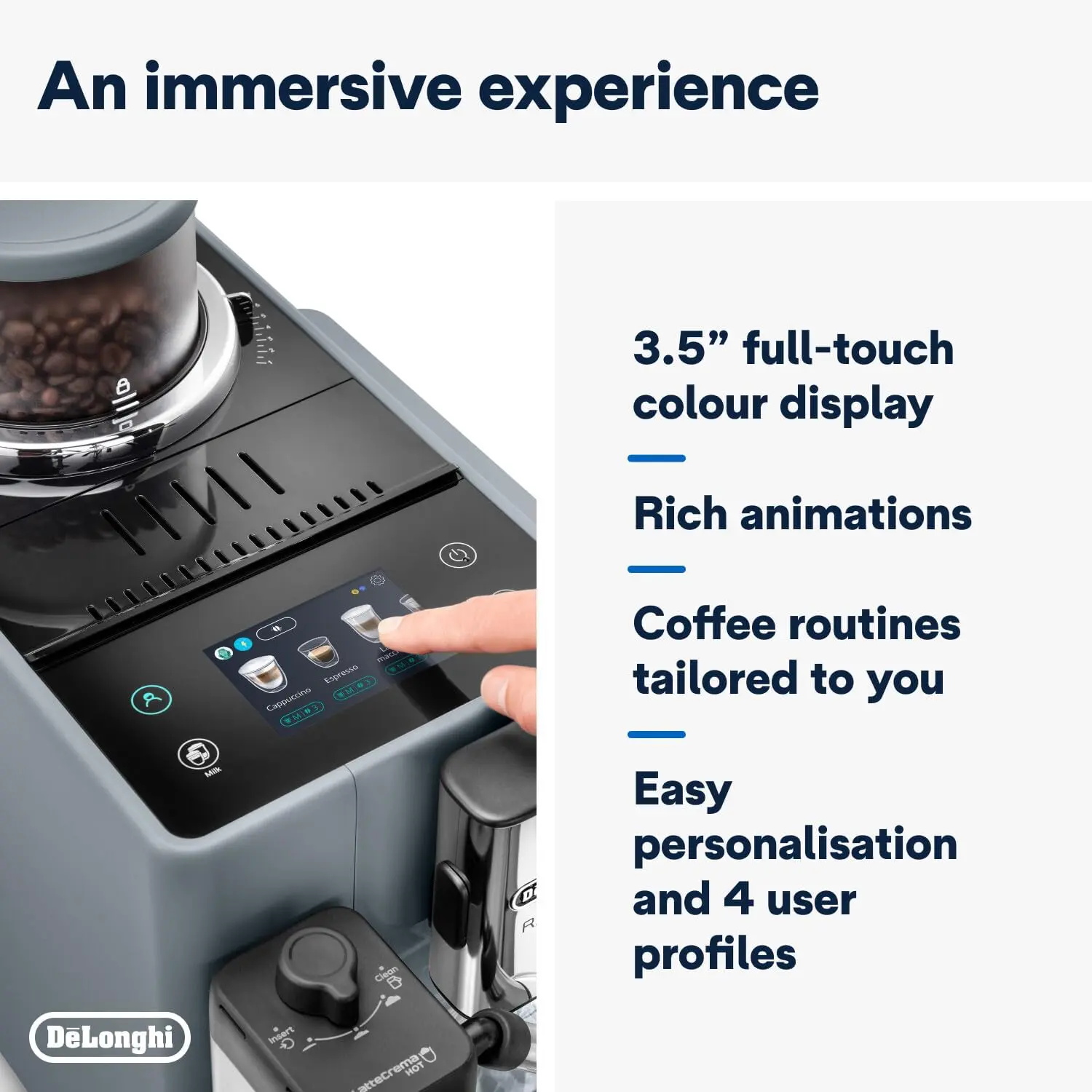
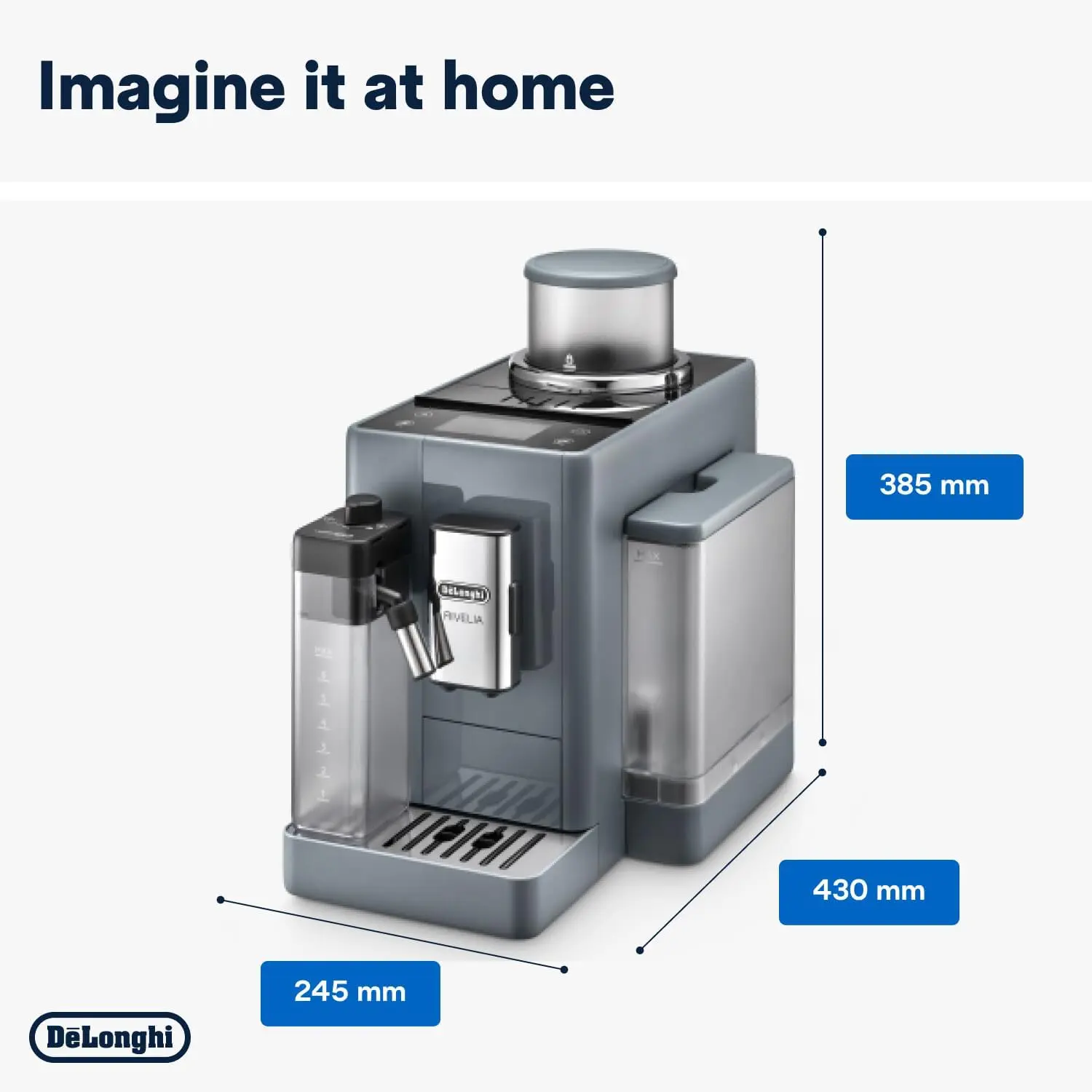
It’s a compact bean to cup machine with 16 drinks on a 3.5-inch touchscreen and an automatic milk frother that makes cappuccinos and lattes at the touch of a button. What surprised us most during testing was how little noise it makes when grinding and how consistent its coffees are from one cup to the next.
Its weak spot is capacity. The water tank is smaller than on many rivals, so you’ll be refilling it often if your household gets through a lot of coffee in a row. On top of that, the grounds drawer and drip tray need emptying frequently, which is common on compact bean to cup machines.
If you value a compact design, the convenience of pressing a button and walking away, and a discreet grinder, the Rivelia will suit you. If your home gets through a huge number of coffees back to back and you don’t want to keep an eye on the water, you’re better off with a machine that has a bigger tank.
We tested the Rivelia in Spain, and it’s exactly the same model sold on Amazon.co.uk, with the same EXAM440.55.G reference and Pebble Grey finish.
Analysis and verdict
Coffee quality – Score: 8.5/10
The Rivelia brews with a 19 bar pump and grinds the beans just before each cup. In our run of five coffees in a row with the same recipe, each one took between 45 and 47 seconds from pressing the button to the last drop. A two-second spread points to a very consistent machine. On a bean to cup machine that time also includes grinding and tamping the puck, which is why it’s longer than on a traditional espresso machine.
The crema was fairly even across the whole run, and the last cups weren’t any thinner than the first. If you serve several coffees in a row, whether at breakfast or after a meal with guests, it’s stable behaviour that saves you babysitting the machine.
It doesn’t score higher because you give up the fine control of a manual machine. You can adjust volume and strength on the screen, but not the exact dose or extraction time, so if you like tweaking every variable to bring out the nuances of a particular coffee, there’s less room to play. In return, there’s no mess and the result is repeatable without any effort.
That consistency shows most in milky drinks. Because the coffee comes out the same cup after cup, the first cappuccino of the afternoon tastes like the last, and that’s exactly what you want from a bean to cup machine the whole family uses.
Grinder – Score: 8.4/10
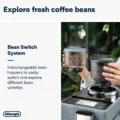
The grinder works with two interchangeable bean hoppers. When you swap them, the machine detects the change and purges the beans left in the grinder, so the first cup of the new coffee doesn’t carry traces of the previous one. It’s a handy system if your household drinks both regular and decaf, because it saves emptying the hopper every afternoon and keeping the other beans in a jar.
It grinds evenly. On white paper, all three grind settings came out uniform with no unground pieces. The finest leaves loose dust, the medium barely any and the coarsest none, with clearly larger particles. On the medium setting each dose takes 8.3 seconds on average and very little is left in the chute, so there’s no need to keep cleaning it.
Noise is its other strong point. It sounds low and restrained while grinding and only gets a bit louder at the extremes of the grind range, where the motor works harder. If you make your first coffee early in an open-plan kitchen, you’ll notice the difference compared with noisier grinders.
The score stops here because of the grind setting, which is a single one shared by both hoppers. If you alternate a dark roast with a very light one, one of them will be under- or over-extracted, because the grind that suits one isn’t what the other needs. The system works best with two similar coffees, such as the same origin with and without caffeine.
Capacity – Score: 7.7/10
The water tank sits at the side and fills from the top without taking it out, which is handy when you’ve got the jug in your hand and the machine tucked under a wall cupboard. The problem is its size, which is smaller than on many rivals, and it’s what bothered us most during testing.
The hopper holds around 250 g of beans, and the grounds drawer and drip tray want emptying roughly every ten coffees. That’s manageable for a couple, but in a house with several coffee drinkers you’ll end up doing one of these jobs almost every day.
For one or two people having two or three coffees a day, it’s a size you can live with easily. In homes that get through coffee after coffee, the machine will ask for water and emptying more often than you’d like, and that’s where it loses points to models with larger tanks.
One way to make it easier is to fill the tank every evening when you tidy the kitchen, just as you’d empty the dishwasher. The machine then starts each morning with a full tank and refills stop catching you halfway through a coffee.
Ease of use, milk and maintenance
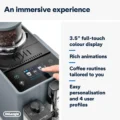
The 3.5-inch touchscreen splits the 16 recipes into two groups, coffee only and coffee with milk, and stores up to 4 user profiles, so everyone gets their drink back without changing settings. You’ll learn it in a couple of goes, and the panel stays uncluttered, with no menus to get lost in. It also makes two coffees at once with a single touch, which is useful if you’re serving breakfast for two at the same time, and anyone who always has the same drink can save it in their profile without adjusting volume or strength every morning.
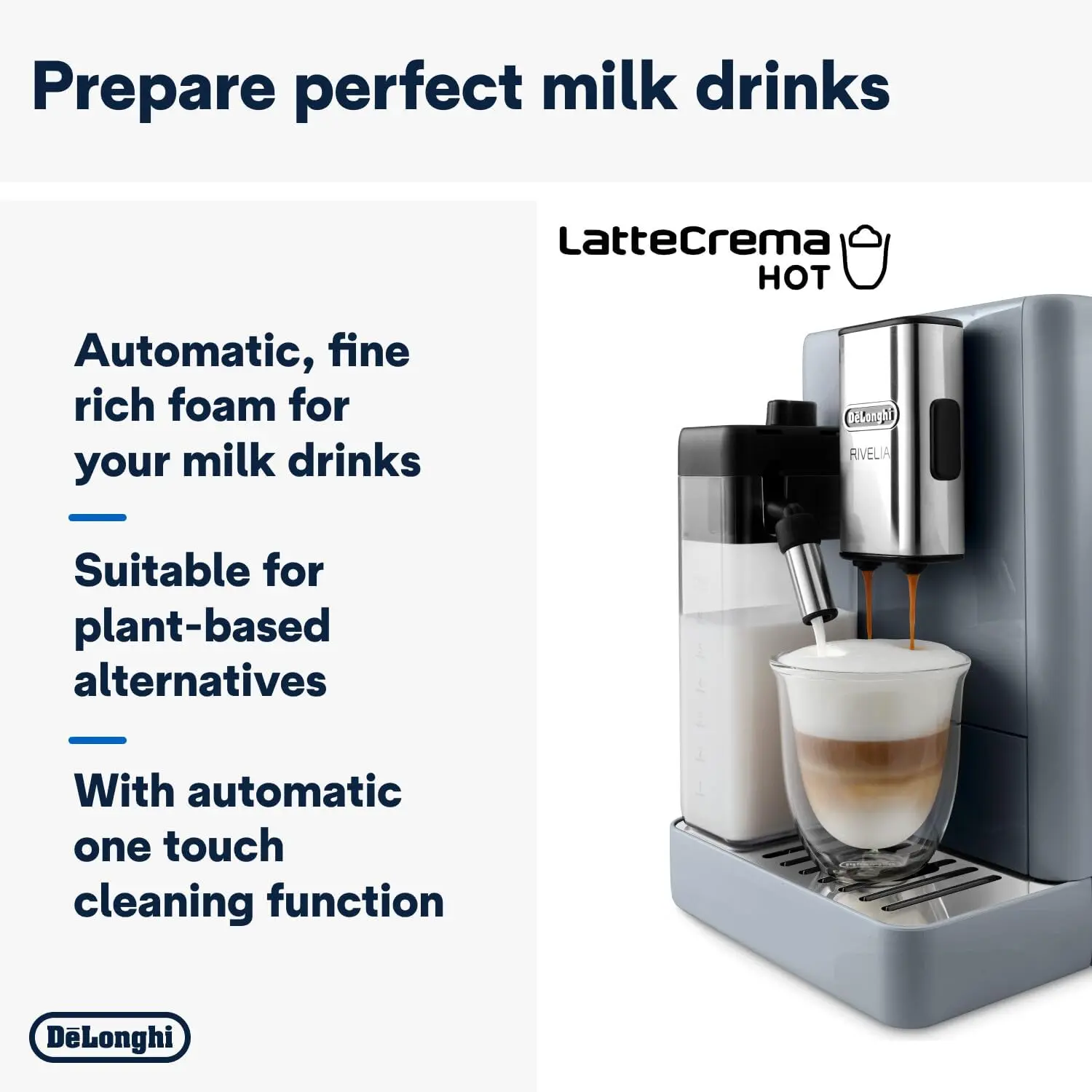
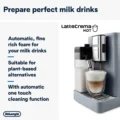
The automatic frother uses a carafe that can go in the fridge and runs a rinse after every use, so you can store leftover milk in the carafe and bring it back out for the next cappuccino. With semi-skimmed milk at around 4 °C, we got dense, even foam with no large bubbles. There’s no cold extraction, so iced coffee is a hot espresso poured over ice.
The rest of the maintenance is what you’d expect from a bean to cup machine. You empty the grounds and drip tray as often as we’ve described, wash the milk carafe when needed and now and then take out the brewing unit to rinse it under the tap and let it dry before putting it back.
All of this is in plain sight and within easy reach. The side tank, milk carafe and bean hoppers are all handled from the outside without moving the machine, so the weekly maintenance doesn’t mean pulling it out from under the cupboards or shifting it along the worktop.
Who we recommend it for
The Rivelia suits you if you value a compact design, the convenience of pressing a button and walking away, and a grinder you can barely hear. It’s also a good match if your household drinks two different coffees, say a regular and a decaf, and you want both ready to go without tipping beans from one hopper to another.
We don’t recommend it for homes that make a huge number of coffees back to back where nobody wants to keep topping up the water. In that situation the tank is too small, and the convenience of two hoppers doesn’t make up for the refills.
If you’re coming from a pod machine, the most obvious change is grinding fresh beans and choosing the coffee you like rather than the one a pod brand sells. The routine is similar, press and wait, but with a few more emptying and cleaning jobs each week.
Pros
- Between 66.4 and 66.8 dB at one metre while grinding on the medium setting, a restrained sound for making your first coffee while the house is still quiet.
- 69 °C in the first cup and 70 °C in the fifth, in a run of five coffees in a row that didn’t lose any heat.
- Bean hopper swap in about three seconds, with no mixing of flavours when alternating a medium roast with its decaf.
- Dense, even foam with semi-skimmed milk at around 4 °C, from an automatic frother with a carafe that can go in the fridge.
Cons
- 1.4 litres of water, good for 26 espressos, plus grounds and a drip tray that need emptying roughly every ten coffees, so in coffee-loving households it needs frequent attention.
- A single grind setting for both hoppers, so with very different roasts one of them will be less well extracted.
Our test
Test 1: Coffee quality – five coffees in a row with the same recipe
We made five coffees back to back with the same recipe and timed each one from pressing the button until the coffee stopped flowing. The times were 45, 45, 46, 46 and 47 seconds. In the cup we measured 69 °C for the first and 70 °C for the fifth, and the crema was fairly even throughout the run.
For you, that means you can serve several coffees in a row, for guests or the whole family, without the last one arriving colder or with poorer crema than the first. The few extra seconds compared with a traditional espresso machine are the price of having the machine grind, dose and tamp for you.
Test 2: Grinder – fine, medium and coarse grinds, time per dose, noise and residue
We ground at the finest, medium and coarsest settings and checked the results on white paper for unground pieces and loose dust. We then timed three doses on the medium setting, took noise readings at one metre and looked for residue in the chute. All three grinds came out uniform with no unground pieces; the fine one left loose dust, the medium very little and the coarse none, with clearly larger particles. The doses took 8.3, 8.2 and 8.4 seconds, the noise readings were 66.4, 66.8 and 66.6 dB and only a few small particles stuck to the outlet, with no build-up. Separately, we timed the hopper swap while alternating a medium roast with its decaf. Turning, lifting out and fitting the other hopper took about three seconds, the machine offered to purge the remaining beans and we found no mixing of flavours in the cup.
For you, that means the medium setting works for your everyday morning coffee with no dust or residue to clean up, and you can use the machine early in an open-plan kitchen without the grinder drowning everything out. Changing coffee takes a single movement, so keeping decaf ready for the afternoon is no longer a chore.
Test 3: Capacity – a full tank and coffees until the refill
We filled the 1.4-litre tank to the maximum and made 40 ml espressos, our reference cup, until it needed refilling. We got 26 espressos, allowing for purges and the water the machine uses internally.
For you, that means several days of coffee for a couple, but an almost daily refill in a house with several coffee drinkers who also have milky drinks or long coffees. Filling from the top at the side makes the refill easy, but it doesn’t stop you having to do it often.
If you’d like to know more about what to look for, have a look at our guide to the best bean to cup coffee machines, where you’ll find the best models we’ve tested and help choosing the right one for you.
Contents
Other models we analysed

Real tests · No sponsorships
Marco Blasco
I'm Marco Blasco and I've been testing and comparing home appliances for more than five years. My ratings come from real tests, first-hand experience and objective criteria, explained transparently. Our tests are carried out in Spain. Through detailed guides and comparisons I've helped thousands of people choose with more confidence, and I can do that because I'm completely independent of the brands.