
Tassimo My Way 2 Pod Coffee Machine

Gallery
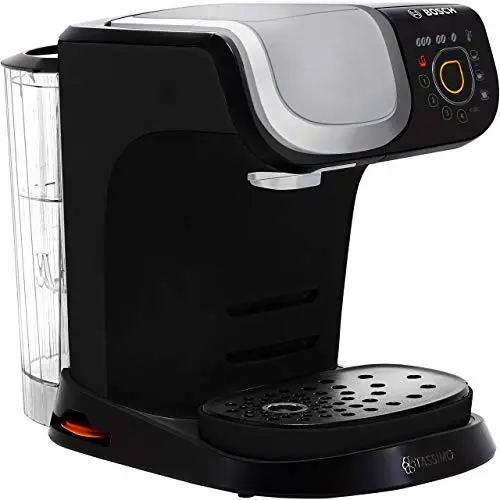
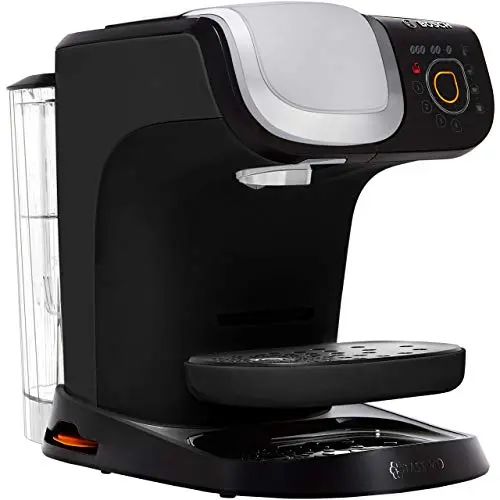
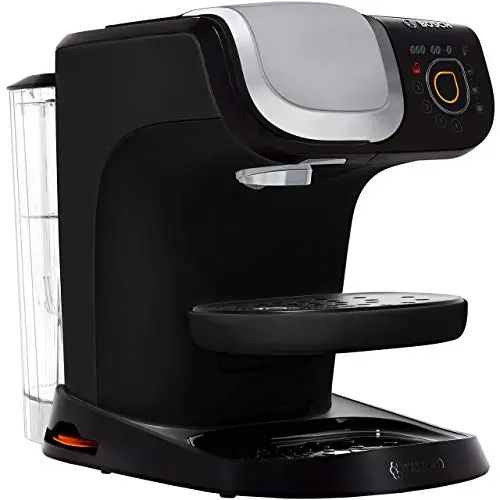
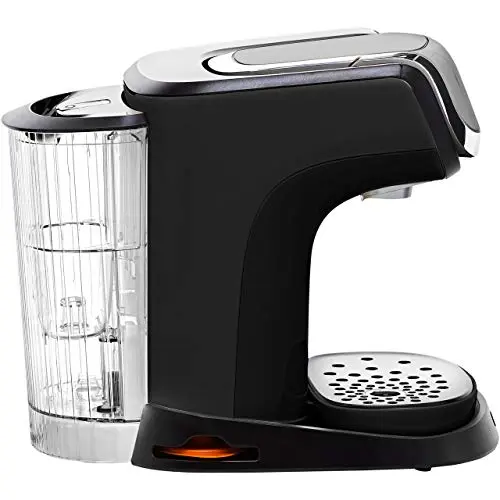
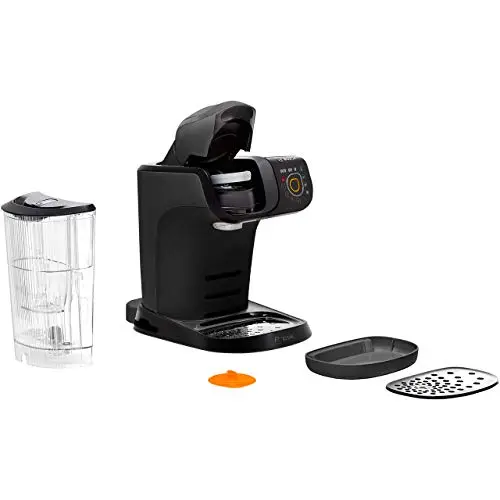
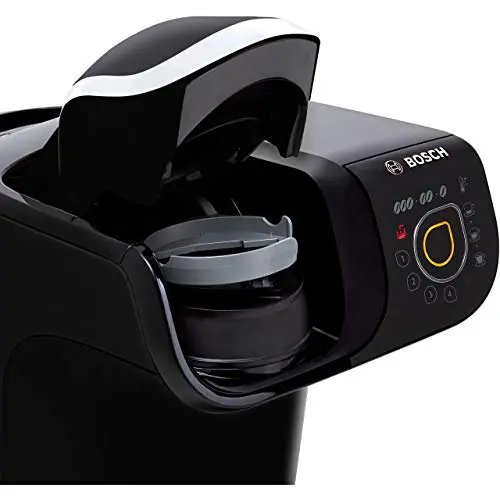
Deals
This page contains affiliate links: if you buy through them we may earn a commission, at no extra cost to you. Prices and availability may change. As an Amazon Associate, La Casa Sibarita earns from qualifying purchases.
Pros
-
Reads each pod's barcode and sets volume and temperature itself, with almost no learning curve.
-
1.3 litre tank makes four or five drinks in a row, enough for a family breakfast.
-
Saves up to four favourite profiles, each with its own strength, temperature and size.
-
Built-in BRITA filter reduces limescale, especially useful in hard-water areas.
Cons
-
Low 3.3 bar pressure gives decent drinks but without the dense crema of a portafilter espresso.
-
The used pod holds back some coffee even at maximum strength, so a little goes to waste.
Contents
Technical specifications
| Material | Not specified |
|---|---|
| Milk frother | Not specified |
| User profiles | Yes |
| Removable brew group | Not specified |
| Coffee grinder | No |
| 2 coffees at once | Not specified |
| Coffee types | T DISC capsules |
| Water tank capacity | 1.3 L |
| Cup warmer | Not specified |
| Type | Multi-drink capsule machine |
| Pressure | 3.3 bar |
| Capsule container | Yes |
Description
Summary
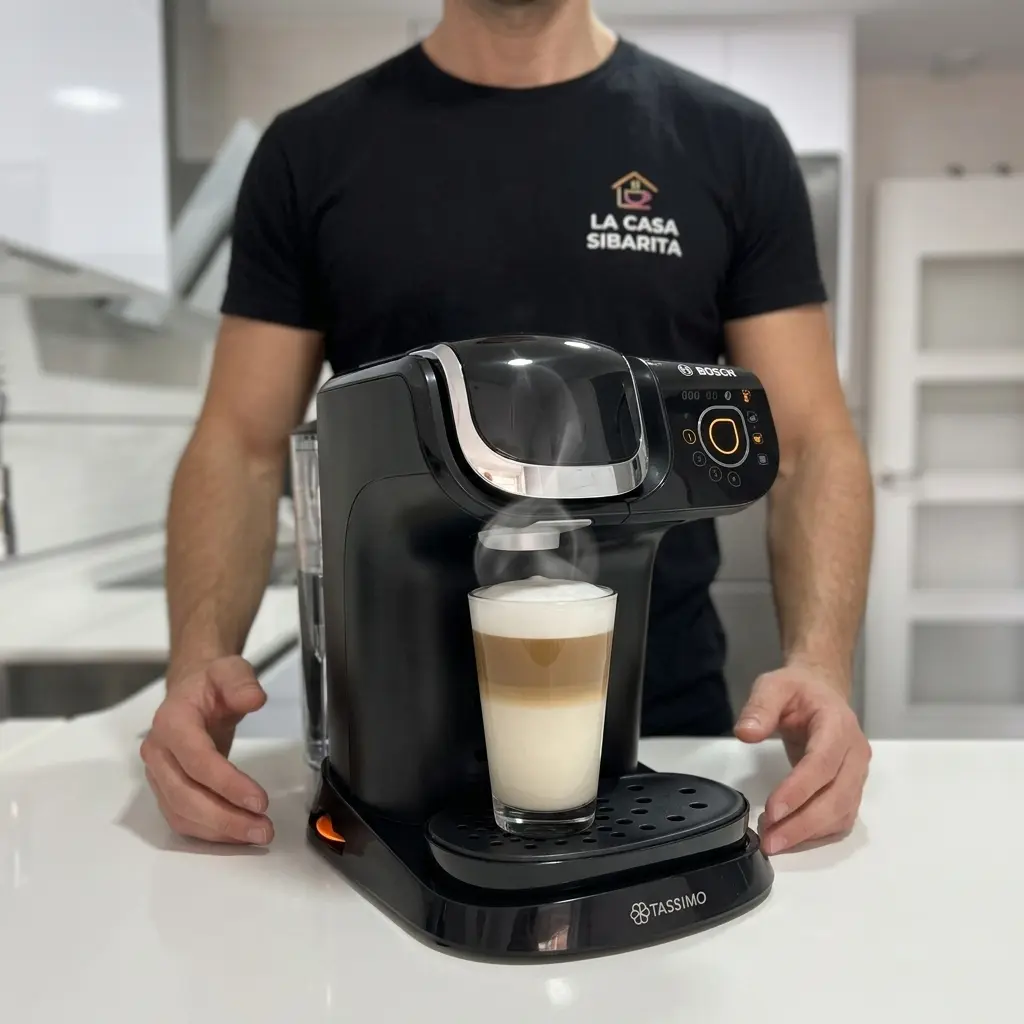
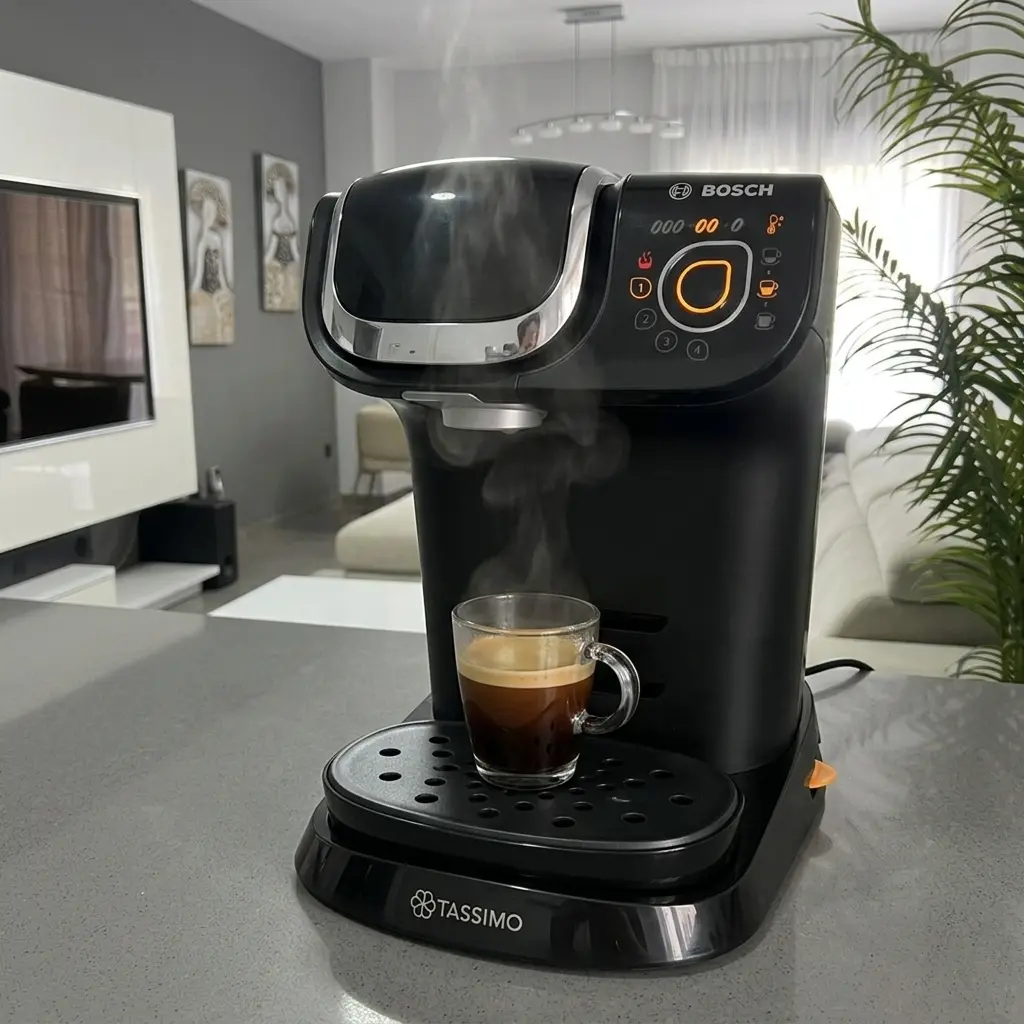
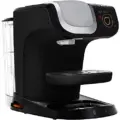
If everyone at home goes their own way, one with a long coffee, another with a cappuccino and the kids with hot chocolate, and you’re tired of fussing over grinding, pressure and learning curves, the Tassimo My Way 2 tackles exactly that problem. You pop in the pod, the machine reads its barcode and makes the drink by itself, without you needing to know anything about coffee.
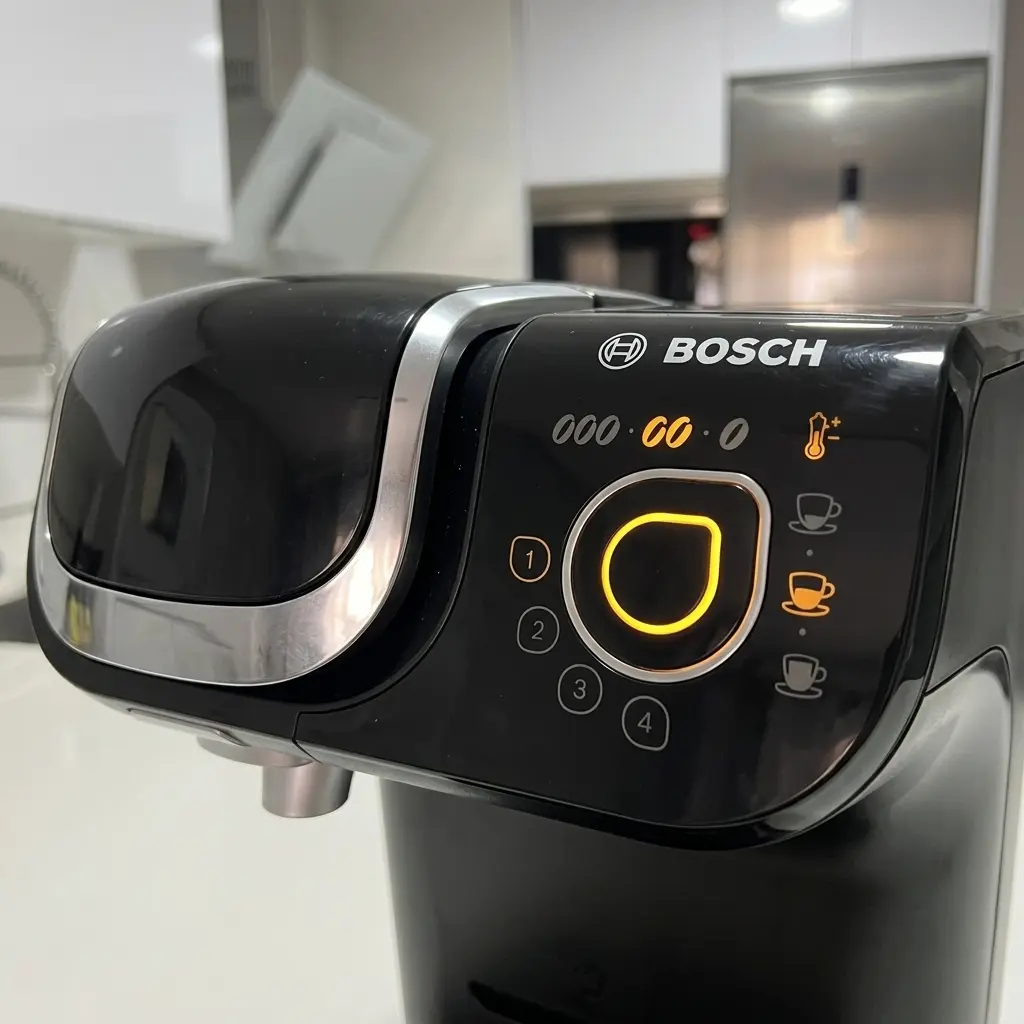
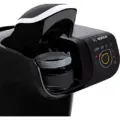
Its big trump card is that automation. Every pod (known as a T DISC) carries a code the machine reads to set the volume and temperature for that particular drink on its own. On top of that, you can tweak strength, temperature and cup size, and save up to four favourite profiles so each member of the household gets their drink with a single touch.
The figures behind it are simple: 1,500 W of power for fast heating, a 1.3 litre tank that copes with several rounds of drinks without refilling, and a built-in BRITA water filter that improves the taste if your tap water is very hard. It’s light (3.3 kg) and sits neatly on the worktop, although its 325 mm depth needs some distance from the wall.
The most honest limitation isn’t specific to this machine but to every pod system. You’re tied to a closed range, albeit one that the Amazon.co.uk listing puts at over 50 drinks from well-known brands such as Costa and Cadbury. Pressure is low (3.3 bar), so don’t expect the crema of a portafilter espresso, and the used pod holds back some coffee that goes to waste.
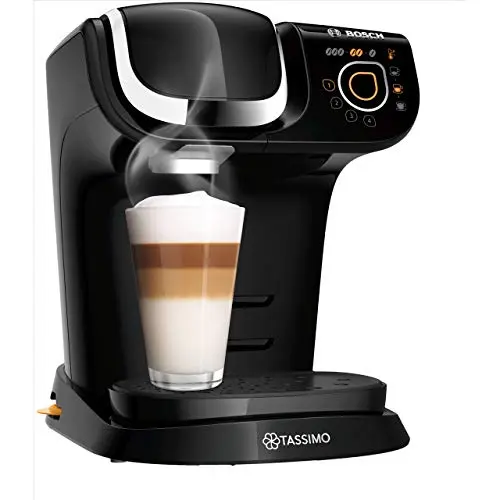
We tested this exact model in Spain, and on Amazon.co.uk it’s sold by Amazon as the TAS6502GB in black, with the same 1.3 litre tank and BRITA filter. For anyone who wants variety and everyday convenience without fuss, it wins us over; for anyone after a barista-style espresso or grinding their own beans, this isn’t the machine.
Analysis and verdict
Design – Score: 7.8/10
The dimensions matched the stated 290 mm high, 230 mm wide and 325 mm deep, and on the scales it came in at around 3.3 kg with the tank empty. The footprint is modest in width, but that 325 mm depth means leaving space from the wall if you have a wall cupboard above. It’s the main reason this is its lowest score.
The touch controls respond first time and the guides for strength, temperature and cup size are clear, so there’s practically nothing to learn. After continuous use the back of the casing gets warm without ever being hot to the touch, and the plastic doesn’t creak when pressed.
Where the finish falls a step behind is in how the tank sits. It has some side-to-side play and you notice it slightly when lifting it out, without it ever becoming a sealing problem. It’s a finishing detail rather than a functional fault, but in a machine that prides itself on a big tank, you’d want a firmer fit.
Cleaning – Score: 8.2/10
The machine runs an automatic clean between drinks, so flavours don’t carry over from one pod to the next. You can go from a hot chocolate to an espresso without washing anything. That rinse is the system’s biggest convenience and what holds the score up.
The trade-off is that it releases a few millilitres into the tray after each cycle, so with long rounds of four or five drinks you’ll need to empty it. It also has a descaling indicator and a built-in BRITA water filter that reduces limescale, which spaces out maintenance if your water is hard.
The unavoidable messy part is the system itself. When you take out the used pod, there’s coffee left inside, even with the strength turned up to maximum. It doesn’t dirty the machine, because the residue goes with the pod, but it’s coffee wasted with every drink.
Capacity – Score: 8.4/10
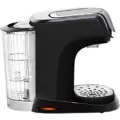
With the 1.3 litre tank full you can make four or five drinks in a row without refilling, and that’s what really shows at a rushed family breakfast, as nobody waits for someone else to go to the tap. Compared with the compact models in the same family, which need refilling far more often, this one sees the whole round through.
It lifts straight up and fills comfortably under the tap, with a clearly visible maximum line so you don’t overdo it, and there’s no need to move the machine to refill it. That’s precisely why this version exists alongside the smaller Tassimo machines.
That said, there’s no option for two coffees at once and no grinder, so you make one drink at a time. For normal home use it’s more than enough, but if you want to serve lots of people at once, that drink-by-drink pace sets the rhythm. We don’t give our own figure for the used-pod container, because we never filled it during testing.
Automation and personalisation
This is the best thing about the machine for the average user. Reading each pod’s barcode worked flawlessly with every variety we tried, setting the volume and temperature by itself, and the option to save up to four favourites means each person in the house presses one button and gets their exact drink.
The 1,500 W here isn’t about extra pressure but about heating the water quickly, and that’s what you notice day to day. In our testing, going from cold to the first drink took around a minute, and subsequent drinks were quicker because the system holds its temperature between cups.
Where it falls short is texture. With 3.3 bar of pressure, you get a decent, hot drink but without the dense crema of a high-pressure espresso. For what the system promises, it more than delivers; just be clear about that if you’re looking for something else.
Pros
- Automatic brewing by reading the pod, setting volume and temperature without you touching anything, with quick heating thanks to the 1,500 W. Ideal if you don’t want to learn about coffee and just want your drink.
- 1.3 litre tank that sees out a full family round of four or five drinks without refilling, designed for homes with several people.
- Four favourite profiles, so each member of the household saves their drink and makes it with one touch.
- Built-in BRITA water filter and automatic rinse between drinks, which improves the taste, reduces limescale and stops a hot chocolate leaving its mark on the next coffee.
Cons
- Low pressure (3.3 bar), so it doesn’t give the crema of a portafilter espresso; it’s decent coffee, not barista coffee.
- 325 mm depth, which means leaving space from the wall, and it’s tied to the closed T DISC range.
Our test
We tested it for three days straight, using tap water run through the built-in filter and pods from several varieties in the range: espresso, long coffee, cappuccino and hot chocolate.
Test 1: Design – worktop fit and finish
The dimensions matched the stated 290 mm high, 230 mm wide and 325 mm deep, and on the scales it came in at around 3.3 kg with the tank empty. The footprint is modest, although that 325 mm depth means leaving space from the wall if you have a wall cupboard above.
After continuous use, the back of the casing warms up without ever being hot to the touch, and there was no creaking when pressing and no scratches around the handle. The only bit of play we noted is the tank’s side-to-side movement when you lift it out, which never led to leaks.
Test 2: Cleaning – automatic rinse and pod waste
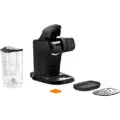
After around twenty drinks, including two cappuccinos made with a milk pod, we took off the tray, tank and pod holder. The automatic rinse between drinks does almost all the work. We detected no flavour carry-over from one pod to the next, not even going from hot chocolate to espresso.
What we did note is that the rinse releases a few millilitres into the tray after each cycle, and in rounds of five cups it needs emptying. We also confirmed the waste we mentioned earlier. When you take the pod out, there’s coffee left inside, even with the strength at maximum, which is down to the system rather than this particular model.
Test 3: Capacity – drinks per tank
We filled the tank to the line and kept making drinks without refilling. We got four or five before it asked for water, counting long coffees and one milky drink, which is exactly the round of a family breakfast. With short cups there’s more margin, but we didn’t settle on a reliable count because we mixed formats.
The tank lifts straight up and refills under the tap without shifting the machine on the worktop. We never filled the used-pod container during the whole test, so we don’t give a figure for how many it takes before jamming.
Test 4: noise and heat in a quiet kitchen
We wanted to know how it behaves in a quiet kitchen first thing in the morning. The pumping is clearly audible during brewing, but not bothersome from the next room, and the pod code reader got every variety we gave it right, without a single recognition error.
If you’d like to know more about what to look for, have a look at our guide to the best pod coffee machines, where you’ll find the best models we’ve tested to help you choose the right one for you.
Contents
Other models we analysed

Real tests · No sponsorships
Marco Blasco
I'm Marco Blasco and I've been testing and comparing home appliances for more than five years. My ratings come from real tests, first-hand experience and objective criteria, explained transparently. Our tests are carried out in Spain. Through detailed guides and comparisons I've helped thousands of people choose with more confidence, and I can do that because I'm completely independent of the brands.