
De’Longhi Nespresso Vertuo Lattissima ENV300 Pod Coffee Machine

Gallery






Deals
This page contains affiliate links: if you buy through them we may earn a commission, at no extra cost to you. Prices and availability may change. As an Amazon Associate, La Casa Sibarita earns from qualifying purchases.
Pros
-
Makes cappuccino and latte macchiato automatically with its built-in milk jug, no frother needed.
-
Six drink sizes in one machine, from a 40 ml espresso to a 535 ml carafe.
-
The barcode reader sets each brew by itself, with no temperature or timing to adjust.
-
1.6 litre tank and 0.5 L milk jug last two or three days with 2-3 coffees a day.
Cons
-
Takes only official Nespresso Vertuo pods, with no third-party compatibles, so daily use costs more.
-
The milk circuit needs frequent cleaning to stop residue affecting taste and durability.
Contents
Technical specifications
| Material | Not specified |
|---|---|
| Milk frother | Yes |
| Coffee types | Single-serve pods |
| Water tank capacity | 1.6 L |
| Type | Capsule coffee machine |
| Pressure | Not specified |
| Capsule container | Yes |
Description
Summary
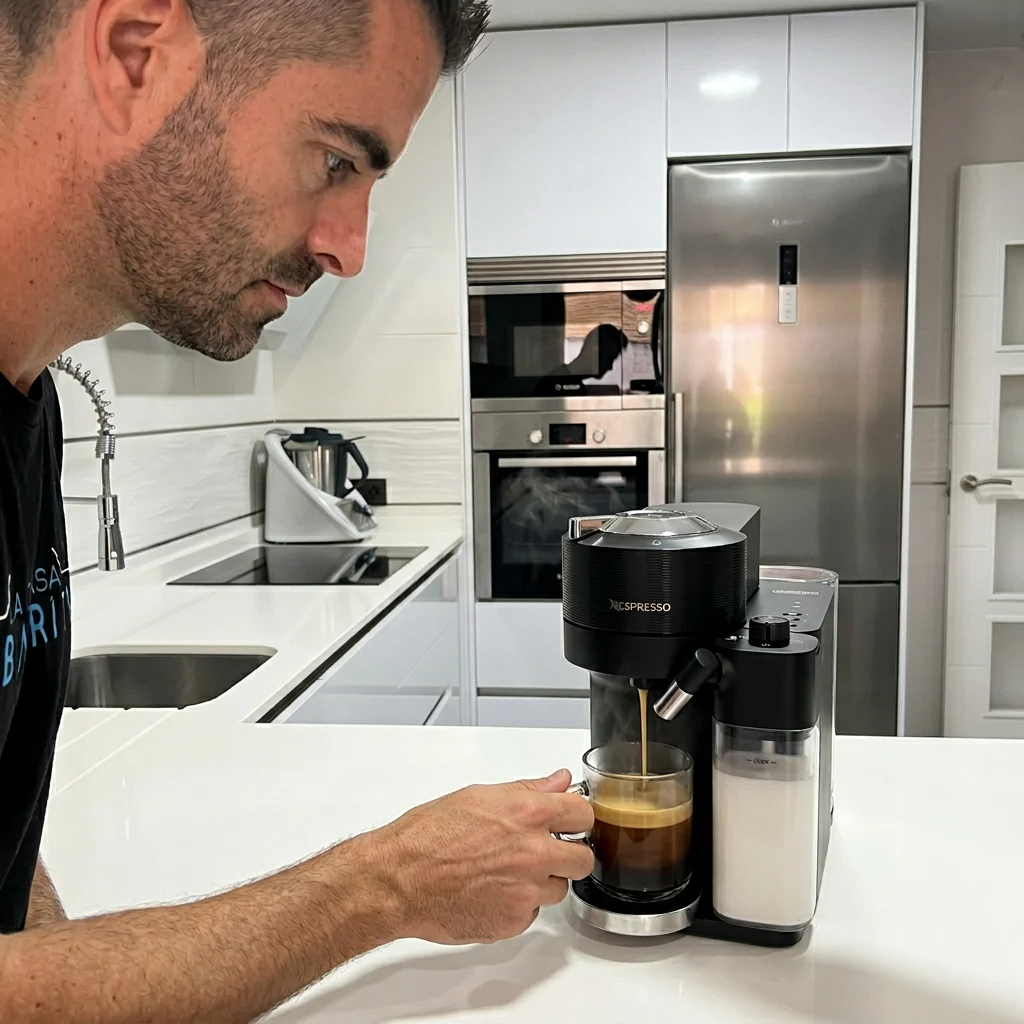
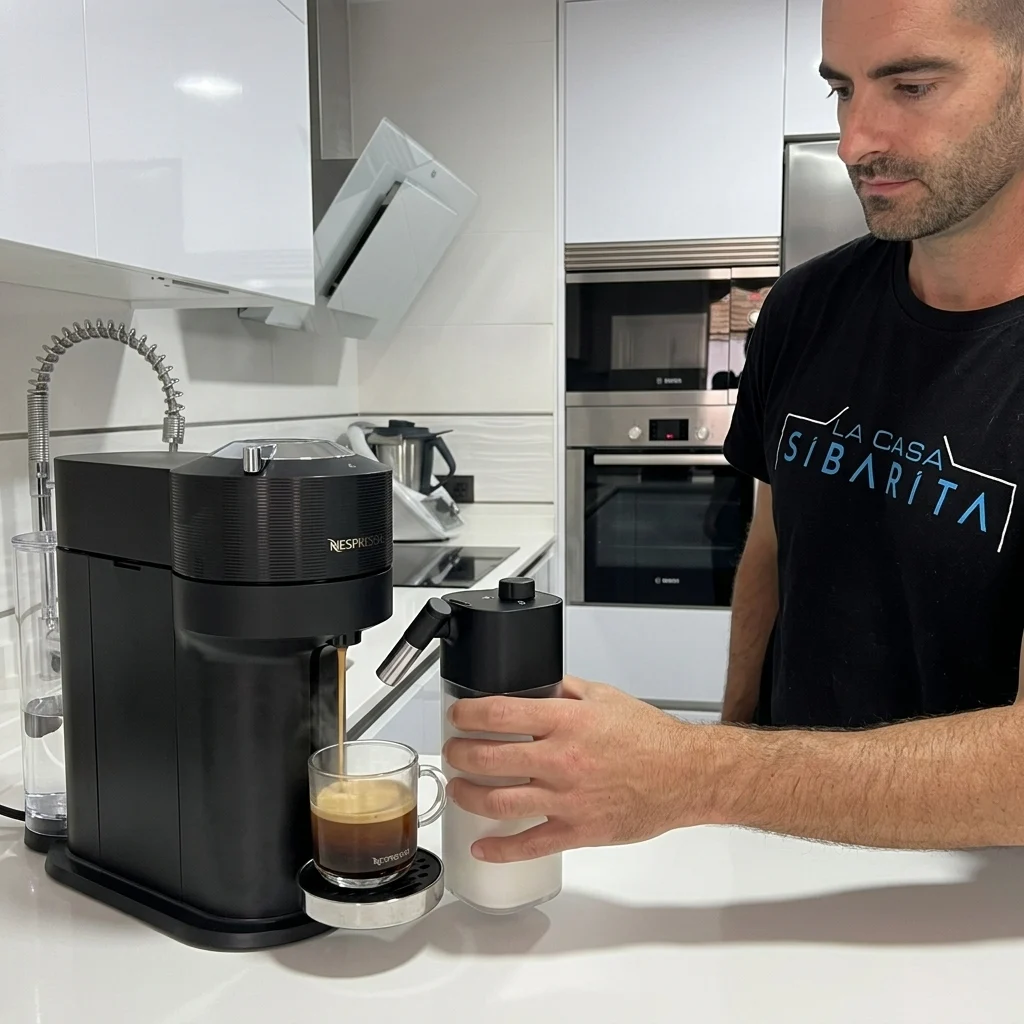
If what you want every morning is a cappuccino or latte macchiato without any fuss, the Vertuo Lattissima is one of the few pod machines that genuinely delivers it at the touch of a button. The built-in milk jug heats and froths automatically, so you don’t need any extra accessory or barista skills. You put the pod in, turn the dial, press and the machine does the rest.
It’s worth putting the timings straight from the start, because that’s where these machines get exaggerated the most. Heat-up from cold took 32 seconds on our stopwatch, practically the 30 the manufacturer quotes. But a full latte macchiato from a cold machine took us between 2 and 2.5 minutes (our reference measurement was 2 minutes 15 seconds), because on top of those 32 seconds you have to add heating and frothing the milk and brewing the coffee. The 30 seconds is the heat-up, not the finished drink.
What convinces us most is the combination of six drink sizes, from a 40 ml espresso up to a 535 ml carafe, with three automated milk options (cappuccino, latte macchiato and hot foam). For a household where people have different tastes, that covers plenty of situations without changing machine. The Amazon.co.uk listing counts five black coffee sizes; our sixth is the 355 ml XL or iced setting.
The biggest downside comes with the Vertuo system. The pods are only sold by Nespresso and carry a proprietary barcode that the machine reads on every brew, and you can’t use third-party or refillable pods. That means your coffee spending is tied to a single supplier for good.
It isn’t a cheap coffee machine, either to buy or to run. But if you value convenience above all and know you’ll be making milky drinks every day, the sums can add up. If you only want a quick espresso, there are cheaper options with a wider choice of pods.
We tested the ENV300.B in Spain, and the one we link on Amazon.co.uk, sold by Amazon, is the same De’Longhi-made ENV300.B in matt and glossy black. The UK listing also mentions Bluetooth and Wi-Fi for automatic software updates.
Analysis and verdict
Design – Score: 7.0/10
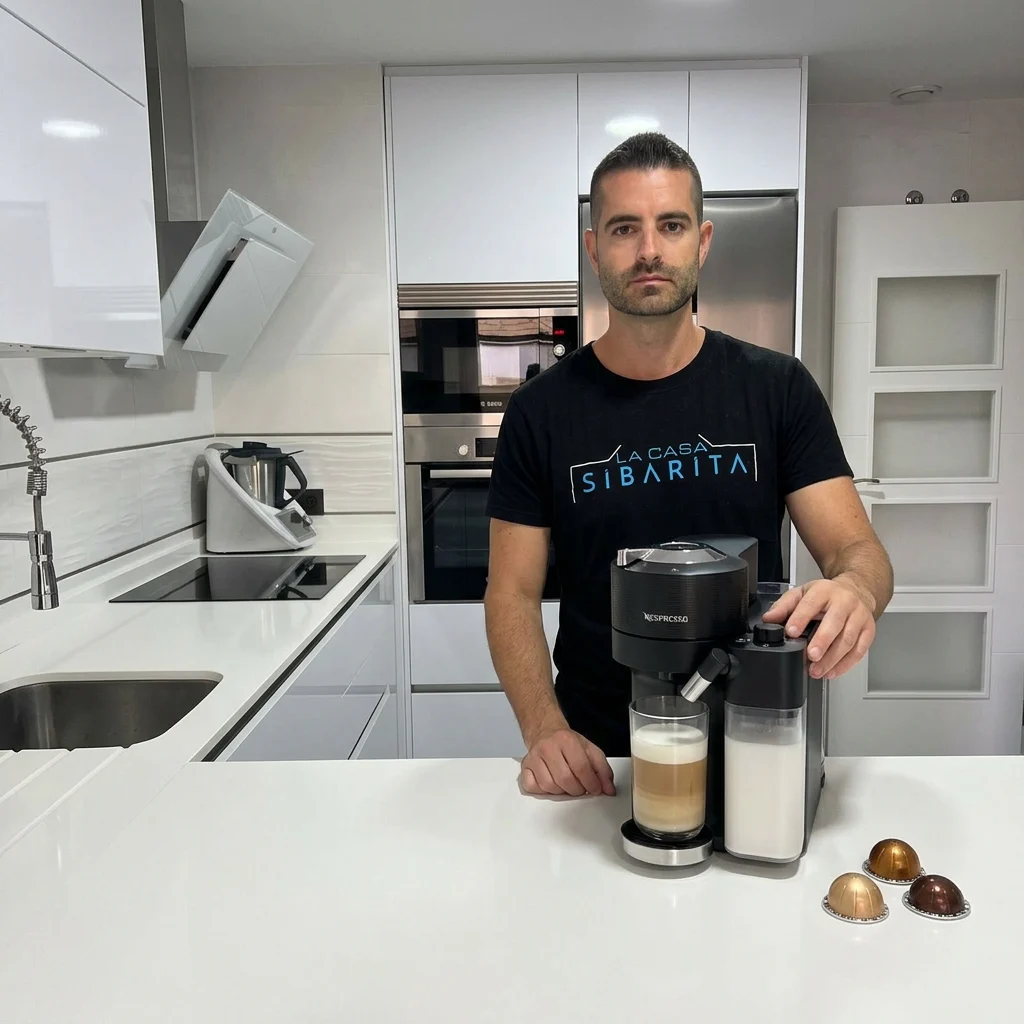
It’s the bulkiest machine in our comparison, and that’s why this is its lowest score. It takes up 190 × 407 × 315 mm and weighs 6.3 kg, so it needs a worktop with depth to spare. Those 407 mm front to back make it the deepest machine on the list. This isn’t one you tuck away in a cupboard between uses.
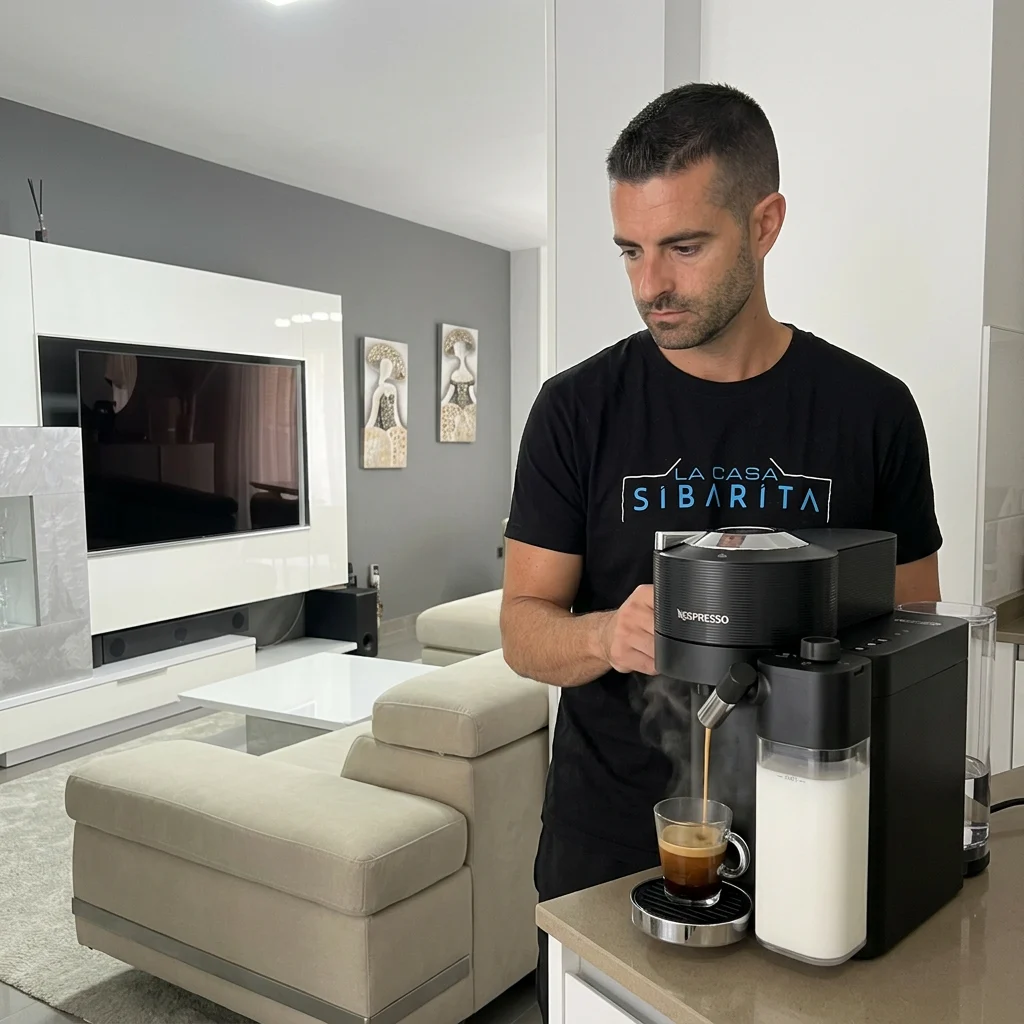
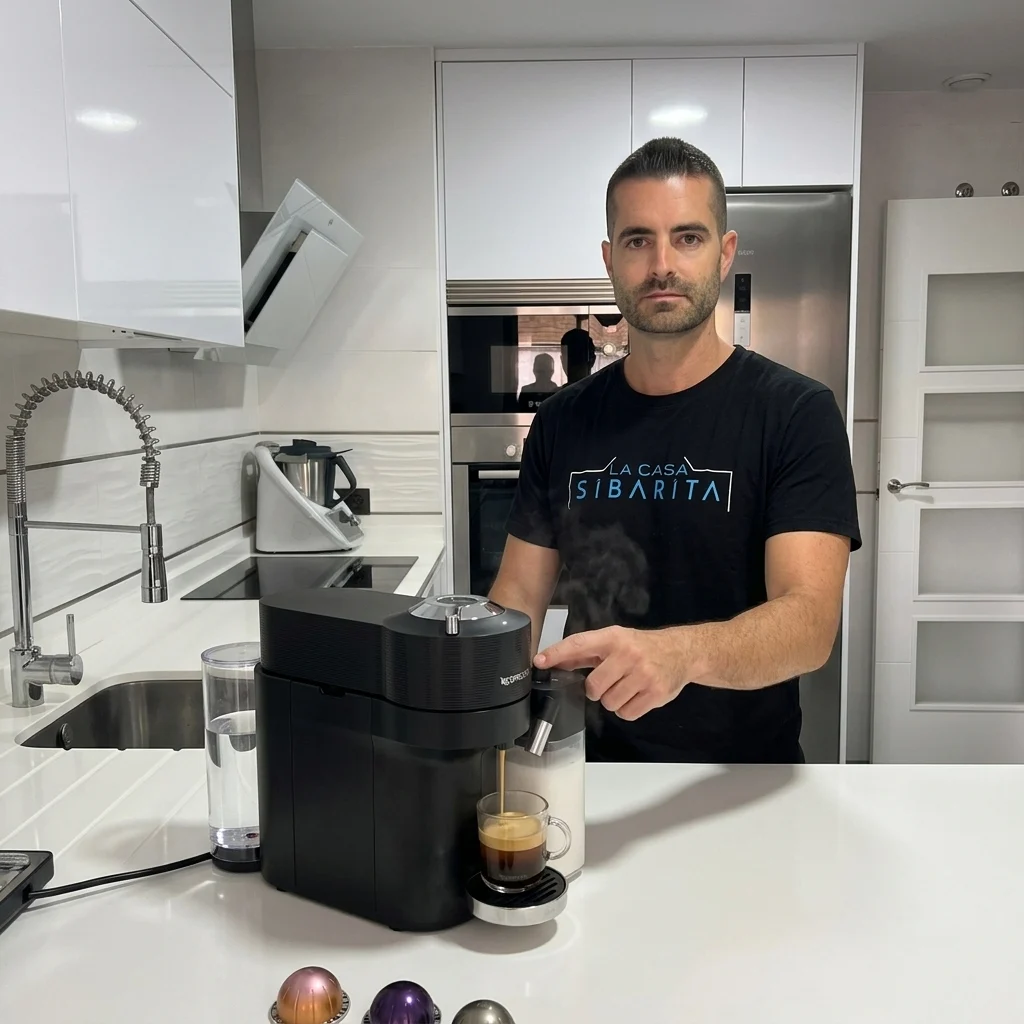
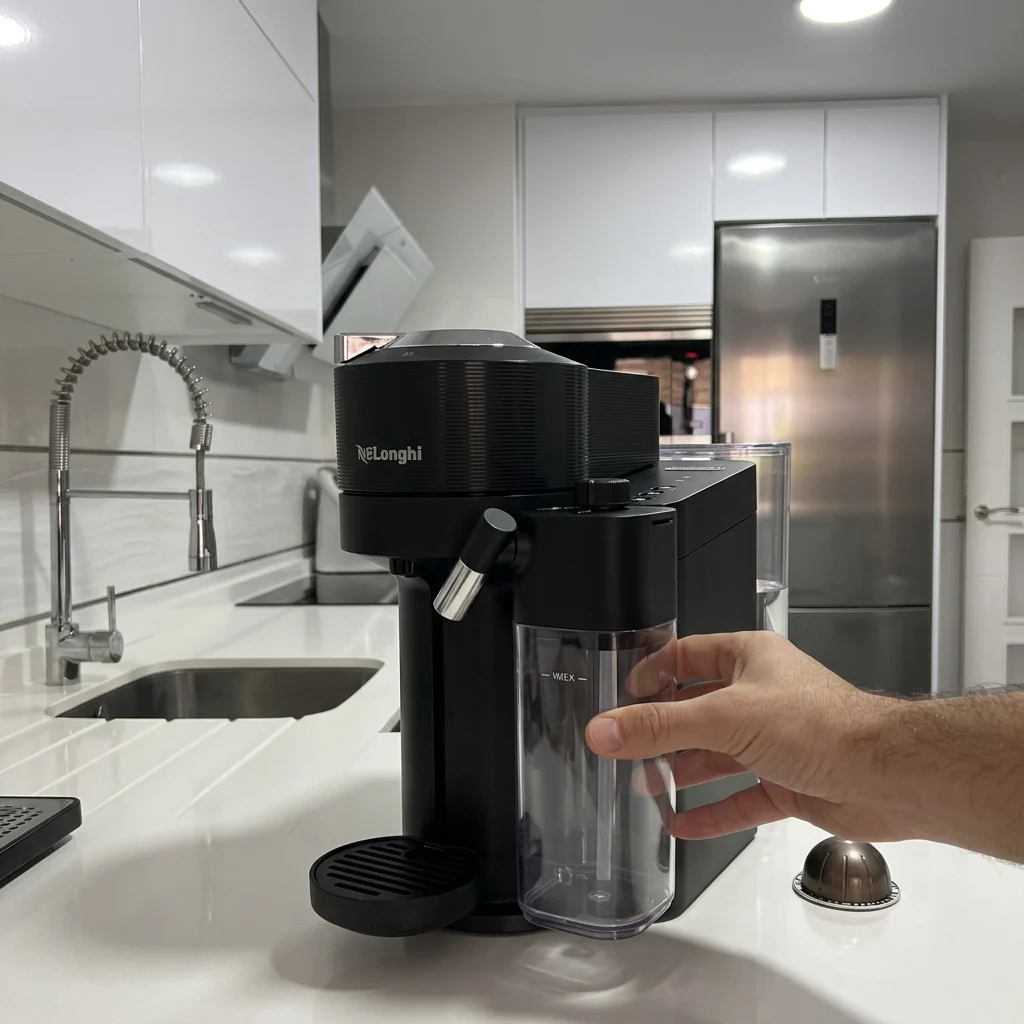
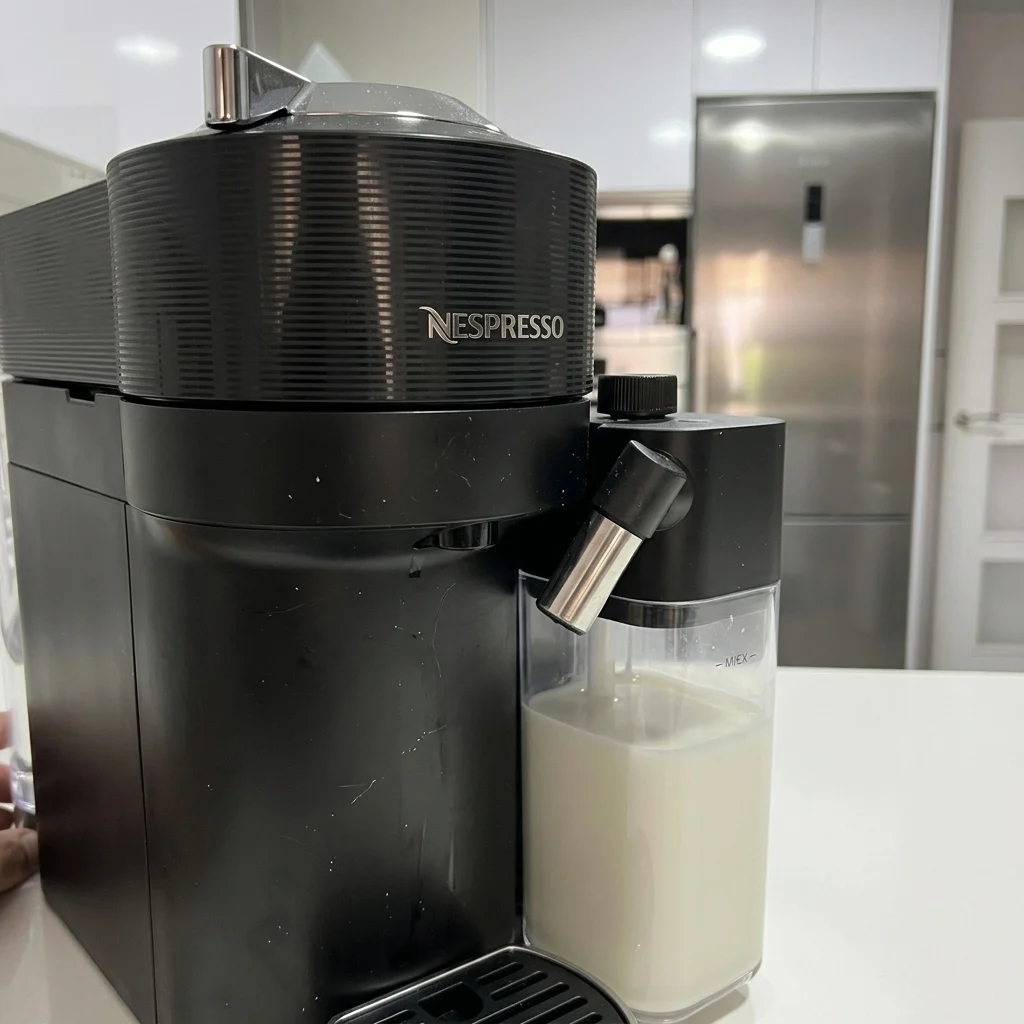
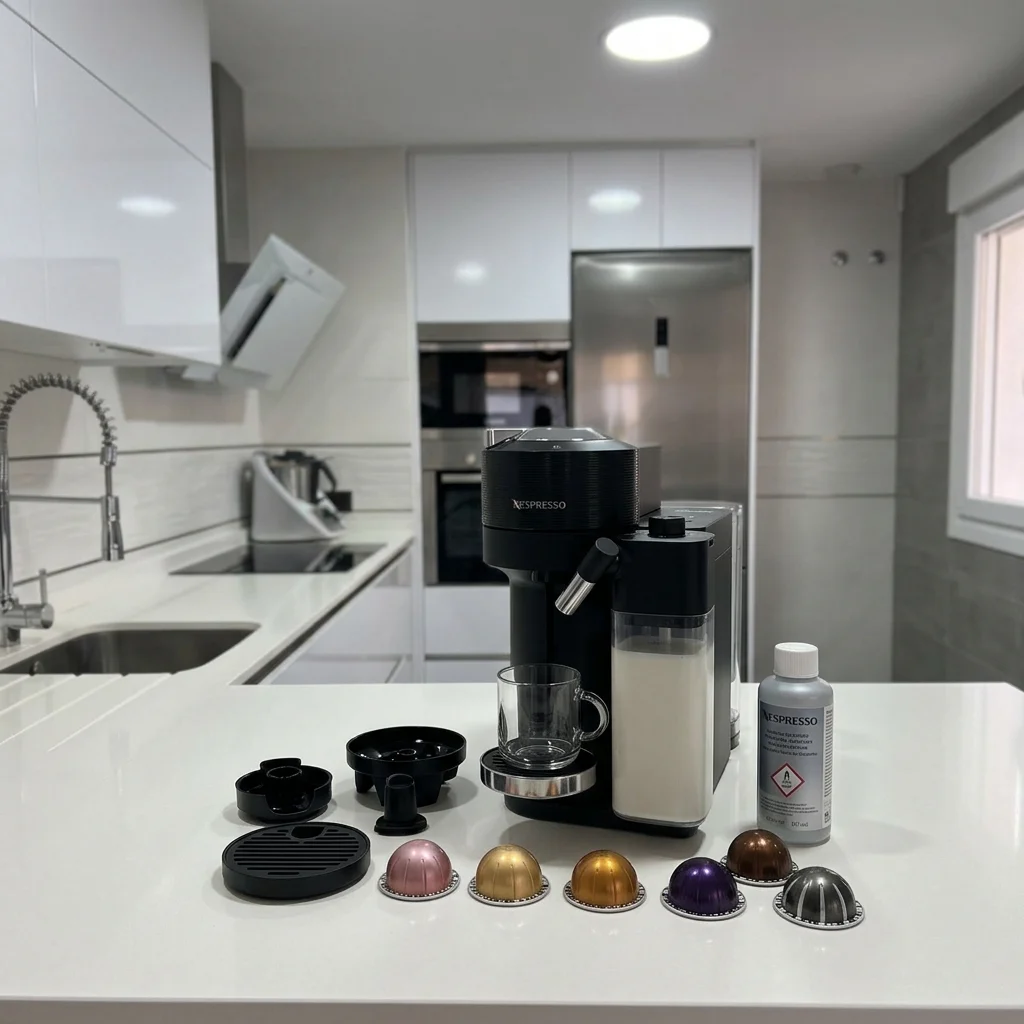
In return, the space is well used. The spout leaves room not just for a cup but for the 0.5 litre milk jug, which is the part that makes the one-touch cappuccino and latte macchiato possible, and tall 355 ml XL cups fit without a problem. The tank comes out from the front without moving the body of the machine, which is welcome on a tight worktop.
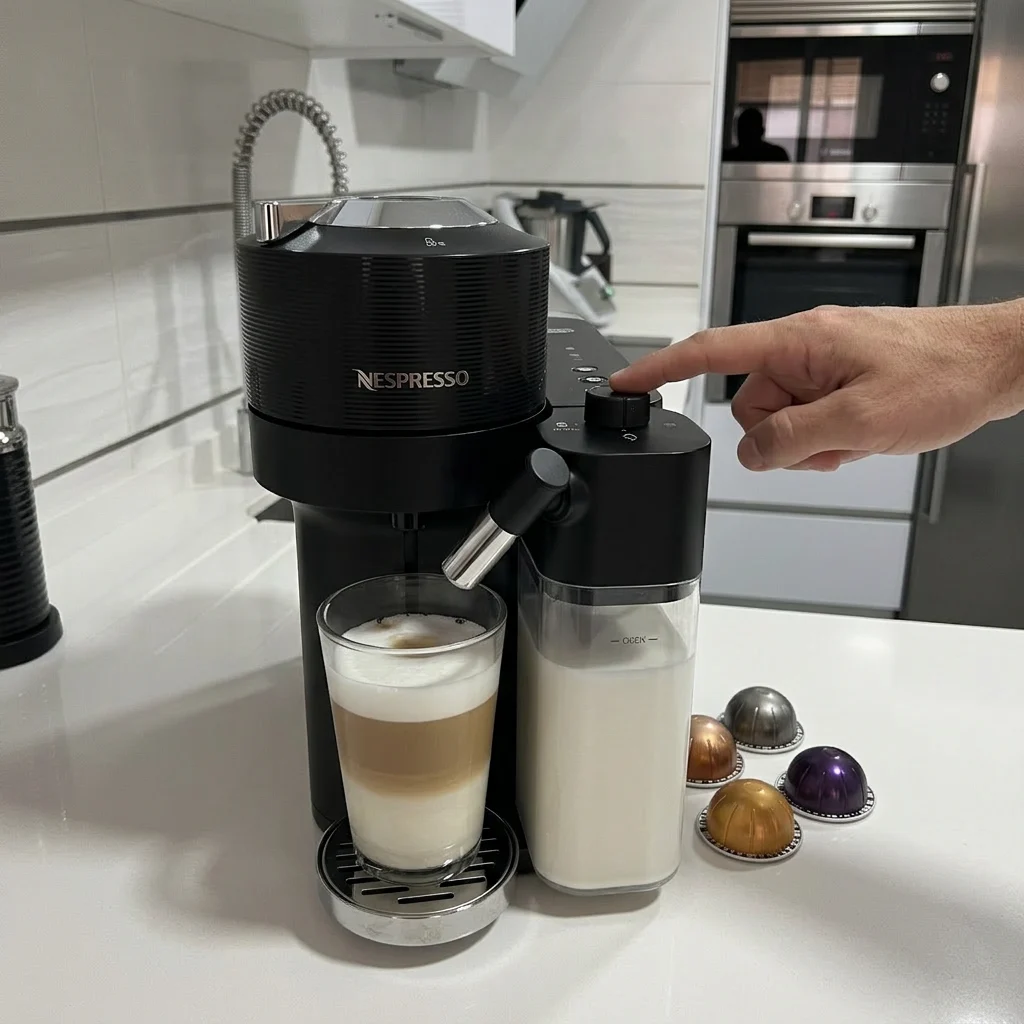
Operation comes down to a selection dial and a button, with automatic switch-off after 2 minutes. After a month of use there was no creaking when turning the dial and no visible marks on the front.
Cleaning – Score: 7.6/10
Here’s the habit you can’t skip. After every use with milk, the machine tells you when it needs a rinse, a cycle that runs hot water and steam through the system and that we timed at 40-45 seconds. It’s essential. The day we left it for later, the next coffee came out with a clear milky aftertaste.
If the jug has been in the fridge for more than 24 hours or has run empty, it has to be taken apart completely (it’s six pieces) and put in the dishwasher, which is more of a hassle, although it isn’t a daily job. The drip tray, tank and pod container come out without tools and wash by hand in a couple of minutes.
The rest of the upkeep is the same as any pod machine, because the grounds stay inside the pod and never reach the machine. What lowers the score is purely the milk circuit, which adds a daily step that coffee-only machines don’t have.
Capacity – Score: 8.5/10
This is its best section by a distance. The 1.6 litre water tank is the largest in the comparison and, with real-world use of two or three coffees a day, it lasted us between two and three days before asking for water. The 0.5 litre milk jug is good for two milky drinks in a row without refilling.
The used-pod container takes 10 small or 6 large pods according to the manufacturer, and at the pace of two people having two or three coffees a day we never had to empty it during the whole test. We never filled it, so we give that figure as the manufacturer’s, not our own measurement.
With six cup sizes (espresso 40 ml, double espresso 80 ml, gran lungo 150 ml, mug 230 ml, iced or XL 355 ml and carafe 535 ml), it covers everything from the most concentrated black coffee to a carafe for several people. That’s something Nespresso’s Original range doesn’t offer as standard, where large sizes come from diluting. One small minus is that each milky drink adds its own automatic rinse cycle, so the tank goes down a little faster than the number of cups alone would suggest.
Milky drinks, measured timings and running costs
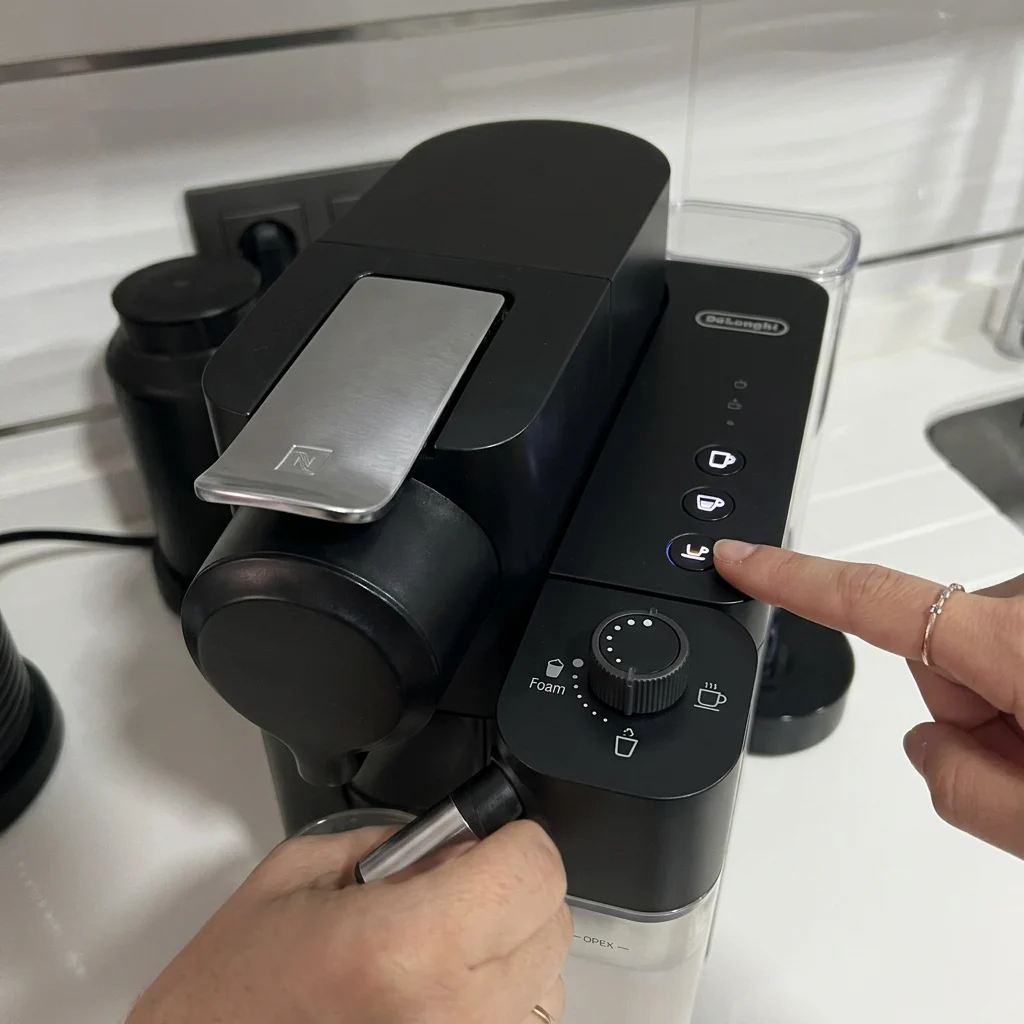
The one-touch system works exactly as promised. You choose the recipe by turning the dial to the milk position, pick cappuccino, latte macchiato or hot foam, and the machine decides by itself how much milk to heat, how much to froth and how much coffee to brew. For the latte macchiato, the milk goes in first and the coffee on top, which gives you that distinctive layer without having to coordinate anything.
The timings, measured with a stopwatch and without rounding in its favour, are 32 seconds to heat up from cold (the manufacturer quotes 30) and 2-2.5 minutes for a full latte macchiato from a cold machine, with 2 minutes 15 seconds as our reference measurement. Compared with the 4-5 minutes it used to take us with a wand frother and milk heated separately, the saving is real, but it isn’t ‘a latte in under a minute’. We never saw that figure in any of our runs.
In the cappuccino, the foam ratio is factory-set, although if you’re very particular about thickness you may find it more standard than artisan. A tip from experience: with cold whole or semi-skimmed milk the foam comes out firm and holds well; with skimmed it collapses in under a minute.
As for cost, do the maths before you buy. Vertuo pods can only be bought from Nespresso, through its website, its app or its shops. There are no third-party or reusable compatible alternatives as there are with the Original system, where the patent has expired. With three or four pods a day, the projected monthly spend soon becomes a significant line in the household budget, depending on the variety you choose. Add the price of the machine and the long-term cost of ownership is high.
And the weak spot of the barcode is that each size needs its own specific pod, because the code on the pod tells the machine exactly how to brew that coffee. That guarantees consistency, but it means you always need the right selection at home. If you run out of the pod for the size you want, there’s no way to improvise with what you have.
Pros
- Genuinely automatic milky drinks, with cappuccino, latte macchiato and hot foam without an external frother or manual technique, in 2-2.5 minutes from a cold machine.
- Six drink sizes in one machine, from a 40 ml espresso to a 535 ml carafe, handy when tastes at home vary a lot or you want to make several cups at once.
- 1.6 litre tank, the largest in the comparison, good for two or three days with 2-3 coffees a day, plus a 0.5 L milk jug that makes two drinks in a row.
- Heat-up in a measured 32 seconds, so you don’t have to plan the first coffee of the morning in advance.
- Automatic switch-off after 2 minutes, so it doesn’t stay on if you forget about it.
Cons
- Nespresso Vertuo pods only. The proprietary barcode rules out any other pod, tying you to a single supplier and removing any chance of saving with alternatives.
- High upfront price and a significant monthly spend on pods at three or four a day. It only makes sense if you’ll use the milk system regularly.
- Daily milk system maintenance. The 40-45 second rinse after every milky drink is compulsory, and skipping it spoils the taste and can end up clogging the pipes.
- Substantial size and weight (6.3 kg, 407 mm deep). It’s the bulkiest in the comparison and isn’t easy to store or move if your kitchen is short on space.
Our test
Test 1: Design – worktop space and finish
We put it on a standard worktop with a wall cupboard above and measured it with the tank fitted: 190 mm wide, 407 mm deep and 315 mm high, with 6.3 kg on the scales. Depth is what matters most here. At 407 mm you have to expect it to stick out beyond the neighbouring appliances, and that’s what limited us most when finding it a spot.
We also checked that the milk jug fits under the spout even for the 535 ml carafe size, and that tall 355 ml XL cups fit without removing anything. After a month of use the front showed no scratches and the dial turned without any play; the weight, though, is noticeable every time you have to move it to clean behind.
Test 2: Cleaning – the milk circuit after every use
After around twenty coffees and several milky drinks, we took apart everything that comes apart. The jug separates into six pieces that are dishwasher-safe, and the drip tray, tank and pod container come out without tools.
We timed the rinse cycle the machine asks for after every use with milk at 40-45 seconds, and it’s the step that decides this score. The day we left it for later, the next coffee had a milky aftertaste and we had to run the long cycle. The one spot you can’t reach by hand is the internal milk pipe, and there the only option is that automatic rinse, not a brush. Once you’re in the habit, daily maintenance takes less than a minute.
Test 3: Capacity – real-world endurance with a milky coffee routine
We filled the 1.6 litres to the maximum and counted how many days it lasted with the household’s real consumption (two milky coffees in the morning and the odd espresso in the afternoon), also checking whether the tank could be removed and refilled without moving the machine.
At that pace, the tank lived up to the manufacturer’s claim for two or three coffees a day, lasting between two and three days before asking for water. One detail specific to this machine, which coffee-only models don’t have, is that every milky drink adds the rinse cycle, so the tank drops a little faster than the number of cups alone would suggest. It comes out from the front without shifting the 6.3 kg body. What we don’t have is an exact count of drinks per full tank, because with our mix of sizes we never reached the low-water warning; the pod container figure (10 small or 6 large) is also the manufacturer’s, not measured.
Test 4: stopwatch timings, from heat-up to finished latte
This is the area where specs for this machine are most contradictory, so we timed it with a stopwatch over several runs. Initial heat-up from cold took 32 seconds, practically the 30 the manufacturer promises, and that speed held across repeats because each brew is governed by the pod’s code, not the state of the machine.
A full latte macchiato from a cold machine, timed from turning the dial until the coffee stopped flowing, took between 2 and 2.5 minutes, with 2 minutes 15 seconds as our reference value. The difference from the 32 seconds is heating and frothing the milk plus the brew, which is why both figures sit side by side without contradicting each other. Thirty-two seconds is the machine ready; 2-2.5 minutes is the drink in your hand.
We also made five 40 ml espressos in a row with the same pod type and noticed no relevant difference in cup temperature between the first and fifth, nor a visibly poorer crema at the end of the run. That said, we don’t have independent timings of each of the five brews or a temperature reading in degrees, so we can’t say with figures whether there’s a real drop after a certain number of coffees in a row.
If you’d like to know more about what to look for, have a look at our buying guide to pod coffee machines, where you’ll find the best models we’ve tested to help you choose the right one for you.
Contents
Other models we analysed


Real tests · No sponsorships
Marco Blasco
I'm Marco Blasco and I've been testing and comparing home appliances for more than five years. My ratings come from real tests, first-hand experience and objective criteria, explained transparently. Our tests are carried out in Spain. Through detailed guides and comparisons I've helped thousands of people choose with more confidence, and I can do that because I'm completely independent of the brands.