
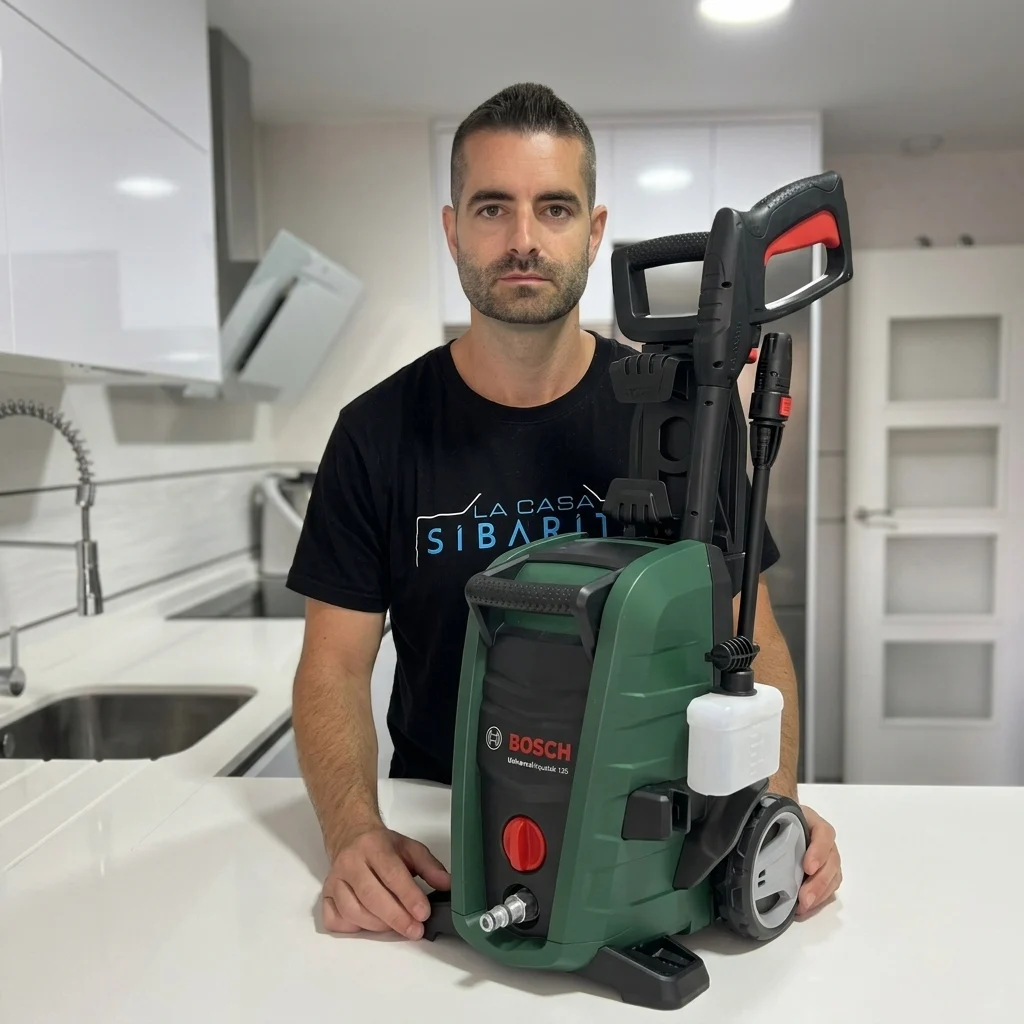
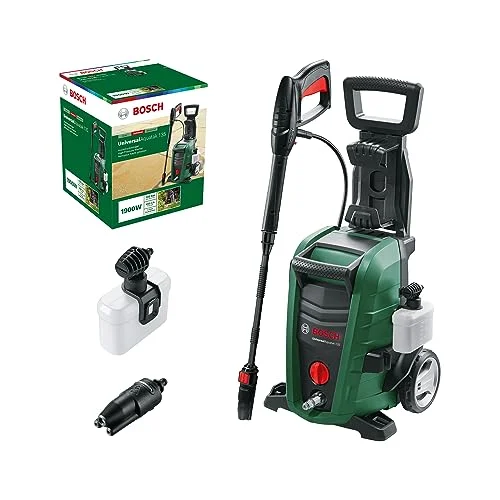
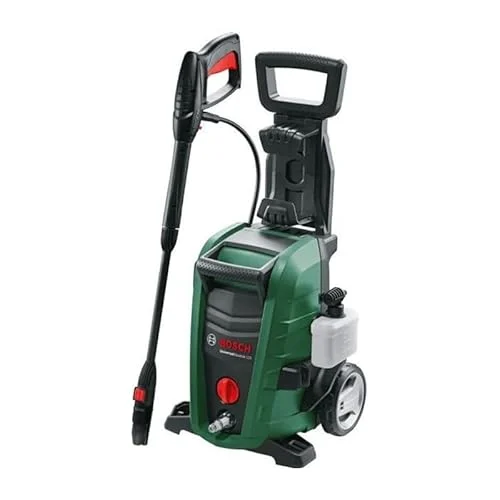
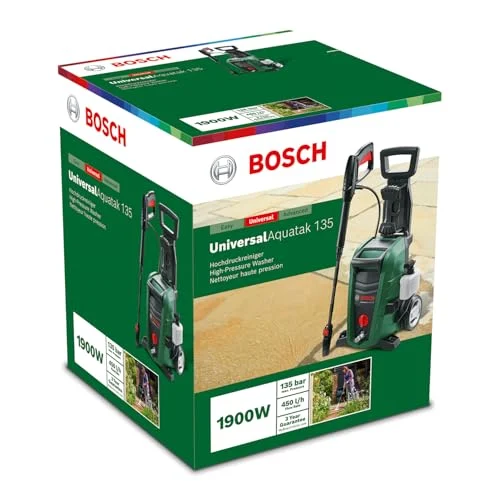
Bosch UniversalAquatak 135 Pressure Washer

Gallery
Deals
This page contains affiliate links: if you buy through them we may earn a commission, at no extra cost to you. Prices and availability may change. As an Amazon Associate, La Casa Sibarita earns from qualifying purchases.
Pros
-
Rotary jet halves the work: 9 minutes for a garage space against 16 with the fan jet.
-
1,900 W and 135 bar give plenty of headroom for the car, floors and patio.
-
Motor stops when you release the trigger and draws only 12-15 W at rest.
-
6.4 kg, large wheels and an extendable handle make it easy to move.
Cons
-
Real sustained pressure of 105-110 bar, not the 135 bar in the catalogue.
-
Self-priming of only 0.5 m and a 5 m cable limit your working radius.
Contents
Technical specifications
| Maximum pressure | 135 bar |
|---|---|
| Weight | 6.4 kg |
| Power | 1,900 W |
| Maximum flow rate | 6 L/min |
Description
Summary
Need to smarten up the car, a garage floor with stuck-on grease, the gate or the patio, without spending all morning scrubbing? For that kind of household job the Bosch UniversalAquatak 135 won us over. It sits in the brand’s mid-range (the Universal line, between the entry-level and professional models) and has just the right amount of punch for everyday grime without straying into industrial territory.
It’s a pressure washer for people who’ll use it often on medium-difficulty jobs. Its 1,900 W motor and 135 bar maximum pressure put it a step above entry-level models, and you notice it in speed: it does the same as a basic machine, only faster.
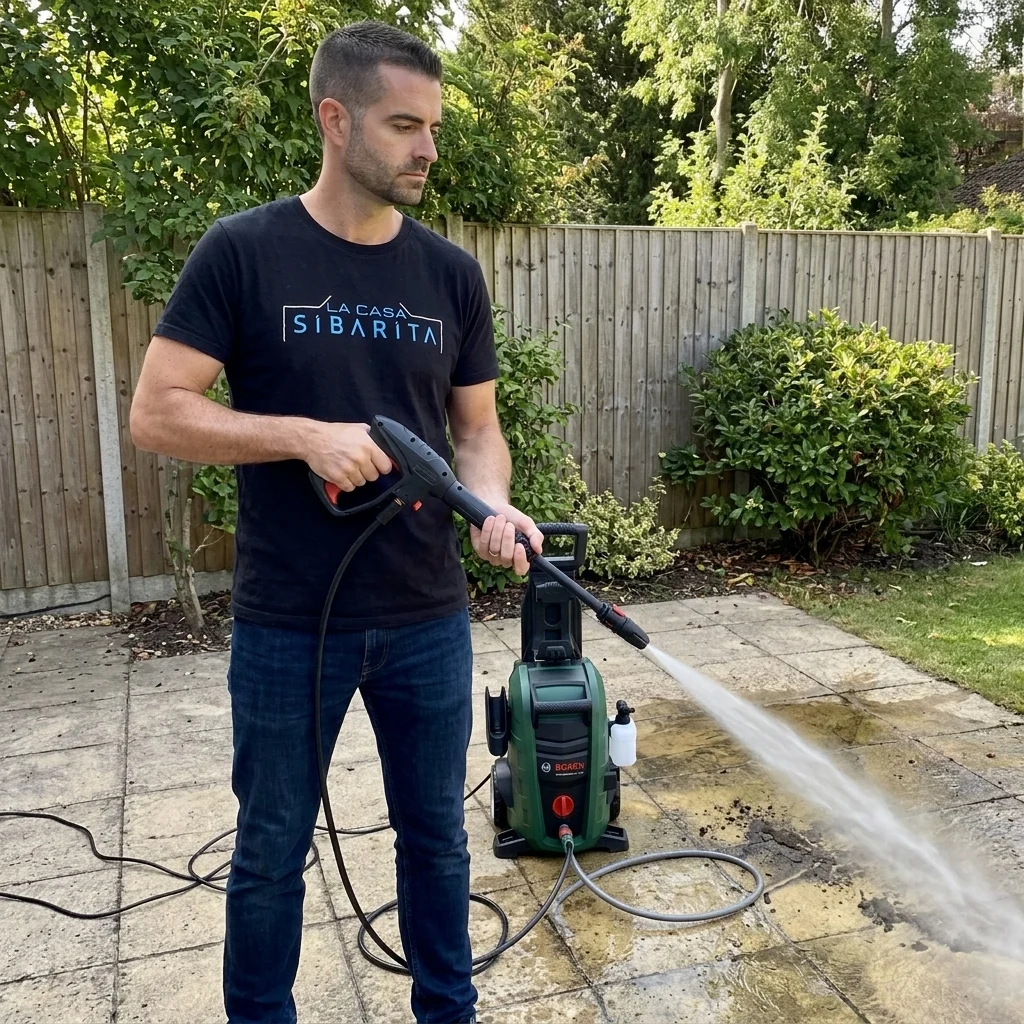
What we got the most out of is the 3-in-1 nozzle (fan, point and rotary jet in a single head): the rotary jet removes algae from tiles in a single pass, so you can forget going over the same spot three times.
The weak points are the working radius and sustained pressure. Self-priming of just 0.5 m means you need the water close by, and in continuous use the real pressure stays below the advertised peak, enough for the home but short for walls or heavy use. The foam dispenser doesn’t produce really thick foam either.
We tested this model in Spain; on Amazon.co.uk it’s sold under the UK reference 06008A7C70, and the listing includes a 7 m high-pressure hose (our unit had 6 m).
Analysis and verdict
Pressure and flow – Score: 7.8/10
With 1,900 W of power and 135 bar maximum pressure, this Bosch promises a step up from entry-level models. In our continuous-use pressure test, the gauge settled between 105 and 110 bar: the 135 bar in the catalogue is an instant peak that only appears when you first pull the trigger. For flow, measuring with a bucket, the machine held steady at 6.8 l/min (around 410 L/h), above the 6 l/min in the spec sheet we worked from in Spain (the UK listing quotes 450 l/h) and plenty to shift heavy dirt or caked-on mud without endless passes over the same area.
It’s solid performance for what you’ll really ask of it at home (car, floors, gate, patio), but it falls short for house walls or heavy daily use, where the drop from the advertised peak is more noticeable.
Accessories – Score: 8.3/10
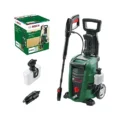
The 3-in-1 nozzle (fan, point and rotary jet in a single head, with a coloured dot showing which one is active) is the star of the kit: with the rotary jet we lifted algae from the tiles in a single pass, and in our garage cleaning test it took us 9 minutes compared with 16 minutes with the fan jet.
The built-in detergent tank (around 0.5 L) is enough to soap down an entire car without refilling, and you can connect warm water of up to 40°C, which helps with ingrained grease. The only accessory that falls short is the foam dispenser: it does a decent job, but it doesn’t produce thick foam like a dedicated foam cannon.
Handling – Score: 7.0/10
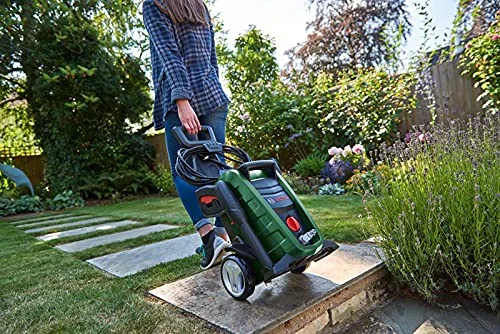
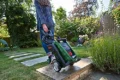
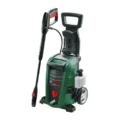
At around 6.4 kg, with large wheels and an extendable handle, the Bosch is easy to pull along and carry, and storing it isn’t a problem even though it takes up some room (420 mm high by 333 mm wide).
Handling gets trickier elsewhere. Self-priming is only 0.5 m, so you need the tap very close, and between the 6 m high-pressure hose of our unit and the 5 m cable the working radius is tight for some patios; with an extension lead we reached around 11 m of usable reach from the socket, but by then you’re improvising. The UK version’s 7 m hose should give you a little more room. The cable wrap is small and the cable tends to come loose. The lance quick-connector is a tight fit and hard to engage the first few times, and after a quarter of an hour of continuous use the gun vibrates noticeably in your hand. At 82 dB(A) under load, it isn’t particularly quiet either.
Build quality and durability
The finish is typical of Bosch’s green range, generally robust, although the transparent connector on the front (where the water filter sits) left us with doubts about the long term, because it’s a part you fit and remove every time and clear plastics tend to become brittle in the sun. We can’t vouch for how it holds up after years outdoors, but it’s worth storing it under cover.
The lance quick-connector is a tight fit and hard to engage the first few times, until you get the knack of turning it the right way.
Value for money
For frequent home use and medium jobs, we think it offers good value for money in its range, because you get more power and a versatile head without jumping to the professional tier. If you’ll only use it once in a blue moon, a basic model will do; if you’ll put it through its paces every day, look at the range above.
Pros
- The rotary jet speeds things up a lot: cleaning a garage space took us almost half the time it did with the fan jet.
- 1,900 W and 135 bar give you plenty of headroom for the car, floors, gate and patio without going professional.
- The motor stops as soon as you release the trigger, so during breaks power draw drops to a handful of watts.
- Genuinely portable: 6.4 kg, large wheels and an extendable handle to move it around the patio effortlessly.
- The built-in detergent tank (0.5 L) lets you soap down a whole car without refilling.
Cons
- The real sustained pressure stays around 105-110 bar; you’ll only see the 135 bar peak for an instant, so it’s not for house walls or heavy use.
- 0.5 m self-priming plus the tight cable and hose mean you need water and a socket close by, or an extension lead.
- The cable wrap is small and the cable comes loose, which is annoying when you put it away.
- The dispenser doesn’t produce thick foam like a dedicated cannon, and the transparent front connector left us with durability doubts.
Our test
Test 1: Pressure and flow – patio with ingrained dirt and car with dried mud
We marked a 1 m² strip on a patio with ingrained dirt and repeated the test on the dried mud of a car, with the standard lance at 30 cm, counting the passes needed and always comparing with the same area tackled with a garden hose alone. The first thing we noticed with this Bosch is that the 135 bar peak in the catalogue only appears for an instant, when you first squeeze the trigger: once it settles into continuous use, the gauge stabilises between 105 and 110 bar.
With that sustained pressure, the dried mud on the car shifted in a few passes and far better than with the hose alone, which barely wetted it. The flow, on the other hand, was a pleasant surprise: it held firm at 6.8 l/min, above its own catalogue figure (6 l/min), so we didn’t have to keep going over the same strip to shift the dirt. What we can’t vouch for is that it keeps up that level in long sessions or on vertical surfaces such as a house wall, where the drop from the advertised peak is more noticeable.
Test 2: Accessories – 3-in-1 nozzle, detergent tank and foam dispenser
We tried each function of the 3-in-1 nozzle one by one (fan, point and rotary jet in a single head, with a coloured dot showing which one is active), as well as the built-in detergent tank and the foam dispenser, noting what really works on each surface. The difference between jets was clear: on a garage space with stuck-on grease, the rotary jet took us 9 minutes compared with the 16 minutes we needed with the fan jet to leave the floor equally clean, and on algae-covered tiles it lifted the dirt in a single pass.
The detergent tank, at around 0.5 L, was enough to soap down an entire car without refilling, and being able to connect warm water of up to 40 °C helped with the most stubborn grease. The only accessory that didn’t convince us was the foam dispenser: it does its job, but the foam is thin and runny compared with a dedicated cannon we’ve tried on other machines. We can’t guarantee that foam is enough for a demanding pre-wash on very dirty cars.
Test 3: Handling – assembly, transport and packing away
We assembled the machine from the box, connected it to the hose and packed it away after use, paying attention to whether it rolls well, whether the cable and hose reach the whole house front and whether the lance pulls hard enough to destabilise it. The lance quick-connector was hard to engage the first few times, until we got the knack of turning it the right way; once assembled, at 6.4 kg with large wheels and an extendable handle, it’s easy to pull and carry around the patio.
Where handling gets complicated is the working radius: self-priming is only 0.5 m, so the tap has to be very close, and between the 6 m hose and 5 m cable the reach falls short for large patios; with an extension lead we got around 11 m of usable reach, but by then you’re improvising. When packing away, the cable wrap felt small to us and the cable tends to come loose, and after a quarter of an hour of continuous use we noticed appreciable vibration in the gun. We don’t have tipping data to publish from pulling on the lance, so we can’t vouch for how it behaves on that specific point.
If you want to know more about what to look for, take a look at our pressure washer buying guide, where you’ll find the best models we’ve tested and advice on choosing the right one for you.
Contents
Other models we analysed

Real tests · No sponsorships
Marco Blasco
I'm Marco Blasco and I've been testing and comparing home appliances for more than five years. My ratings come from real tests, first-hand experience and objective criteria, explained transparently. Our tests are carried out in Spain. Through detailed guides and comparisons I've helped thousands of people choose with more confidence, and I can do that because I'm completely independent of the brands.