
Roborock Q10 S5+ Robot Vacuum

Gallery
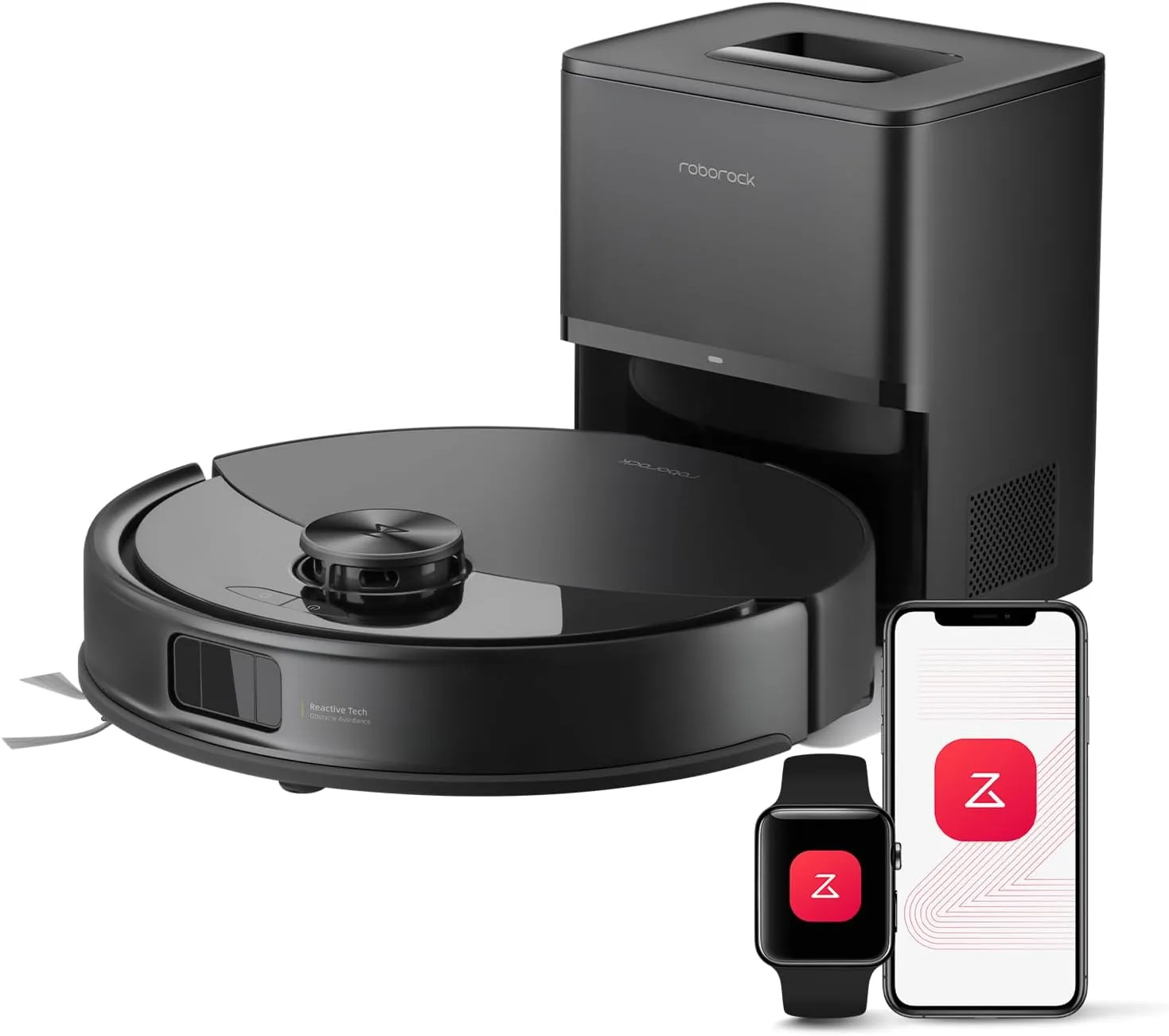
Deals
This page contains affiliate links: if you buy through them we may earn a commission, at no extra cost to you. Prices and availability may change. As an Amazon Associate, La Casa Sibarita earns from qualifying purchases.
Pros
-
10,000 Pa of suction, ideal for pet hair, fine dust and deep-cleaning rugs.
-
Vibrating mop pads that mimic hand scrubbing and shift stuck-on stains.
-
Self-emptying station with a bag you only change every couple of months.
-
Lifts its mop pads 8 mm when it detects a rug so it stays dry.
Cons
-
Slows down on long-pile rugs and doesn't clean them as thoroughly.
-
Mop pads and filters have to be washed by hand.
Contents
Technical specifications
| Filter | HEPA |
|---|---|
| Navigation | LiDAR laser |
| Mopping | Yes |
| Height | 9.9 cm |
| Suction power | 10,000 Pa |
| Battery life | 150 min |
| Pet hair brush | Yes |
| Self-emptying | Yes |
| Small object detection | Yes |
| Carpet detection | Yes |
| App | Yes |
| Smart mapping | Yes |
Description
Summary
Roborock is one of the most forward-looking robot vacuum brands around, which is exactly why we wanted to try the Q10 S5+. It’s an affordable model, and it genuinely impressed us with how much it packs in for the money.
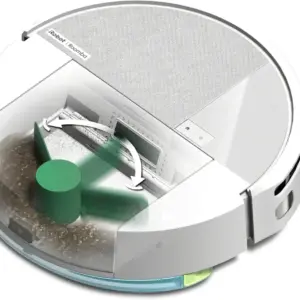
Roborock has put its effort into serious suction power (10,000 Pa), and it shows. It picks up fine dust, hair of every length and all kinds of crumbs. On hard floors its brush set keeps it stable and gathers pet hair without tangling.
The mopping system uses vibrating mop pads that scrub hard over stains and lift them off the floor, something we had only seen on more premium robots. We liked how it left our floors, and it steers around small and large objects without any fuss.
From the mobile app you can manage every room thanks to its 3D mapping, which shows a full floor plan where you can set schedules and cleaning levels and even check a history of what it has done.
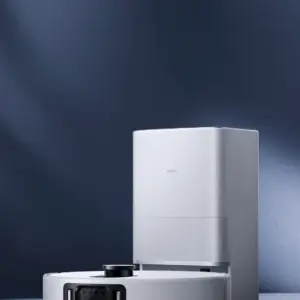
The self-emptying station was one of the nicest surprises: it empties the dust into a 2.5 L bag (the Amazon.co.uk listing quotes a 2.7 L bag), although you still wash the mop pads by hand. With 150 minutes of battery life it covers around 150 m², so it’s ideal for single-storey homes and smaller flats. For the key points to weigh up before you buy, take a look at our ranking of the best robot vacuums.
Analysis and verdict
Suction power – Score: 8/10
When we tried it, we were struck by how deeply such an affordable robot vacuum can clean. It’s no mystery: 10,000 Pa lets it lift fine dust, food crumbs, spilt coffee and all the hair our pets shed.
We like that it lifts its mop pads by 8 mm when it detects a rug, so they don’t get wet, and it boosts suction while it cleans the rug. We checked the result and we’re happy to recommend it for short-pile rugs. On very deep long-pile rugs it slows down and the clean isn’t as thorough. Bear in mind the lift is modest, so long fibres can get caught.
It comes with an effective double anti-tangle brush for everyday mess, plus a floating brush that helps it glide across different floor types. We tried it on smooth and uneven floors alike, and it delivered a genuinely deep clean, helped by a side brush that reaches into corners and along skirting boards so dust doesn’t build up.
For a home with pets and children, it’s an ideal way to keep floors clean without spending a fortune.
Battery life – Score: 8/10
It’s a rather elegant robot in white, with a sturdy finish that blends into any room. At 9.9 cm it’s within the usual compact range, so it has no trouble cleaning under furniture and beds.
We like that the water tank is easy to refill, as you do it from the top of the robot without any faff.
We were surprised that, at this price, it comes with a station that holds a 2.5 L dust bag, which needed changing about every 2 months. On Amazon.co.uk the listing describes a 2.7 L bag lasting up to 7 weeks.
It has a 5,200 mAh battery, which kept it cleaning non-stop for 150 minutes, roughly 150 m², so we’d recommend it for smaller flats or single-storey houses.
Another standout feature is that when the battery runs low, it returns to the station and, once it has enough charge, heads back out to finish where it left off. We love that. It also adjusts its power to the floor type it detects, so the battery lasts longer and the clean is more effective.
🆚 Quick comparison with other models
The Q10 S5+ is easily the most powerful of the budget robots, with more features, and better ones, than some mid-range and premium models.
Its 10,000 Pa puts it ahead of many budget rivals, and in our tests that strong suction left floors deeply clean. Lifting the mop pads when a rug is detected is something we’re only starting to see in the mid-range, and some cheaper robots don’t even recognise rugs.
So if you want a robot that mops hard enough to shift stains, has seriously strong suction for the money and an app to organise your cleaning plan, we wholeheartedly recommend this one. It’s ideal for hard floors and homes with children and pets.
✅ Pros and ❌ Cons
- Pro: 10,000 Pa of suction, among the highest you’ll find on a budget robot.
- Pro: vibrating mop pads that mimic hand scrubbing and loosen food and grease stains.
- Pro: lifts its mop pads (8 mm) when it detects rugs and boosts suction on them automatically.
- Pro: 3D mapping with front and side laser detection that avoids objects without bumping into them, rare at this level.
- Pro: self-emptying station (2.5 L bag) you only change about every 2 months; it resumes cleaning where it stopped after recharging.
- Con: on long-pile rugs the robot slows down and cleans less thoroughly, because the mop lift is limited.
- Con: with no cameras, it can brush against very thin objects such as slender chair legs or fine cables.
- Con: the mop pads and filters are washed by hand; they aren’t self-cleaning.
- Con: on older phones the app can be slow to load the map.
Mopping – Score: 8.5/10
What caught our eye most is that its mop pads vibrate while mopping. This mimics the action of scrubbing by hand, and you can see it in the results: it loosens dried food and even cooking oil in the kitchen. We had only seen this on mid-range to premium models, and we were very pleased with what it achieved. It removed footprints and our dog’s drool marks, and in the kitchen there was no trace that anyone had been cooking.
The self-emptying station (2.5 L) means changing the bag about once every 2 months, which is great. The mop pads do have to be washed by hand, but the dirt rinses straight out under the tap, so it takes no more than 5 minutes. The filters are washable too, so we tend to wash everything together.
🧠 Navigation and obstacle detection
This is where it clearly outclasses other budget models: where most of them crash, the Q10 S5+ dodges or goes around. Its front and side laser detection system identifies socks, toys, furniture and chair legs and avoids them without bumping.
It also has 3D recognition, so it stores a complete map of your home. That way the robot knows which rooms are bedrooms, the living room or the kitchen, and it can plan the most efficient cleaning routes according to how dirty each area is. It’s another feature we’d only seen on premium products, but Roborock has been bringing it to its mid-range and budget robots.
In our tests it avoided everything in its path without collisions, from cables to furniture, while keeping a steady, effective cleaning route. It also turns up the suction when it detects more dirt, something only the best robot vacuums do. The same happens on rugs: it goes to maximum power as it passes over them without any setting on our part.
Because its detection system doesn’t use cameras (it’s a budget product, after all), it does sometimes brush against very thin objects such as slender chair legs or fine cables. The same goes for things it doesn’t detect well, such as glasses, or pet mess, although we never had an accident because of it.
📱 App and smart features
So far it’s the only budget robot we’ve tried with 3D mapping, as similar models usually stick to 2D. That lets you see your home in three dimensions, choose which rooms to clean and how intensively, and keep it out of certain areas with no-go zones.
The app is easy to set up, and you can choose the suction and water levels you want the robot to use in particular areas.
You can also schedule cleaning times and days, which is really handy for keeping the house organised.
What surprised us for a budget model is the cleaning history, with detailed data such as how long it took to clean each area. It’s a really neat feature. It also works with Alexa, Google Home and Siri.
The only thing we didn’t like is that if your phone isn’t a recent model, the map can take a while to appear in the app.
Our test
Test 1: Suction power – rice and flour on long-pile rug, short-pile rug and hard floor
We tested this model in Spain, and it’s the same robot you get from Amazon.co.uk. We started with the toughest condition: 30 g of rice and flour spread over a 50 cm square on a long-pile rug, the worst nightmare for any robot with mop pads, before repeating the test on hard floor and on a short-pile rug, all on maximum power with a single pass. The Q10 S5+ has 10,000 Pa of suction and a system that detects rugs and lifts the mop pads 8 mm to keep them dry, so we wanted to see whether that promise held up once the pile starts making life difficult.
On hard floor and the short-pile rug the robot swallowed the rice and flour, leaving no visible trace when we went over the area with a handheld vacuum afterwards. The double anti-tangle brush did its job without a single pet hair wrapping around it. On the long-pile rug things changed: it slows down and, although it automatically raises suction to the maximum, it can’t lift what sinks between the taller fibres as well, so we can’t promise as deep a clean there as on short pile. We don’t have a figure in grams for the residue to publish, but the difference between the two rug types was obvious to the naked eye.
Test 2: Battery life – two rugs midway through a living room, hallway and bedroom circuit
We set up a circuit with the living room, hallway and bedroom, placing the two rugs right in the middle section so the robot had to raise its suction on detecting them before finishing the rest of the home on medium, and timed it from leaving the station to returning. The Q10 S5+ has a 5,200 mAh battery, for which the manufacturer quotes 150 minutes and around 150 m², so that was the margin we had in mind throughout.
It completed the whole circuit without needing to recharge, within the 150 minutes quoted for the size of home we tested, and as a bonus we saw it adjust its power to the floor beneath it, which stops the battery draining just from crossing the rugs. We didn’t push it until it had to return to the station mid-clean, so we can’t tell you from our own data how long it takes to resume where it left off; that’s how the robot is described, but our circuit didn’t require it.
Test 3: Mopping – milky coffee and tomato sauce on laminate and porcelain tiles
We left a milky coffee stain and a tomato sauce stain to dry for 30 minutes, spread across laminate and porcelain tiles, and mopped twice on medium water flow to see whether the Q10 S5+ lives up to the promise of its vibrating mop pads. That side-to-side movement, unusual on robots at this price, was what we were most curious about: it’s supposed to scrub like a hand would instead of simply dragging water around.
Both stains came off without leaving a ring once dry, on laminate and tiles alike, and the edges were as clean as the centre of the marked area. Nor did the mop wet the rug when it passed nearby, because the robot lifts the module before going over it. What we can’t vouch for is how well it copes with more ingrained grease or several days of built-up dirt, because our test stuck to the 30-minute drying time in our protocol. Washing the mop pads by hand afterwards took us just a few minutes, so maintenance held no surprises.
If you want to know more about what to look for, take a look at our robot vacuum buying guide, with the best models we’ve tested to help you choose the right one for you.
Contents
Other models we analysed

Real tests · No sponsorships
Marco Blasco
I'm Marco Blasco and I've been testing and comparing home appliances for more than five years. My ratings come from real tests, first-hand experience and objective criteria, explained transparently. Our tests are carried out in Spain. Through detailed guides and comparisons I've helped thousands of people choose with more confidence, and I can do that because I'm completely independent of the brands.