
Dreame L10s Ultra Gen 3 Robot Vacuum

Gallery
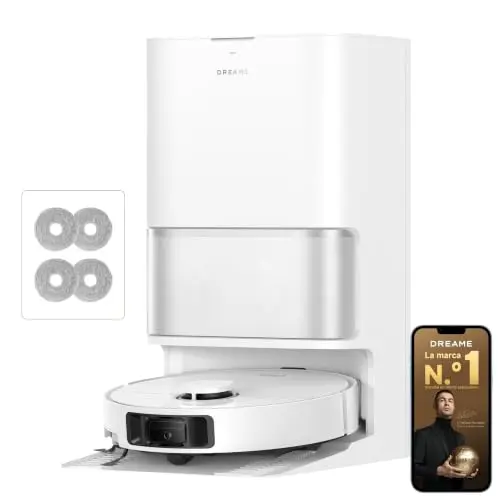
Deals
This page contains affiliate links: if you buy through them we may earn a commission, at no extra cost to you. Prices and availability may change. As an Amazon Associate, La Casa Sibarita earns from qualifying purchases.
Pros
-
Station washes and dries the mop pads and empties the dust, with 4.5 L and 4.0 L tanks.
-
10.5 mm mop lift and rug detection, so short pile stays dry.
-
Double extending arm brings the brush and mop right up to the skirting board.
-
Maps up to 4 floor plans and resumes after recharging.
Cons
-
Sticky dried stains such as tomato need two passes and can leave a faint ring.
-
Suction delivers a little less on rugs and leaves fine flour at the base of the fibres.
Contents
Technical specifications
| Suction power | 25,000 Pa |
|---|---|
| Navigation | Dynamic laser |
| Filter | Not specified |
| Mopping | Yes, two rotating mops with pressure and 32 moisture levels, with 10.5 mm lift; the base washes them and dries them with hot air |
| Height | 9.7 cm |
| Battery life | 231 min (quiet suction mode) |
| Pet hair brush | Dreame does not claim an anti-tangle brush · no tangles in 18 days with a pet (tested) |
| Self-emptying | Yes |
| Small object detection | Yes |
| Carpet detection | Yes |
| App | Yes |
| Smart mapping | Yes |
Description
Summary
25,000 Pa of suction and a station that only asks you to empty the dust bag every 100 days. Those two figures sum up what the Dreame L10s Ultra Gen 3 is about: a robot that vacuums and mops and is designed so you step in as little as possible, especially if you have a pet at home.
We had it working for eighteen days in a two-storey home in Spain with laminate, porcelain tiles and short-pile rugs, and what convinced us most was the station, which washes the mop pads and dries them with hot air, refills the water, removes the dirty water and doses the detergent by itself. It’s the kind of robot that suits large homes or homes with pet hair every day, where a basic model without a station has you emptying the bin and rinsing the mop almost daily.
Among the figures we think are decisive are its 231 minutes of battery life in quiet mode (from a 5,200 mAh battery), the 32 water levels for mopping and the 10.5 mm mop lift, which in our case kept the living room rugs dry. Dynamic laser navigation with memory for up to four floor plans also lets it work across two storeys without remapping.
The feature that sets it furthest apart from a robot with a single flat mop is the double extending arm that brings the side brush and mop right up to walls and corners. In our measurements it left an unmopped strip of just 0.5 cm next to the skirting board, without wetting it, where other robots of the same type leave a noticeably wider band.
What we liked least is that with tough dried stains, such as tomato on laminate, it needs two passes and can still leave a faint ring, so if you want it to replace your mop completely in a kitchen that sees a lot of cooking, you’ll need the odd touch-up.
On Amazon.co.uk it’s sold by Amazon as the L10s Ultra Gen 3 Kit, with the British reference RLL53SE-UK. The listing describes the same robot, station and 10.5 mm mop lift we tested, but it doesn’t spell out what the ‘Kit’ includes, so check the box contents on the product page.
Analysis and verdict
Suction power – Score: 8.7/10
The quoted 25,000 Pa means it leaves almost nothing behind on hard floor: of 30 g spread over a 50 cm square, just 0.4 g remained after a single pass, 98.7% picked up, and what was left was fine flour along the edge plus one grain of rice the side brush had pushed out. Dreame markets it for homes with pets and talks about 99% hair removal, but it doesn’t claim an anti-tangle main brush: in our eighteen days with a pet at home the main brush didn’t tangle, although that isn’t the same as the hair-cutting blade fitted to other robots in this comparison. (The UK listing does say its side brush reduces hair tangles.) It has five power levels (quiet, standard, turbo, max and max+), although the last one only kicks in when mopping after vacuuming, so for vacuuming alone you’ll be working at max at most.
Where it limps slightly is on textiles: the same test on a short-pile rug left 1.8 g behind, 94%, and the difference was almost all flour lodged at the base of the fibres, concentrated in the central area and the last third of the run. The rice, on the other hand, it picked up practically in full. Compared with mid-range robots we’ve tested, we did see more picked up first time along edges and joints, helped by the side arm that extends towards the wall, but you should know that the lab figure delivers a little less on rugs.
Battery life – Score: 8.9/10
The official figure of 231 minutes and 156 m² applies to quiet mode, so on standard or turbo the battery lasts less. On our living room, hallway and bedroom circuit with two rugs, in standard mode, it finished the whole clean in 81 minutes in one go, without returning to the station. For an average home that’s more than enough; in very large homes with everything on turbo it may recharge midway, and thanks to its map it picks up where it left off.
We like that charging can be scheduled for off-peak hours, when the manufacturer quotes 30% faster charging, which is handy if you run it at night and want it ready first thing. Compared with gyroscope robots without a map, which can’t resume a clean, the battery goes further here because it doesn’t repeat areas.
Mopping – Score: 8.3/10
The two spinning mop pads with pressure do a lot more than a dragged mop, and the 32 water levels let you go almost dry on laminate and wetter on tiles. With fresh stains or coffee it was very capable, and on tiles it cleared both the coffee and the tomato, dried for 30 minutes, without a trace. The weak spot appeared on laminate: there the dried tomato needed both passes and still left a very faint ring, the kind you only see against the light, so for demanding kitchens it doesn’t completely replace a quick wipe by hand.
Rug detection works on two levels, as it can lift the mop pads 10.5 mm to cross rugs or avoid them altogether. In our mopping tests it chose to lift them and go over, and the short-pile rug never got wet. Be careful with high-pile rugs, though, because that lift protects short pile well, but we can’t promise the same with long fibres.
Base station and automation
The station is the main reason to choose this model over one without a dock. It holds 4.5 L of clean water and 4.0 L of dirty water, a 3.2 L bag that the manufacturer says lasts 100 days between emptyings and a detergent tank that doses itself. In the box we got 200 ml of solution and two bags, but both run out and need replacing, so factor in that ongoing cost.
In return it takes up a fair bit of space, at 59 cm tall, 45.7 cm long and 34 cm wide and weighing 8.86 kg, and the auto-empty is brief but sharp, noticeable from another room, which is worth bearing in mind if you schedule it in the early hours. The robot itself, at 9.7 cm tall, fits under most sofas and furniture on legs, although it sits above the 7.98 cm of models that have done away with the turret.
Navigation and app
Dynamic laser navigation with 360° scanning and small-object detection meant we didn’t have to pick up cables or socks before setting it off, and the map recognised the rooms without needing to be reconfigured after the first run. It works with the usual voice assistants and with the open smart-home standard, which doesn’t work on its own, as it needs a compatible controller in your home, such as a smart speaker or smart display.
Pros
- Station that washes and dries the mop pads and empties the dust, with 4.5 L and 4.0 L tanks, cutting maintenance to topping up the water every few weeks in medium-sized homes.
- 10.5 mm mop lift and rug detection, so you can mop and vacuum in the same run without dampening short pile.
- Double extending arm that brings the brush and mop up to the skirting board, so kitchen corners and hallway edges don’t get missed.
- Maps up to 4 floor plans and resumes after recharging, useful if you live in a maisonette or a house on several levels.
Cons
- With sticky dried stains such as tomato it needs two passes and can leave a faint ring, so it won’t retire your mop in a busy kitchen.
- On rugs the suction delivers a little less and leaves fine flour at the base of the fibres, which calls for a second pass.
Our test
Test 1: Suction power – rice and flour on laminate and rug
We mixed 30 g of rice and flour and spread it over a 50 cm square, first on laminate and then on the short-pile rug in the living room, running a single pass on max, without using max+ because it only kicks in when mopping after vacuuming. We then went over the area with a handheld vacuum to weigh what was left and compared it with other premium robots that have done the same circuit.
On hard floor the handheld vacuum recovered just 0.4 g of the 30 g, 98.7% picked up first time, and the main brush didn’t tangle with the rice; the only thing worth noting was a grain the side brush pushed towards the edge instead of into the centre. On the rug the residue rose to 1.8 g, 94%, all of it flour lodged at the base of the fibres and concentrated in the central area and the last third of the square, not around the edge; the rice came out almost entirely in one pass. At the end of that section the motor note rose for a moment, as if it had sensed the resistance of the fabric and compensated. For homes with lots of rugs, plan on scheduling an intensive clean in those areas; on hard floor it won’t give you any trouble.
Test 2: Battery life – the home circuit in standard mode
We scheduled a continuous clean in standard mode from the app, covering the living room, hallway, bedroom and the two rugs, timing it from leaving the station to returning and noting whether it recharged midway and how long it took to resume.
It finished the whole route without returning to the station in 81 minutes, well below the 231 minutes Dreame quotes for quiet mode, which makes sense because that figure is maximum vacuuming time in the gentlest mode and here it worked on standard. It didn’t run the battery down, so resuming after a recharge wasn’t needed. One detail that caught our attention was that when crossing the hallway from one rug to the other it slowed visibly before climbing the edge of the rug, without getting stuck or needing a nudge. If your home is comfortably larger than 156 m² and you always use turbo, it will probably recharge midway.
Test 3: Mopping – coffee and tomato dried for half an hour
We left a milky coffee stain and a tomato sauce stain to dry for 30 minutes on laminate and porcelain tiles, and ran two passes on medium flow with the spinning mop pads, letting the app decide what to do with the rugs along the way. We checked for rings once dry, how close it got to the skirting board and whether it wet the rugs.
On the tiles both stains disappeared without a trace, coffee and tomato alike. On laminate the coffee also came out clean, but the tomato left a very faint ring around the edge, the kind you only see looking at the floor against the light. Next to the skirting board it left an unmopped strip of just 0.5 cm, without dampening the skirting, which is among the tightest we’ve measured on a robot with spinning mop pads. With the rugs on the route it lifted the mop pads and went over them without wetting them, rather than going around. Back at the station we heard the mop pads being rinsed for several minutes, with a hum of water and hot air, and the tray was warm to the touch when it finished; in return, the mop pads came out dry and odour-free. If what you need is daily floor upkeep, it delivers; for ingrained stains on laminate, plan an intensive pass.
If you want to know more about what to look for, take a look at our robot vacuum buying guide, with the best models we’ve tested to help you choose the right one for you.
Contents
Other models we analysed

Real tests · No sponsorships
Marco Blasco
I'm Marco Blasco and I've been testing and comparing home appliances for more than five years. My ratings come from real tests, first-hand experience and objective criteria, explained transparently. Our tests are carried out in Spain. Through detailed guides and comparisons I've helped thousands of people choose with more confidence, and I can do that because I'm completely independent of the brands.